As the intersection of artificial environment and natural ecology, American courtyards not only provide stable food sources and nesting spaces, but also pose challenges such as natural enemy threats, resource competition, and environmental fluctuations. The birds that inhabit here - from the common main Cardinals and Blue Jays to the agile house swallows and small tits - have developed a precise self adjustment mechanism through long-term evolution, calmly coping with various survival tasks such as foraging, reproduction, and avoidance, demonstrating strong adaptive intelligence.
1、 Foraging Affairs: Coping with Resource Changes through Beak Specialization and Behavioral Resilience
Food acquisition is the core of bird survival, and the types of food in American courtyards show dynamic changes with seasons and human activities. Birds ensure energy supply through a dual adjustment of "physiological specialization+behavioral flexibility".
Physiologically speaking, the specialization of beak morphology is their "innate tool" for coping with different foods. The main Cardinals have short and thick conical beaks, which are designed specifically for biting common berries (such as winter green fruit and elderberry fruit) and grass seeds in the yard. They have strong biting force and can accurately peel off the fruit shells; The beak of the swallow, on the other hand, is a flat triangle that, when opened, resembles a small net, suitable for capturing mosquitoes, flies, and other insects in the courtyard during flight, in line with its foraging pattern as an "aerial hunter". In addition, some omnivorous birds such as blue jays have beaks that serve both pecking and grabbing functions, allowing them to peck open nut shells and pick up grains fed by humans, providing greater flexibility in food selection.
The adjustment at the behavioral level highlights its adaptability. When insects are active in spring, many courtyard birds switch to their "foraging mode": tits jump along the gaps in tree branches, peck at bark with their beaks, and even hover under leaves to search for aphids; The main Cardinals, on the other hand, will briefly leave the ground to forage for food and instead capture caterpillars in the bushes to reserve high protein food for the breeding season. When food is scarce in winter, they will gather around the bird feeders set up by humans and learn to recognize the opening methods of different feeders - some use their beaks to pry open the trough cover, while others patiently wait for their companions to "demonstrate". This social learning ability greatly improves foraging efficiency. Some bird species also store food to cope with extreme weather conditions, such as blue jays burying acorns, peanuts, etc. in the soil or under fallen leaves in their yards, and retrieving them after several weeks through precise spatial memory. As a result, their hippocampus, which is responsible for spatial cognition, is more developed than other bird species.
2、 Breeding affairs: precise adaptation of nest building strategies and chick rearing division of labor
Reproduction is the key to species continuity, and American courtyard birds adjust their nesting positions, nest material selection, and brooding behavior based on environmental safety and resource abundance to maximize offspring survival rates.
The selection of nesting sites is full of "balancing wisdom". Swallows prefer to build their nests under the eaves of human houses or inside corridors, using buildings to block wind and rain, while reducing the intrusion of natural enemies such as snakes and raccoons through human activities; The main Cardinals, on the other hand, will build their nests on dense shrubs or small trees in the courtyard, with a height usually between 1-3 meters - which not only avoids the attack of ground predators, but also facilitates the quick back and forth foraging of parent birds. The selection of nest materials also adjusts with environmental changes: traditional nest materials mainly consist of twigs, hay, and feathers, but in highly urbanized courtyards, birds will flexibly use materials discarded by humans. For example, blue ravens will weave the framework of their nests with colored plastic ropes, while swallows will mix newspaper scraps with soil to reinforce the nest walls. This "reuse" of artificial materials not only saves nest building time but also enhances the stability of the nest.
The division of labor and cooperation in the process of raising chicks further improved the success rate of reproduction. Most courtyard birds adopt a "parental co breeding" model: male birds are mainly responsible for foraging and vigilance, such as the main Cardinals. Male birds will inhabit the branches around the nest, immediately emit sharp calls when they discover natural enemies, and interfere with their attention through flight; The female bird focuses on incubating the eggs and feeding the newly hatched chicks, softening the food with her crop and feeding it to the chicks to ensure that they are easily digestible. When the chicks approach the stage of leaving the nest, the parent birds will adjust their feeding strategy, intentionally placing food further away from the nest to guide the chicks to practice jumping and short distance flight, while transmitting "safety signals" through chirping to help the chicks establish environmental awareness.
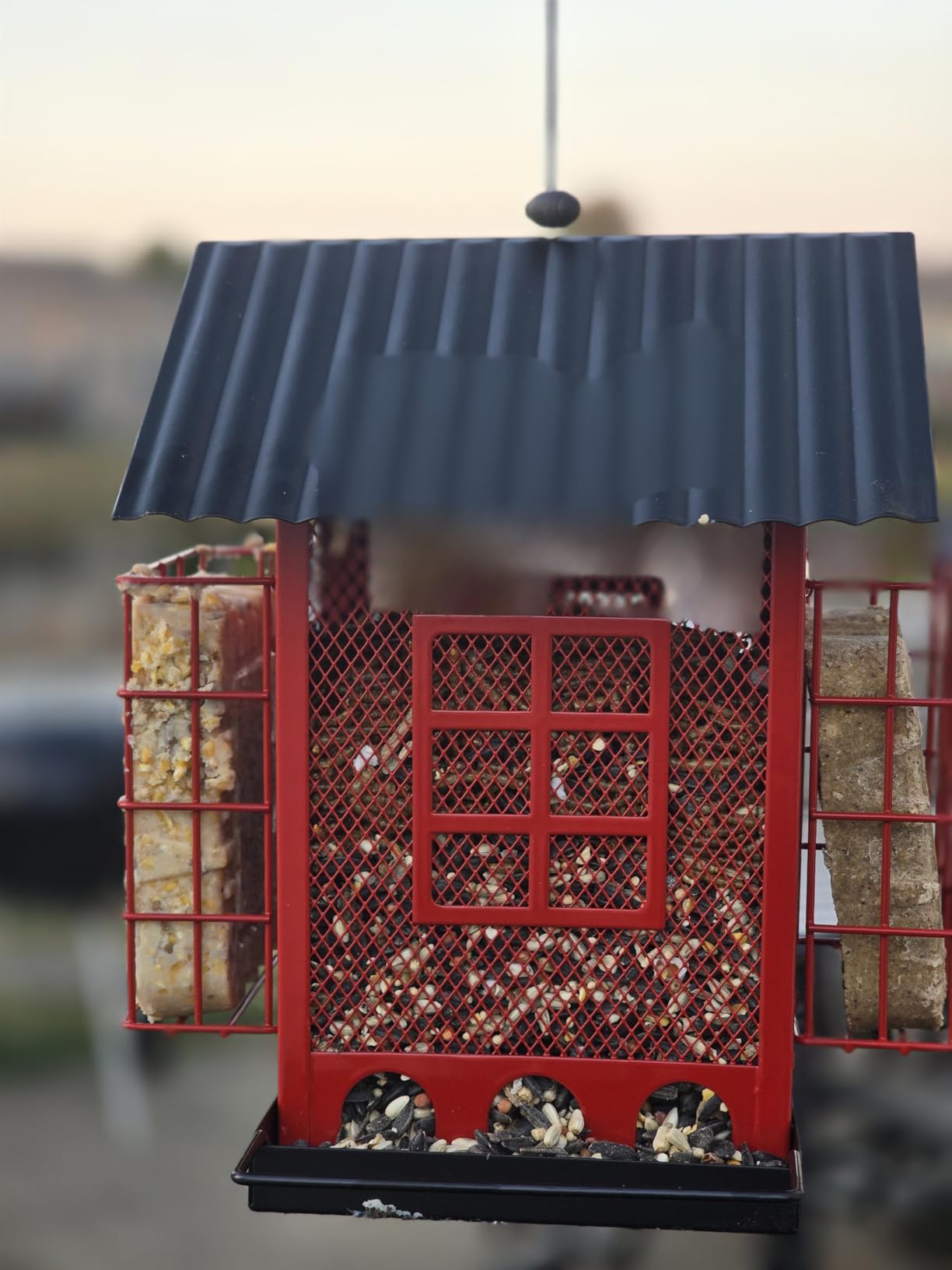
We recommend our Flowafoli bird feeder!