As the intersection of artificial environment and natural ecology, American courtyards not only provide stable food sources for birds (such as seeds in feeders, fruits of courtyard plants) and nesting sites, but also bring unique survival challenges - key life activities such as breeding and brooding, foraging and grain storage, natural enemy defense, molting, etc. often fall into "time conflicts" due to environmental changes (such as temperature fluctuations, changes in food abundance) or physiological rhythm differences. Faced with these asynchronous issues, common birds in American courtyards (such as the main Cardinals, Blue Crows, Swallows, and Thrush) have evolved a response system centered on "priority sorting", combining behavioral resilience, physiological regulation, and social cooperation to ensure the achievement of their core goals of survival and reproduction.
1、 Core strategy: Prioritization based on "breeding and brooding" as the anchor point
For most courtyard birds in the Americas, reproduction is the most energy intensive and time sensitive aspect of their life cycle. Therefore, when multiple matters conflict, they prioritize reproductive activities, while other matters are coordinated through "delay, simplification, or division of labor" to form a clear behavioral priority ladder.
1. Breeding and foraging: energy balance technique of "fixed-point supply+efficient round-trip"
During the breeding season (usually from spring to summer), parent birds need to simultaneously undertake two tasks: "building nests/incubating eggs" and "foraging and raising chicks". If the food source is far away from the nest site, there is a high risk of asynchronous "incubation and insulation needs" and "feeding needs of chicks". Taking the common main Cardinals in North American courtyards as an example, the female bird stays in the nest for more than 90% of the time during the incubation period to maintain the hatching temperature of the eggs. At this time, the male bird will take on almost all of the foraging tasks - it will efficiently forage in a fixed area within 50 meters of the nest (such as feeders, berry bushes), store seeds, insects and other food in its beak or crop, and return to the nest every 15-20 minutes, reducing the frequency of female birds leaving the nest and ensuring that the chicks (after hatching) can receive continuous food supply.
For carnivorous birds such as house swallows, if rainfall during the breeding season leads to reduced insect activity (decreased foraging efficiency), parent birds will adjust their foraging strategies: shorten the single foraging time, increase the number of round trips, and prioritize capturing larger insects with higher energy density (such as butterfly larvae) instead of spending time searching for smaller insects. By "improving food quality", they can compensate for the lack of foraging time and avoid the impact of delayed foraging on the survival of chicks.
2. Reproduction and molting: physiological regulation of "staggered processing+local priority"
Feather replacement (updating feathers to maintain flight ability and insulation) and reproduction both require a large amount of energy. If the two overlap, it can lead to energy depletion in the parent bird. American courtyard birds achieve "off peak" or "local synchronization" between the two through precise physiological rhythm regulation. For example, the breeding period of blue Jay is concentrated from April to June, while the complete molting period is arranged from July to September - after the breeding is over, the chicks leave the nest and the parent birds do not need to invest energy in raising chicks. At this time, molting is initiated. During the process of feather renewal, although the flying ability slightly decreases, the foraging pressure is relatively low due to the high abundance of food (abundant fruits and insects in summer).
If breeding is delayed due to extreme weather conditions (such as late spring cold waves), some birds may adopt a "local molting" strategy: prioritizing the replacement of primary and tail feathers that affect flight, and delaying the replacement of body feathers. In this situation, the traveling thrush will first complete the renewal of its feathers to ensure flight efficiency during foraging and chick rearing. The replacement of its body feathers will be dispersed between chick rearing intervals and gradually completed during short rest periods to avoid a decrease in flight ability caused by whole body molting, which may affect the food supply to the chicks.
3. Breeding and Defense: Risk Avoidance through "Division of Labor Alert+Flexible Transfer"
During the breeding season, bird nests are susceptible to attacks from natural enemies such as snakes, squirrels, and eagles. Parent birds need to find a balance between "incubating/protecting chicks" and "guarding and defending". Birds in American courtyards often use a "division of labor and cooperation" approach to deal with this conflict: female birds are mainly responsible for incubating eggs and protecting chicks in the nest, while male birds act as "guards" on the high branches around the nest, transmitting information about natural enemies through specific calls (such as rapid "chirping" sounds). When encountering aerial predators such as eagles, male birds will first sound an alarm and then actively fly towards the predators, attracting their attention and guiding them away from the nest through the behavior of "pretending to be injured"; The female bird stays still inside the nest to avoid exposing its position due to activity. After the natural predator leaves, the male bird returns to the guard post, and the female bird continues to incubate the eggs, forming a seamless connection of "guard defense protect chicks".
If the threat of natural enemies persists (such as squirrels frequently approaching nest trees), the parent bird will give up "holding" and activate a "transfer strategy" - at night or when the activity of natural enemies is weak, the female bird will transfer the chicks (already capable of short distance movement) one by one to nearby concealed places (such as dense bushes), while the male bird will be alert on the transfer route. After all chicks have transferred, the parent bird will rebuild the nest in a new area to avoid breeding failure due to excessive focus on defense.
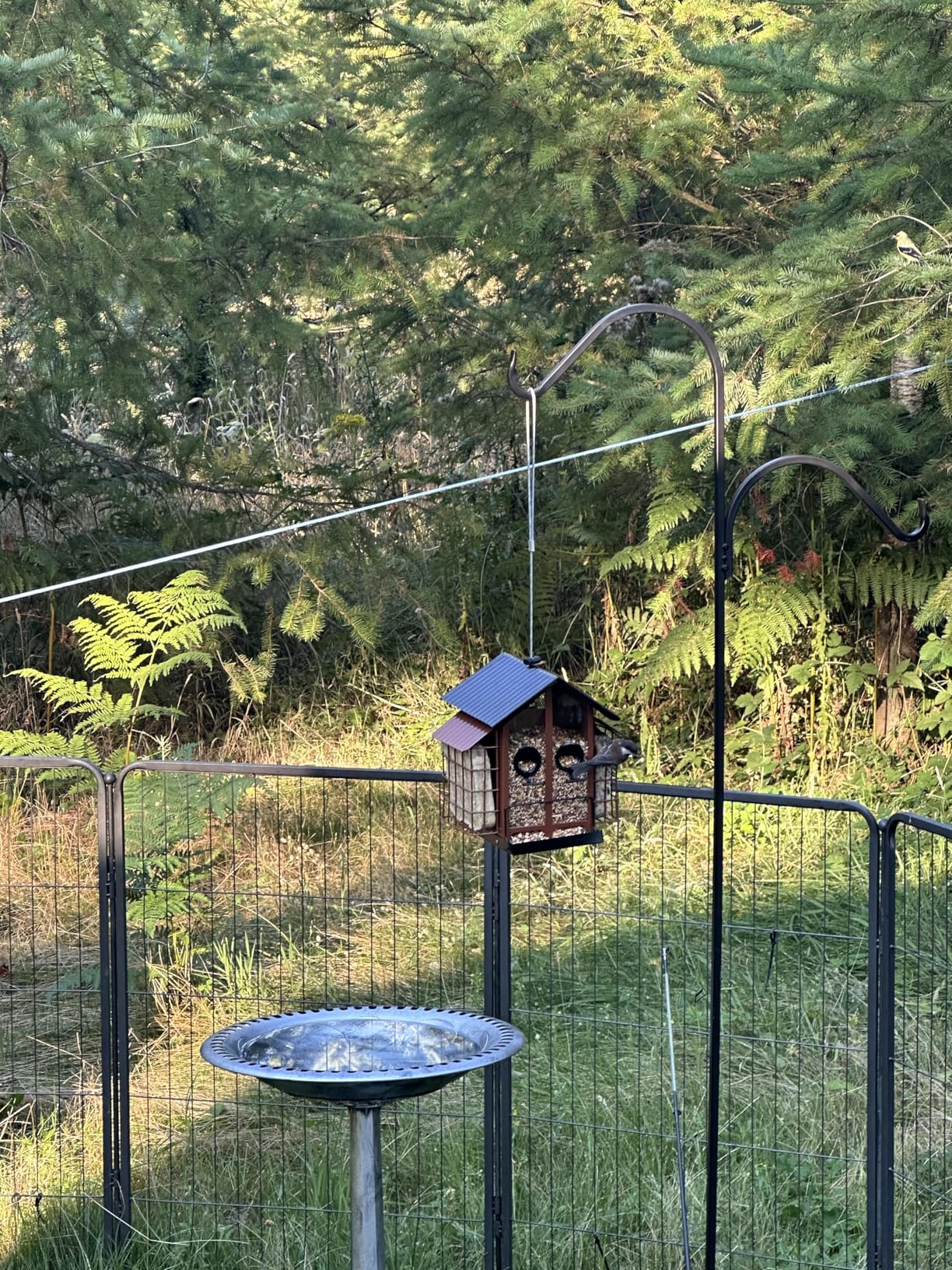
We recommend our Flowafoli bird feeder!