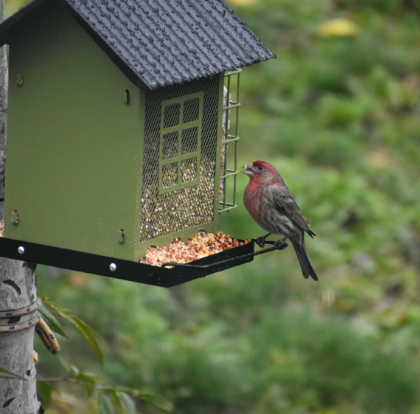
In the semi natural ecological environment of American courtyards, birds not only need to rely on high-speed flight to complete survival behaviors such as hunting, refuge, and courtship, but also need to deal with sudden problems such as collisions, imbalances, and energy depletion caused by this. Long term natural selection has allowed them to evolve a complete response system that covers physiological regulation and behavioral strategies, while achieving stable flight states through precise neural regulation, essentially forming a collaborative mechanism of "problem response" and "mental stability".
In the face of sudden danger during high-speed flight, the core coping logic of birds is "rapid perception precise regulation damage avoidance", and their physiological and behavioral adaptability is particularly prominent in courtyard environments. From the perspective of visual perception, most courtyard birds (such as sparrows and mockingbirds) have physiological limitations of weak frontal ability, but have evolved flexible neck rotation and visual field switching abilities, which can compensate for the deficiency of insufficient obstacle prediction ahead by combining side view and dynamic scanning during high-speed flight. When encountering sudden obstacles such as glass curtain walls and fences in the courtyard, their neural feedback system can exhibit extremely high response speed - high-speed camera observations show that the posture adjustment response time of these birds is less than 20ms, and they can achieve emergency steering or emergency stop by instantly changing the wingtip angle and adjusting the shooting frequency, avoiding collision damage. For example, in the high-speed flight of chasing insects, if a bird suddenly encounters the obstruction of bushes in the courtyard, it will generate asymmetric lift through the differential bending of its wing membrane, completing centimeter level precision emergency avoidance. At the same time, it will use the dynamic deformation of its tail feathers to offset more than 80% of aerodynamic interference and maintain body balance.
Birds cope with potential hidden problems such as energy depletion and body damage caused by high-speed flight through pre competition physiological preparation and post competition repair mechanisms. Although courtyard birds do not need to complete long-distance migrations, they still require a large amount of energy support for short distance high-speed flights. They will store energy in advance by consuming protein and antioxidant rich foods (such as berries and insects in the courtyard), while activating the "turbocharged" mitochondria in the flying muscle cells - these mitochondria have a larger number and higher production efficiency, can quickly supply energy during high-speed flight, and can quickly clear excess mitochondria after the flight to avoid energy waste. In response to the oxidative stress damage that may occur during high-speed flight, they will actively choose plant fruits rich in vitamin E in the courtyard, neutralize the reactive oxygen species molecules produced during mitochondrial production through antioxidant substances, and reduce the risk of muscle damage. If a minor collision occurs accidentally, birds will take advantage of the hidden branches of tall trees in the courtyard to temporarily rest, promote body recovery by combing their feathers and adjusting their breathing rhythm, and use the three-dimensional space of the tree layer to avoid secondary dangers. This behavior is not only a physiological repair, but also a subsequent avoidance strategy for sudden risks.
We recommend our Flowafoli bird feeder!