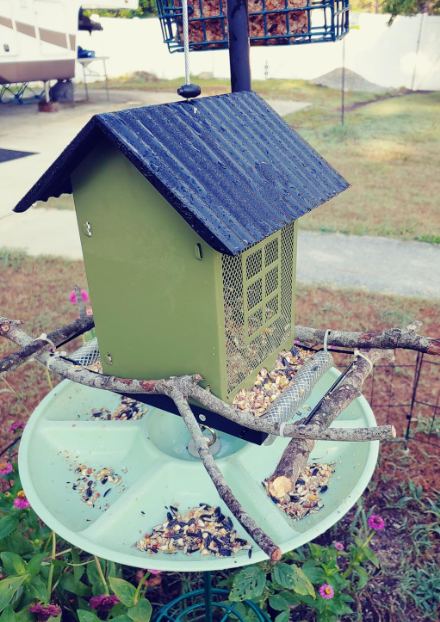
As an ecological space where artificial and natural elements intertwine, the American courtyard is home to a variety of bird species such as the North Puffin Owl, the main Cardinals, the Thrush, and the Flycatcher. These feathered residents are not passively adapting to the environment, but through precise behavioral strategies, they flexibly handle short-term core issues such as foraging, nesting, reproduction, and defense, while also dealing with long-term extension issues such as climate fluctuations and environmental changes, demonstrating strong survival wisdom.
1. Foraging matters: Multiple strategies adapted to courtyard resources
The distribution of food resources in the courtyard is scattered and changes with the seasons, and birds efficiently forage through a combination strategy of "specialized adaptation+opportunity utilization". The main Cardinals have a conical thick beak and are skilled at cracking hard shelled foods such as sunflower seeds and nuts. They frequently visit the feeders set up by humans and even remember the feeding rules, coming to feed at regular intervals; The traveling thrush prefers earthworms and insects in the lawn, and perceives the activities of prey in the soil through keen hearing. The action of pecking with its head down has become a common sight in the courtyard. At the same time, it also feeds on shrub fruits and fallen breadcrumbs, demonstrating its omnivorous advantage.
2. Risk avoidance measures: quick response, flexible avoidance of threats
Birds will quickly respond to sudden threats such as human activities, pet sightings, and natural enemy invasions in the courtyard through precise behavioral signals and avoidance actions. The black crowned sparrow is small in size and highly alert. Once it detects threats from cats, dogs, raptors, etc., it will immediately emit a rapid cry of "chick-a-dee-dee-dee", which is both a warning to its own kind and a self deterrent. At the same time, it can flexibly shuttle between branches and even hang upside down on them to avoid pursuit.
3. Nesting matters: renovation and utilization, adaptation to courtyard space
The urbanization process has changed the natural nesting environment for birds, and courtyard birds in the Americas have adjusted their nest site selection and nesting materials to adapt to artificial and natural structures such as balconies, fences, and trees. Pearl necked spotted doves abandon traditional tree holes and prefer to build nests in the gaps between balconies, anti-theft windows, and air conditioning units in the courtyard. They use twigs and grass stems to build simple yet sturdy platform nests, and even use discarded fibers and hair from humans to reinforce the nest body, maximizing the shielding effect of artificial structures in the courtyard.
We recommend our Flowafoli bird feeder!