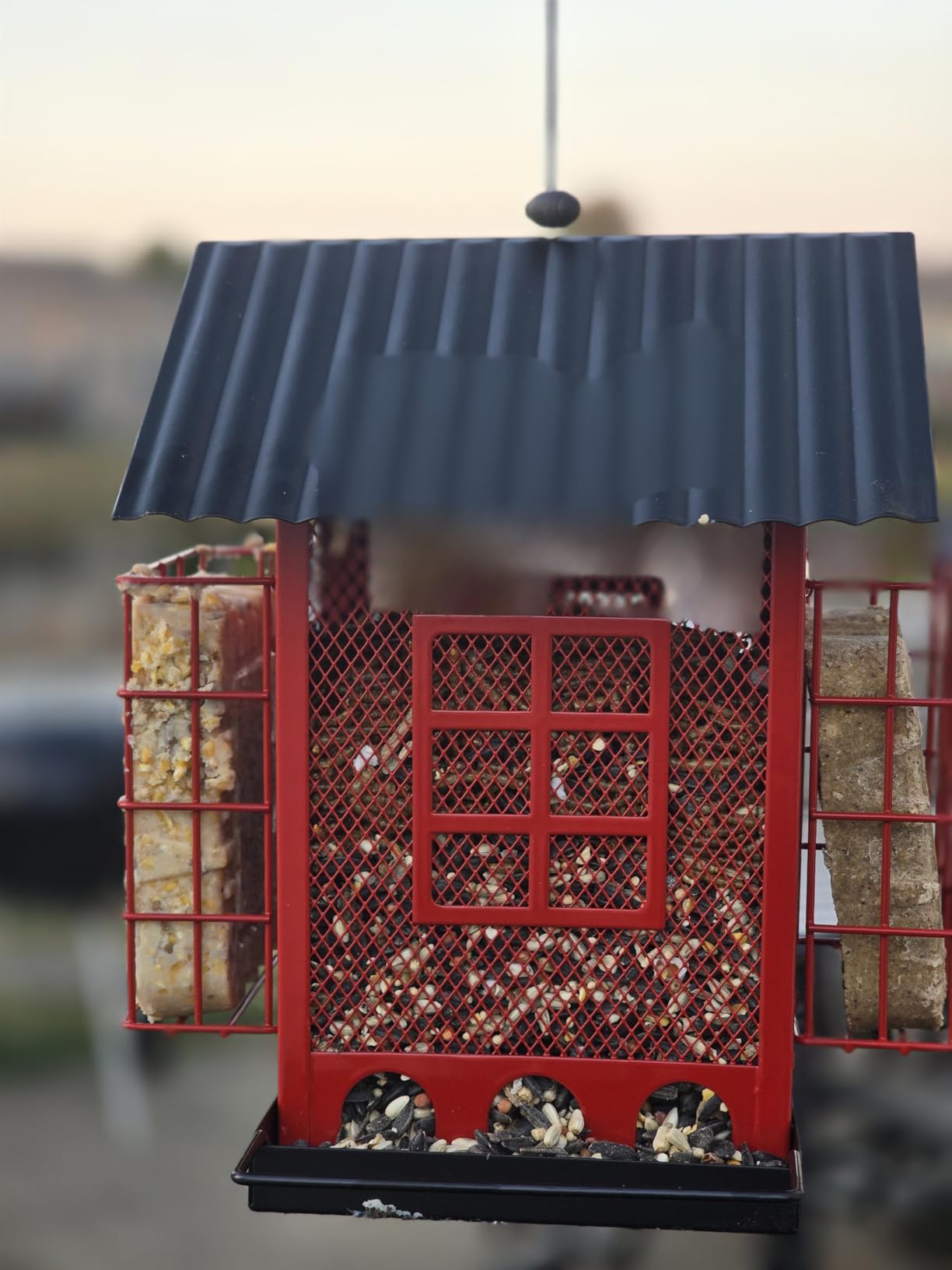
The American courtyard serves as a transitional space connecting nature and human activities, providing a core habitat, foraging, and breeding ground for various bird species. The birds here need to simultaneously deal with immediate issues such as foraging, sheltering, and raising chicks, as well as long-term lagging issues such as adapting to climate change, habitat changes, and population continuity. They have formed an efficient "transaction processing system" through precise behavioral adjustments, resource allocation, and strategic planning, which not only ensures current survival but also lays the foundation for future survival.
1. Foraging and grain storage: efficient collection and precise storage
Birds in the courtyard have evolved diverse operational strategies to meet the core recent demand for food acquisition. The common American Crested Tit actively approaches the feeders set up by humans, prioritizing the largest and highest quality nuts, demonstrating its precise screening ability for food resources. At the same time, it reduces foraging time and exposure risk by quickly pecking and swallowing. White breasted oak is good at "storing and preserving grain". They will stuff nuts and seeds into the gaps under the bark, and then use their sharp beaks to strike and fix them, forming temporary "storage points" for use in case of short-term food shortages. This behavior not only ensures immediate energy replenishment, but also reserves a buffer for the needs of the following hours or one or two days.
For seasonally abundant food, birds will activate a "centralized collection" mode. For example, during the mature season of mulberries and figs, the orange bellied oriole temporarily abandons insect foraging and feeds on fruits in large quantities for rapid digestion, maximizing the use of short-term food dividends; The Crown Blue Crow, on the other hand, shows a strong preference for peanuts and black sunflower seeds. It quickly grabs food near the feeder, either for immediate consumption or for short-term storage in the crop, and then transfers it to a hidden corner of the courtyard to complete the rapid allocation of food resources in the near future.
2. Instant risk avoidance: rapid warning and coordinated evacuation
Sudden threats such as human activities, pet disturbances, and the appearance of natural enemies in the courtyard environment are safety issues that birds need to deal with immediately. They avoid risks through sound warning mechanisms and rapid response behaviors. The orange bellied oriole is highly vigilant during its nest building period. Once it detects cats, dogs, or other animals approaching, it immediately emits a rapid chirping sound to warn its companions and deter intruders through continuous chirping. If the threat persists, it will actively fly away from the nest for a short period of time to avoid it, and quickly return after the danger is resolved.
Birds with strong social behavior, such as the American Crested Tit, can also form a "collaborative warning network". When a sparrow detects danger (such as eagles flying low), it will make specific warning calls, and other sparrows, even white bellied pheasants and other symbiotic birds in the courtyard will immediately stop their activities, either hiding in the gaps of tree branches or quickly flying away from the courtyard, minimizing the immediate risk through group cooperation.
We recommend our Flowafoli bird feeder!