In recent years, new issues such as climate change, habitat changes, and fluctuations in food resources have continued to impact the living environment of birds in American courtyards. From the common main Cardinals and Blue Jays to the highly adaptable Cuckoo, these feathered elves actively "cope" with various survival pain points by adjusting their behavior patterns, optimizing their survival strategies, and reshaping their activity range, demonstrating amazing adaptability. Their response measures are not only immediate feedback on environmental changes, but also a vivid reflection of species evolution.
1、 Coping with Climate Change: Adjusting Migration and Activity Rhythms
The rising temperatures and frequent extreme weather caused by climate change are the core new challenges faced by courtyard birds in the Americas, directly disrupting their migration, reproduction, and activity patterns.
Reshaping migration strategies. Species that originally had a fixed migration habit have adjusted their migration time and route one after another - some migratory birds have moved northward earlier, delayed their southward migration, and even abandoned migration due to rising winter temperatures, becoming resident birds in courtyards. For example, the American mockingbird was originally seen as a messenger of spring, but now it has become a year-round resident in most areas. In winter, it no longer goes deep into forests, but stays around courtyards to forage. A more representative example is the cuckoo, a bird native to the southwestern deserts of the United States. Due to climate change, the arid areas have expanded, and its range of activity is continuing to expand northward and westward. Its presence can be seen from mountainous areas in Colorado at an altitude of over 2000 meters to suburban neighborhoods in Missouri. The original "desert residents" have gradually become new customers in the courtyard. Research has shown that bird migration strategies have strong phenotypic plasticity, adjusting their stopover time and migration routes according to environmental changes to balance energy consumption and survival needs.
2、 Coping with Food Shortage: Expanding Recipes and Foraging Channels
The food phenological mismatch caused by climate change (the mismatch between bird breeding periods and insect and seed peak periods), the reduction of insects caused by pesticide use, and the natural food scarcity caused by habitat modification collectively constitute the "food crisis" of courtyard birds in the Americas. To overcome this pain point, birds actively break through by expanding their diet, adjusting their foraging methods, and utilizing artificial resources.
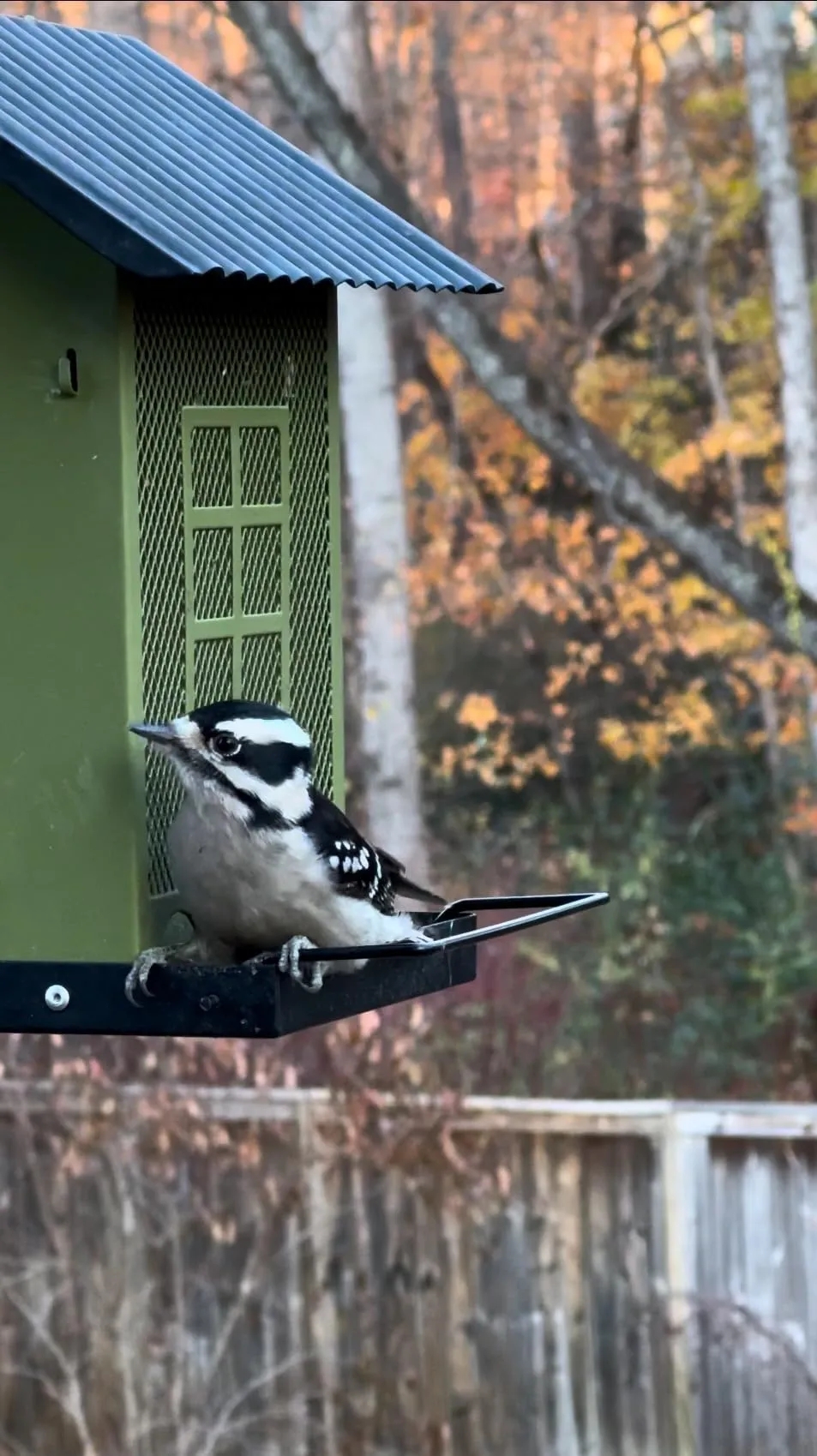
Birds will also optimize their foraging behavior and resource reserves. For example, the North American goldfinch accurately tracks the fruiting period of yard plants, focuses on foraging when the seeds of pine cones and thistle plants mature, and learns to use artificial bird feeders, showing a high preference for thistle seed feeders; The velvet woodpecker will search for insect larvae hidden in the trunk by tapping the bark and digging tree holes. Even when natural insects are reduced, it can still obtain food through "deep foraging". Some birds also store food, and blue jays hide their collected peanuts and nuts in the soil and shrubs of their yards as a reserve in case of food shortages. Their super strong memory can help them accurately retrieve stored food.
We recommend our Flowafoli bird feeder!