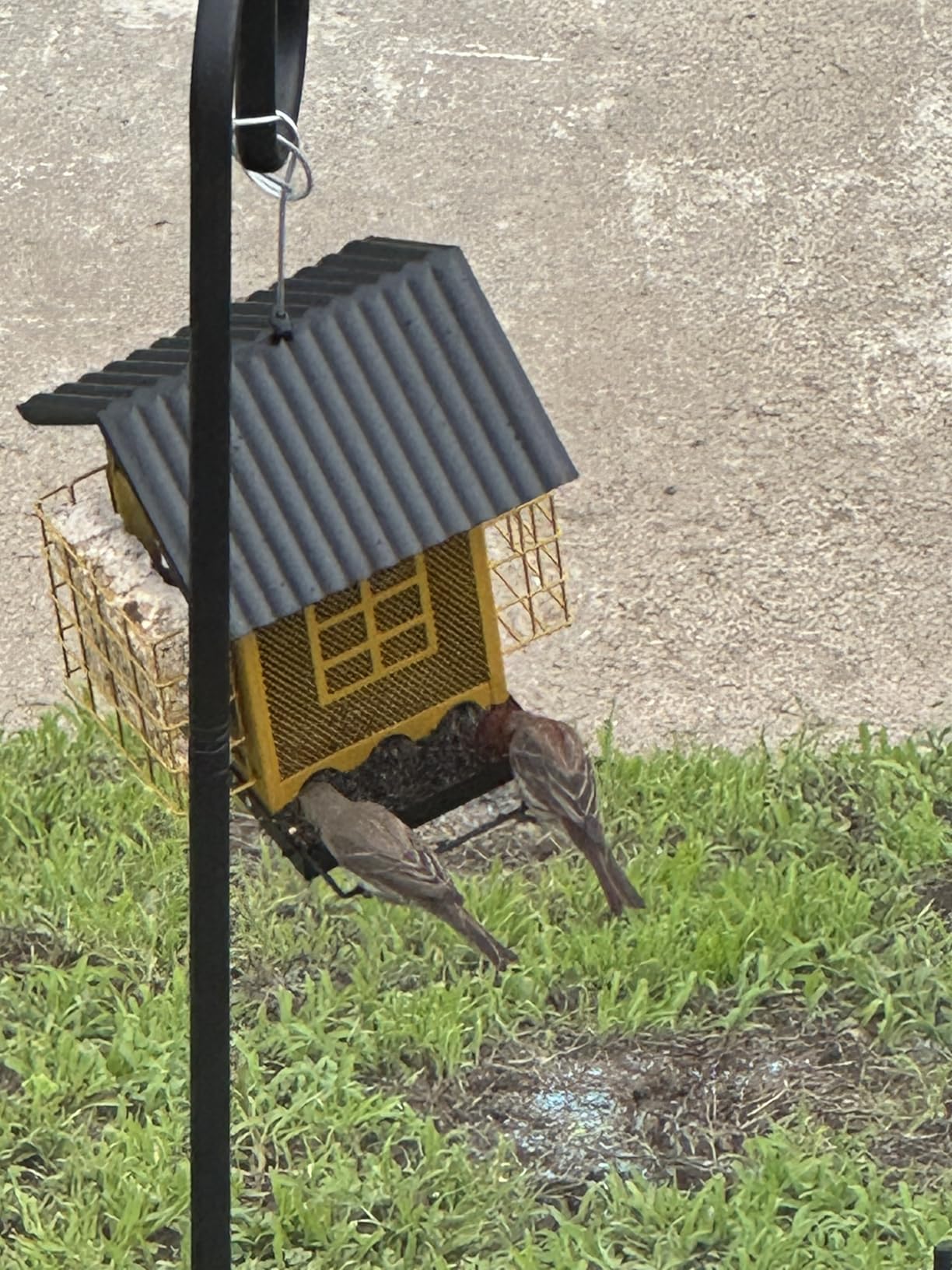
Birds in American courtyards, such as the main Cardinals, Blue Jays, Black crowned Cardinals, and Thrush, often face multiple problems in recent times, including habitat destruction, food shortages, threats from natural enemies, human activity interference (such as HOA regulations and courtyard renovations), and pests and diseases. They actively adapt through their own instinctive behavior, while relying on human scientific intervention to form a dual response system of "natural regulation+artificial assistance". The specific operations can be divided into the following core scenarios:
1. Coping with habitat compression and regulatory restrictions: proactive adaptation+human policy support
With the HOA (Homeowners Association) rules restricting "clean lawns" in the Americas, many native vegetation is being cleared as "weeds", resulting in significant compression of bird habitats. The core operation of birds in this regard is "habitat adaptation": common birds such as blue jays and thrushes will actively migrate their nests to areas allowed by rules, such as hanging flower pots, window sill gaps, air conditioning vents, and other hidden spaces at the edge of human activities; Black crowned tits and other hole nesting birds prefer to use artificial nest boxes or preserved dead tree stumps to build their nests, replacing native trees that have been cut down.
And human intervention has become a key support: multiple states have enacted laws to protect the planting rights of native vegetation in courtyards, prohibiting HOA from forcibly removing native plants that attract birds (such as black heart chrysanthemum and marigold), and preserving food and habitat for birds. At the same time, residents simulate natural habitats through "layered planting of native plants" (from ground cover, shrubs to trees), which not only meets aesthetic requirements but also provides continuous living space for birds.
2、 Solving the problem of food acquisition: diversified foraging+artificial supply optimization
Seasonal changes and monotonous courtyard vegetation often lead to food shortages for birds. The instinctive operations of birds include "expanding foraging range" and "food type adaptation": the thrush will expand the lawn foraging area and accurately capture earthworms and insects; The main Cardinals switch their diet from insects in summer to berries in autumn and seeds in winter; Blue Jay, with its strong adaptability, even feeds on peanuts and sunflower seeds fed by residents and stores excess food for emergencies.
The scientific supply of human beings further solves this problem: residents set up feeders in a standardized manner and regularly replace fresh seeds (3-4 days in dry weather and daily in rainy and snowy weather) to avoid bacterial growth and disease in birds; At the same time, local plants that bear fruit throughout the year (such as black cherries, Chinese parasols, and elderberries) are planted at the edge of the courtyard to provide natural and sustainable food sources for birds and reduce dependence on artificial feeding. For areas such as orchards where birds are prone to pecking at crops, residents adopt a "diversion strategy" by setting up a "bird canteen" 5 meters away from the crop area to distribute exclusive food, reducing the probability of birds attacking crops by 80%.
3、 Avoiding natural enemies and security threats: behavior warning+environmental protection upgrade
Birds face natural enemies in the courtyard, including eagles, raccoons, squirrels, and pets such as cats and dogs. Their core response operation is "warning+avoidance": Black crowned sparrows transmit danger signals through specific calls of "chick-a-dee-dee-dee" to remind their companions to avoid; Blue ravens actively drive away small predators near their nests, and even imitate the calls of raptors to deter competitors; All birds will prioritize building nests in locations with a wide field of view to ensure timely detection of predators.
Human protective measures enhance safety: residents place feeders 10-12 feet away from windows and shrubs, which not only prevents birds from hitting glass during flight, but also allows birds to quickly evacuate to a safe area when they discover predators; At the same time, wear bell collars on domestic cats to prevent them from hunting outside in the early morning when birds are active, and prohibit feeding stray cats to reduce the number of natural enemies; For potential threats near the nest, residents will hang warning signs to avoid human interference, and install metal fences to protect the nest and prevent natural enemies such as raccoons from invading.
We recommend our Flowafoli bird feeder!