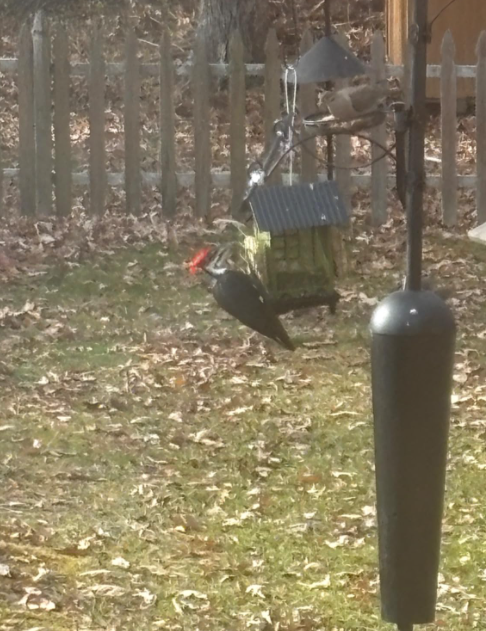
When there are more construction noises, frequent tourist activities, or food fluctuations caused by abnormal climate in human courtyards, the resident birds in American courtyards are facing a dual test of "depression" emotions and new survival challenges. These feathered elves did not passively endure, but evolved a set of coping strategies that encompass behavioral adjustment, physiological adaptation, and social cooperation, demonstrating strong survival resilience in the midst of human activities. From the goldfinch in the backyard of Illinois to the songbirds in the Galapagos Islands, their adaptive intelligence is being revealed one by one by scientific research.
Behavioral Breakthrough: Confronting Environmental Pressure with Proactive Change
In the face of new human activity interference in the courtyard, different bird species develop differentiated behavioral strategies, with the core logic being the balance between "risk avoidance" and "optimizing resource acquisition". This adaptability is particularly evident in courtyards with a high degree of urbanization.
The sensitive American sandpiper has developed a unique "stress behavior ritual". This bird, jokingly known as the "jumping bird", moves with a swaying gait of "one step, three shakes" when crossing courtyard roads or encountering new disturbances such as lawn mowing. Combined with the decaying leaves of its feathers, it mimics the movement of wind and grass, which not only avoids attracting attention, but also can supplement food by disturbing insects in the soil through vibration. If the interference suddenly intensifies, they will immediately switch to the "wooden man" mode and remain still. This "dynamic static switching" strategy has become an important means for them to deal with sudden operations in the courtyard.
In terms of reproductive behavior, birds have more precise adjustments. When courtyard construction leads to the destruction of traditional nest sites, House Sparrow will decisively use artificial structures such as air conditioning unit gaps, billboard holes, etc. to build nests, and even occupy old nests left by swallows. Its breeding success rate is actually increased due to the reduction of urban predators. For monogamous bird species, environmental pressure may trigger changes in reproductive strategies - similar to the "divorce" behavior logic of snow petrels. If there is a shortage of food in the yard leading to hatching failure of chicks, some songbirds will choose to change mates to improve subsequent reproductive efficiency. This seemingly "ruthless" adjustment is actually the wisdom of population continuation.
Physiological regulation: the invisible defense line between hormones and metabolism
When behavioral adjustments are insufficient to cope with stress, birds activate physiological regulatory mechanisms, in which corticosterone (a stress hormone) plays a central role, but its role is not a single "negative signal", but a precise "balancing agent".
There are significant differences in physiological adaptation strategies among birds with different dietary habits. The Galapagos yellow warbler (Setophaga petechia aureola) in the same region feeds on insects and is less affected by human food. Its cortisol levels did not show significant fluctuations and only adapted to changes in prey through subtle adjustments in beak width. This species-specific adaptation reflects the precision of bird physiological regulation - activating the stress system only when necessary to avoid energy waste.
The physiological response of chicks is more dramatic. Research has found that when nestlings of the Jurassic sparrow face stress, an increase in cortisol levels in their bodies can prompt them to beg more strongly, ultimately resulting in heavier body weight when they fly out; When adult birds are under too much pressure, corticosterone will inhibit chick rearing behavior, reduce the number of times they return to the nest for feeding, and prioritize their own survival. This "intergenerational strategic differentiation" also exists in courtyard birds. When human activities lead to food instability, parent birds will adjust their brood rearing inputs, while chicks compete for resources by enhancing their begging behavior, forming a unique survival tacit understanding.
We recommend our Flowafoli bird feeder!