When weather, environmental changes, or physical discomfort occur, these birds will actively respond to difficulties and ensure their own survival through physiological regulation, behavioral adaptation, and environmental utilization strategies formed through long-term evolution. Their coping strategies not only conform to the unique characteristics of courtyard ecology, but also demonstrate strong adaptive intelligence.
The winter temperature difference in the Americas is significant, especially in temperate courtyards, where low temperatures and cold winds often become the main challenges for bird survival. Birds do not have a hibernation habit and mainly respond to cold through two core logics: "reducing heat loss" and "increasing energy intake", which can be divided into two categories: physiological regulation and behavioral strategies.
1. Physiological level: Actively regulate body temperature and reduce energy consumption
Birds belong to homeothermic animals, with a normal body temperature maintained at 38-42 ℃. In cold environments, physiological mechanisms are needed to reduce heat loss. The most typical practice of courtyard birds in the Americas is "feather fluffiness" - by contracting the muscles around the feathers, the gaps between the feathers are widened, forming a layer of air insulation. The thermal conductivity of the air is extremely poor, which can effectively prevent the heat inside the body from dissipating outward. This behavior is particularly common in sparrows and main Cardinals, who appear particularly "fluffy and obese" at low temperatures.
In addition, some birds regulate their metabolic rate by appropriately lowering their body temperature (only 1-5 ℃) during low nighttime temperatures, entering a "shallow hibernation" state, and reducing energy consumption. For example, during winter nights, bluebirds will lower their body temperature from around 41 ℃ to 37 ℃, reducing their heart rate and respiratory rate to save energy and avoid energy shortages caused by the inability to forage at night. At the same time, the claws and beaks of birds are covered with blood vessels, which reduce blood flow through "vasoconstriction" at low temperatures, avoiding heat loss from the extremities and preventing frostbite.
2. Behavioral level: clustering, location selection, and efficient foraging
Cluster habitat is an important behavioral strategy for courtyard birds in the Americas to cope with cold weather. On winter nights, social birds such as sparrows and goldfinches gather in dense branches, eaves crevices, or shrubs in the courtyard, tightly packed together. By gathering in groups, birds can not only share heat, reduce individual heat loss, but also increase vigilance and prevent natural enemies. Research has found that birds living in clusters experience a smaller decrease in nighttime body temperature and a 20% -30% reduction in energy consumption compared to those living alone.
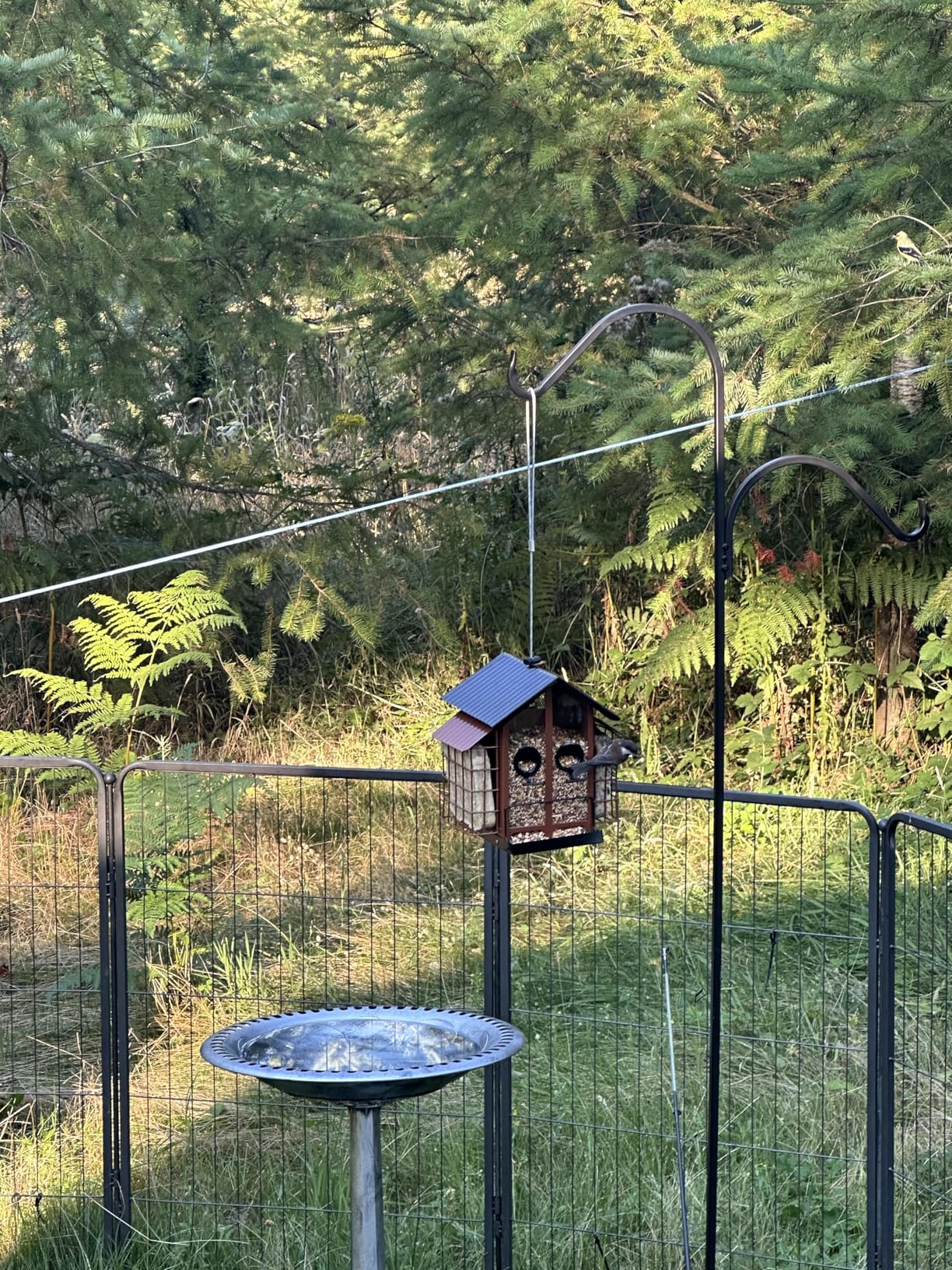
Efficient foraging to store energy is the foundation for coping with cold weather. In winter, natural food (seeds, insects) in the courtyard decreases, and birds adjust their foraging time and range: during the day, they prioritize foraging in sunny and windless areas, such as feeders in the courtyard, leaf litter piles, and gaps in the lawn, searching for seeds, berries, or residual insects; At the same time, it will accelerate the pace of foraging, shorten rest time, consume as much energy as possible, and store excess energy in the form of fat. For example, the main Cardinals frequently visit the feeders placed by humans, pecking at high calorie foods such as sunflower seeds and millet. In winter, their body fat content increases by 15% -25% compared to summer, and fat becomes an "energy reserve" for keeping warm at night.
We recommend our Flowafoli bird feeder!