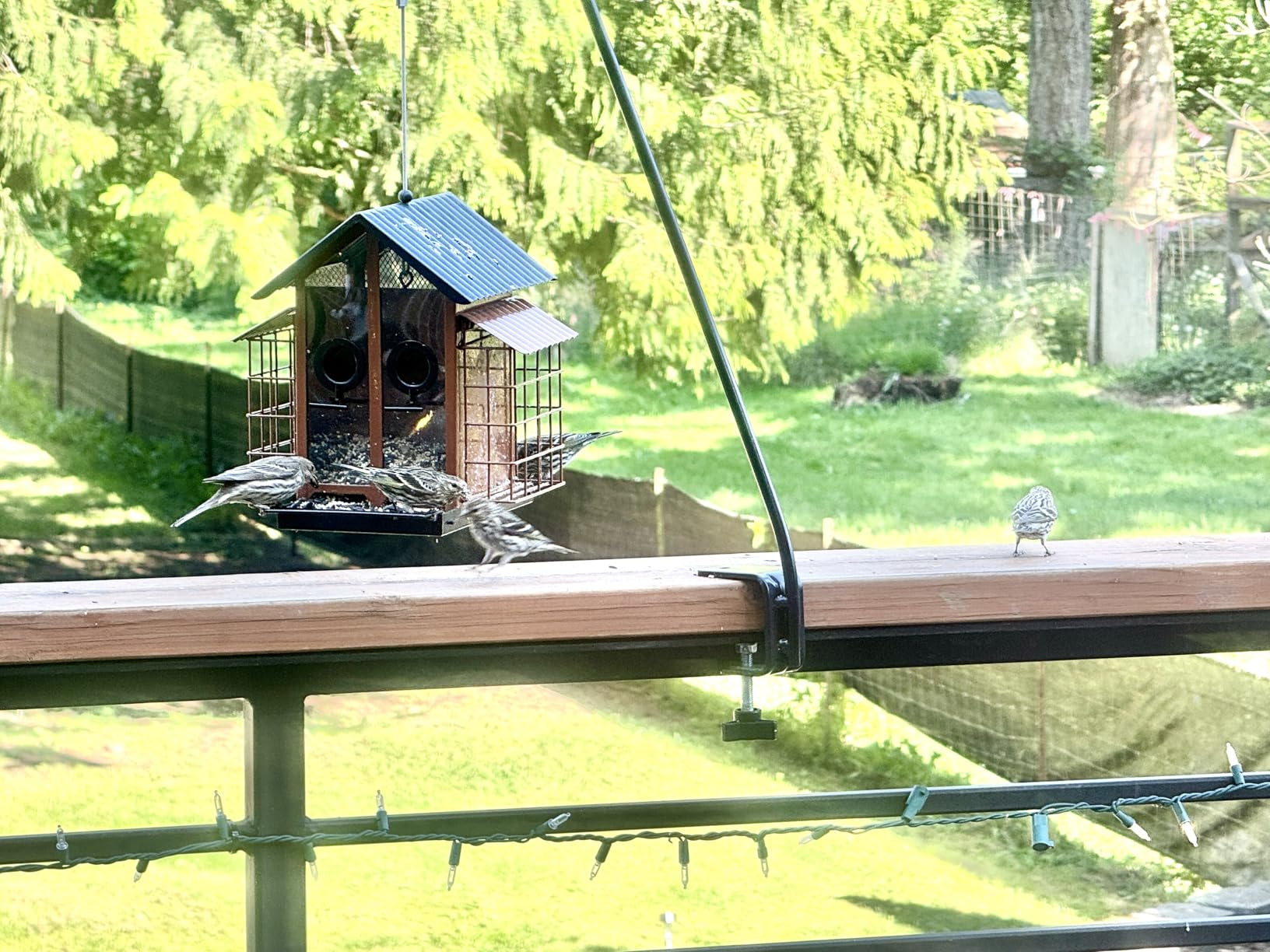
In urban courtyards and suburban gardens on the American continent, the morning activity of birds is not a random behavior, but a sophisticated system regulated by physiological rhythms, environmental signals, and survival needs. From the North American mockingbird to the Karoo reed wren, different species use unique perceptual abilities and behavioral strategies to accurately process and dynamically adjust the start time of their morning outings, achieving a balance between energy acquisition, predator avoidance, and reproductive success.
1、 Physiological anchor point for basic morning departure time
The morning departure behavior of birds is first based on the internal circadian rhythm. The suprachiasmatic nucleus (SCN) located in the hypothalamus of bird brains sets a 24-hour activity rhythm by sensing changes in light. Research shows that the basic morning departure time of common birds in American courtyards generally follows the "morning light trigger rule": when the ambient light intensity reaches 5-10 lux (equivalent to the brightness 30-60 minutes before sunrise) in the morning, retinal photoreceptor cells will send signals to the SCN, initiating a series of physiological arousal processes - cortisol levels rise, body temperature rises by 0.5-2 ℃, metabolic rate increases by 15% -20%, to reserve energy for outdoor activities.
There are significant differences in the basic morning emergence time among different species. For example, the chicks of early maturing birds (such as quails and pheasants) can emerge with their parents in the morning just a few hours after birth, while adult birds usually begin to move around 45 minutes before sunrise; The parent birds of late maturing birds (such as thrushes and main cardinals) need to go out to forage earlier, and their morning departure time can be advanced to 1.5 hours before sunrise to meet the high-energy needs of the chicks in the nest. This species-specific time setting is the evolutionary result of long-term adaptation to the ecological niche.
2、 Dynamic adjustment driven by environmental factors
The morning departure time of courtyard birds in the Americas is not fixed, but can be flexibly adjusted according to real-time environmental conditions, with core regulatory factors including light, temperature, precipitation, and food availability.
1. Fine response of light intensity
Light is the most critical regulatory signal. Before and after the vernal and autumnal equinoxes, the sunshine duration is close to 12 hours, and the morning departure time of most courtyard birds is relatively stable; On the summer solstice (where the longest sunshine in North America can reach 16 hours), birds will delay their morning departure by 15-30 minutes to avoid activities during high temperature periods; On the winter solstice, go out 20-40 minutes in advance to make full use of the limited daytime foraging time. In addition, cloud cover significantly affects the morning departure time - on cloudy days, birds' morning departure time is delayed by an average of 28 minutes compared to sunny days, until the ambient light intensity reaches their perception threshold.
2. Adaptive adjustment of temperature and precipitation
The influence of temperature on morning departure time exhibits a "bidirectional regulation" characteristic. When the morning temperature is below 5 ℃ (such as in North American winter), small birds (such as hummingbirds and warblers) will delay their morning outings by 30-60 minutes, reducing energy consumption in low-temperature environments; When the temperature exceeds 25 ℃ (such as in summer), medium-sized birds (such as blue jays and mockingbirds) will emerge 15-25 minutes in the morning to avoid the high noon temperature. Precipitation will significantly delay morning departure - in moderate rain weather, birds' morning departure time is delayed by an average of 52 minutes compared to sunny weather, and their outdoor activity intensity decreases by 40% until precipitation weakens or stops.
3. The driving effect of food resources
The availability of food directly determines the "advance or delay" of morning departure time. For example, when there are abundant berries and seeds in the courtyard (such as in autumn), birds that mainly consume plant-based foods (such as sparrows and goldfinches) will delay their morning departure by 15-20 minutes because there are sufficient food resources and there is no need to compete early; When food is scarce (such as during the spring breeding season), bird species that feed on insects (such as flycatchers and swifts) will emerge 20-30 minutes early in the morning, taking advantage of the window period of frequent insect activity in the morning to efficiently forage. In addition, the presence of artificial feeders can make the morning departure time of birds tend to be fixed - in courtyards with stable food supply for a long time, the fluctuation range of birds' morning departure time is reduced to less than 10 minutes.
We recommend our Flowafoli bird feeder!