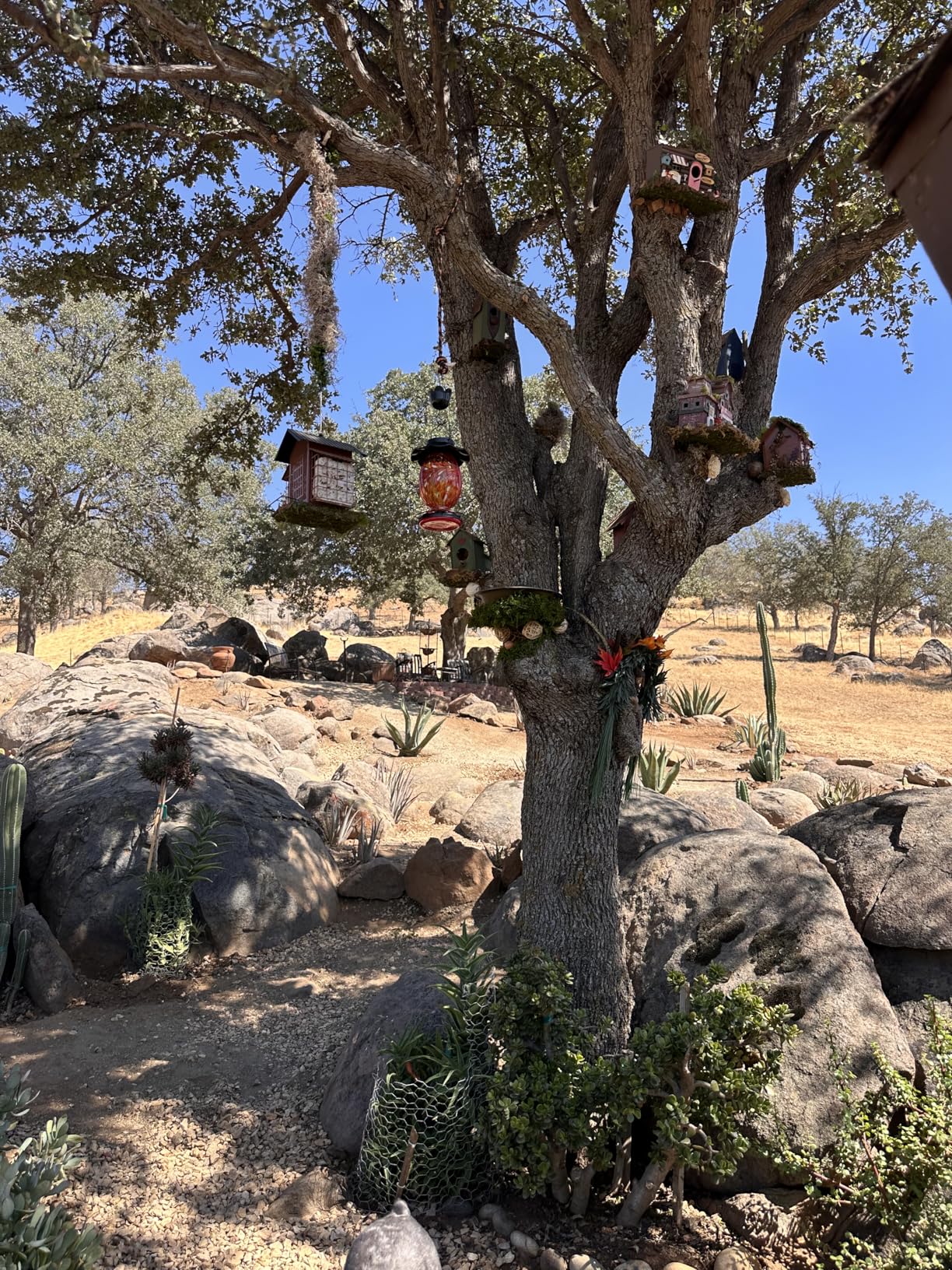
The foraging of birds in American courtyards for bird feeders is a complete process that integrates sensory adaptation, behavioral adaptation, and environmental interaction. From discovering bird feeders to successfully feeding, birds utilize their evolved physiological advantages, combined with their familiarity with the courtyard environment, to flexibly adapt to different types of bird feeders. The entire process not only reflects the uniqueness of the species, but also demonstrates their survival wisdom. Specifically, it can be divided into three core stages: "location discovery", "adaptive feeding", and "auxiliary support", which are interconnected to ensure efficient and safe foraging.
Whether birds can quickly find feeding devices depends on the synergistic effect of multiple senses, with visual guidance, social and memory assistance, and olfactory and auditory cues as supplements, to jointly complete "food clue recognition".
Vision is the primary tool for birds to locate bird feeders. The common birds in American courtyards, such as the main Cardinals, Goldfinches, and Black crowned Cardinals, generally possess far more acute vision than humans. Some species can even recognize the unique shape, color, or reflected light of bird feeders when flying at hundreds of feet. For example, hummingbirds are highly sensitive to the color red and will dive directly into the bird feeder with a red shell; Orioles and main cardinals are more easily attracted by yellow and orange feeders, which can quickly stand out in the green plant background of the courtyard. In addition, the shaking of seeds inside the bird feeder, the movement of humans filling food, and even the small amount of seeds scattered on the ground can become visual signals to guide birds to locate their targets - many courtyard owners deliberately scatter a small amount of seeds around the bird feeder, using the birds' visual alertness to ground food to indirectly guide them to discover the feeder.
Social behavior (local reinforcement effect) is a key driver for birds to quickly gather at bird feeders. Once a bird (such as a black crowned sparrow or a silver throated long tailed sparrow) discovers the feeding device and starts feeding, its flight trajectory, feeding movements, and calls will be quickly detected by surrounding birds. By observing the behavior of their own species, birds can quickly determine whether the area is safe and has food, forming a "chain reaction" - the originally quiet bird feeder may become a "foraging hub" for birds to gather within a few hours. This phenomenon is particularly evident in winter when food is scarce, and a group of pine finches or evening sparrows may even collectively "occupy" the bird feeder.
Memory ensures the continuity of foraging. Birds form precise 'psychological maps' of reliable food sources within their territory, with resident birds such as the main Cardinals and Mourning Doves patrolling their feeders along fixed routes daily, and even remembering the approximate time when humans fill their food, waiting next to the feeders. Migratory birds, such as some warblers, are more likely to remember their foraging locations in previous years. After returning from their migration the following year, they fly directly back to the courtyard they have visited to feed the birds. This long-term memory ability is an important guarantee for them to adapt to their environment.
Although the functions of smell and hearing are secondary, they are indispensable in specific situations. Most courtyard birds do not have a keen sense of smell, but some songbirds can identify seed oils and fats (such as the scent of black sunflower seeds) through their odors, which can assist in locating food; And hearing can help birds capture the foraging calls, wing vibrations, and even water flow sounds of their own kind (if there is a bird bath near the bird feeder), indirectly finding the location of the bird feeder. In addition, weather can also affect positioning efficiency - after winter blizzards and cold waves, birds will expand their foraging range, significantly increase their attention to bird feeders, and have faster positioning speed.
We recommend our Flowafoli bird feeder!