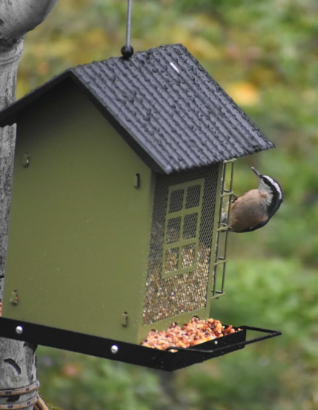
When the morning dew in the American courtyard began to condense on the petals, the chirping of the mockingbird was once the most timely alarm clock; Nowadays, several young birds are drowsy under the noon sun, and the active main Cardinals, who were originally active at dusk, occasionally stray into the halo of streetlights before dawn - the recent frequent extreme weather and temporary increase in human activities in the courtyard have caused these little creatures to fall into a sleep disorder caused by "exhaustion". But don't underestimate their survival wisdom, a silent 'sleep repair plan' is quietly unfolding among the branches and leaves.
The primary repair strategy is "fragmented sleep supplementation+deep cultivation during core time periods". The most prominent branches of oak trees in the courtyard have become a "temporary resting place" for birds. The Karoo reed wren chooses a "hidden nest" woven from dense branches and leaves, and takes 15-20 minutes of extra sleep each time in gaps that are difficult for predators to detect. It completes its rest 4-5 times a day. This "short sleep, multiple meals" pattern can compensate for sleep deficit without exposing itself to risks due to prolonged stay. The slightly larger blue jays, on the other hand, pay more attention to "deep repair". They will find the leeward corner of the courtyard wall during the softest afternoon sunshine period, bury their heads in their wings, and enter a one hour deep sleep, replacing scattered naps with high-quality rest to quickly restore energy.
Adjusting the foraging rhythm is the key to synchronously calibrating one's daily routine. Birds that originally followed the rule of "eating in the morning and abundant in the evening" have begun to flexibly switch their foraging time according to their own fatigue state. Those migratory thrushes that are weak in the morning due to frequent awakenings at night will delay their early foraging time and wait until the sun rises and their body temperature rises before moving out. At this time, the earthworms on the courtyard lawn are more active, and their foraging efficiency is higher, avoiding wasting energy in a weak state. And raptors like bald eagles tend to concentrate in the evening, when they are relatively energetic. One hunt is enough to support subsequent rest and reduce excessive consumption caused by frequent hunting.
The ability to adapt to the environment allows birds to build a 'sleep buffer zone' in the courtyard. Faced with the noise interference caused by human decoration in the courtyard, the cedar Taiping bird learned to use the "sound blind spot" to rest. They moved to the fence near the bushes and used the sound insulation effect of branches and leaves to reduce interference; When the watering system in the courtyard temporarily changes the spraying time and disrupts the drinking habits of waterbirds, the mallard ducks will actively adjust their stopping position, reserve a fixed "drinking+grooming" time at the edge of the artificial pond, and anchor their sleep nodes with fixed behaviors. What's even more interesting is that some birds use artificial facilities in the courtyard, such as bird nests hanging under the eaves, to block the cool breeze at night, allowing them to sleep more soundly and reducing frequent awakenings caused by environmental discomfort.
Group mutual assistance provides a "safety net" for vulnerable individuals. In the group of sparrows, young birds with disrupted sleep patterns are protected by adult birds in the center of the group, and are monitored by peripheral individuals during rest, allowing them to rest peacefully and catch up on their sleep; When a main sparrow becomes too tired to hunt, its companions will share the berries they find to help it overcome its physical slump. This group collaboration not only improves the efficiency of individual sleep restoration, but also keeps the entire population stable in environmental fluctuations.
As human activities in the courtyard return to normal, the daily routines of birds are gradually returning to the right track. The mockingbirds that once dozed off at noon reappeared on the lawn in the morning; The chirping of the main sparrow also echoed in the sunset glow on time. They do not have a complex concept of time, but through instinctive adaptation, flexible adjustment, and warm mutual assistance, they have completed a "routine repair" about survival - perhaps the most touching wisdom of nature, always finding a balanced answer in subtle fluctuations.
We recommend our Flowafoli bird feeder!