In the courtyards of the Americas, birds are highly integrated with human living spaces, and their carefully constructed nests, stored food, and even marked territory "tokens" may be moved due to human activities, interference from other animals, or natural factors. Faced with this sudden situation of "passive objects", different types of birds have evolved a set of response strategies based on instinct and experience, which not only demonstrate their resilience to survival, but also reveal their keen perception of environmental changes.
1、 Nesting materials and nest passivity: repair, reconstruction, and "site relocation"
Nests are the core "assets" of bird reproduction, and once touched or moved, the birds' reactions will show significant differences based on the degree of disturbance and reproductive stage. For the most common North American robin in American courtyards, if the nest is only slightly displaced (such as being blown by the wind or accidentally touched by humans) and the eggs or chicks are not harmed, the parent bird will first hover and chirp around the nest, marking dangerous areas with high-frequency warning sounds and observing whether there is a threat around. After confirming safety, they will use their beaks to pick up tree branches, soil, and other materials, repair the damage caused by the nest's displacement, and even bring in new hay to strengthen the stability of the nest.
When the nest is severely moved (such as falling from a branch or being overturned by squirrels), or when eggs or chicks are injured or killed, the North American mockingbird will decisively abandon its old nest. They usually do not rebuild their nests near their original location, but instead move to more concealed areas in the courtyard (such as deep shrubs, eaves angles). The structure of the new nest will be more compact, and the outer layer will wrap more tough vines, reducing the risk of being disturbed again.
The situation is different for the Baltimore Oriole, known for its exquisite nest building. Their nests are "bag like structures" suspended at the ends of tree branches, woven from soft materials such as plant fibers and hair. If the nest is lightly touched and the fibers become loose, the male bird will take on the main repair work - it will fly to nearby grasslands or shrubs to search for longer fibers, and re weave and fix the loose parts like "sewing clothes". Throughout the process, the female bird will be on guard nearby, occasionally making crisp calls to interact with the male bird. If the nest is completely moved or destroyed, due to its high building cost, they will choose different branches from the same tree near the original nest and repeat the complex weaving process, because they are more confident in the food resources and safe environment of the familiar area.
2、 Passive Food Reserve: Tracking, Competition, and Strategic Transfer
Many courtyard birds in the Americas have the habit of storing food for use during seasons of food scarcity. If these "reserve foods" are moved by other animals or humans, the birds will activate efficient tracking and response mechanisms. Blue Jays are typical "food reserve experts" who bury acorns, nuts, and other food in the soil of their yards or hide them in tree holes, and locate them by remembering terrain, marking odors, and other methods. When the food stored in the storage point is found to have been moved, blue ravens will first conduct a "carpet like search" around them - they peck the ground with their beaks, perceive foreign objects under the soil, and visually observe whether there are excavation marks on the ground. If the predator (such as squirrels, chipmunks) can be traced, they will launch fierce attacks, driving them away by diving, pecking, and even "plundering" the predator's reserves as revenge.
If the food cannot be retrieved, blue ravens will change their storage strategy: they will scatter new food and store it in more locations, reducing the amount of food in each storage point, while choosing more concealed locations (such as under fallen leaves or rock crevices) to reduce the probability of being moved or stolen again. In addition, they intentionally bury worthless small stones in some "fake storage points" to confuse potential predators.
For Cedar Waxwing, which feeds on insects and berries, although they do not have the habit of storing food for a long time, when they find that the berry bush they are feeding on has been trimmed (human activities cause the "food position to move"), they will quickly make a group call, summoning their companions to other areas in the courtyard with berries. The response of migratory thrushes is more inclined towards "instant adaptation". They do not spend time searching for moved food, but use their sharp vision to quickly locate new food sources. This strategy is closely related to their habit of "foraging in groups", and the power of the group can help them discover new resources faster.
3、 Passive territory 'markers': re marking and upgrading territory defense
Birds have a strong sense of territorial awareness, and many courtyard birds in the Americas use specific "markers" to divide their territories. For example, the Northern Cardinals mark the boundaries of their territories by leaving pecking marks on tree branches or excreting specific odors of feces on the ground. When these "markers" are moved or removed due to human cleaning, wind and rain, etc., the main Cardinals will quickly initiate the "re marking" program. The male lead Cardinals will repeatedly peck on the branches at the boundary of their territory, leaving deeper marks while increasing the frequency and volume of their calls - their crisp and loud calls are both a declaration of "territory ownership" to their peers and a warning to potential intruders.
If the "marker" is moved and accompanied by signs of invasion from other birds (such as discovering feathers or feces of unfamiliar birds), the defense of the main Cardinals will be fully upgraded. It will conduct high-frequency patrols within its territory, and once an intruder is detected, it will deploy a "display of deterrence" - raising its feathers above its head, spreading its wings, revealing bright red feathers, and using visual signals to scare off the opponent; If deterrence is ineffective, a direct attack will be launched until the intruder is driven out of the territory. This coping strategy not only maintains the integrity of the territory, but also ensures the safety of its own reproduction and foraging.
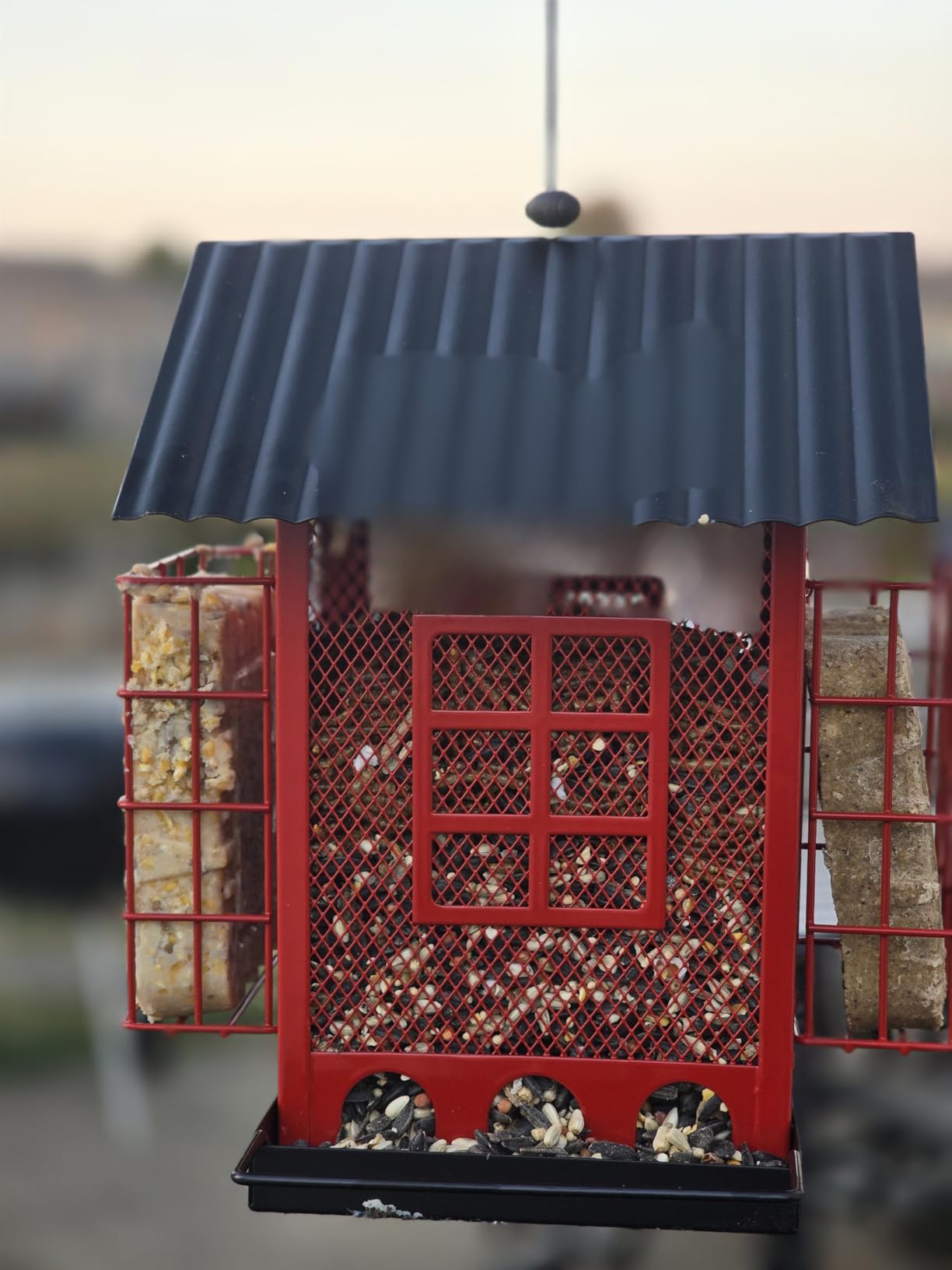
We recommend our Flowafoli bird feeder!