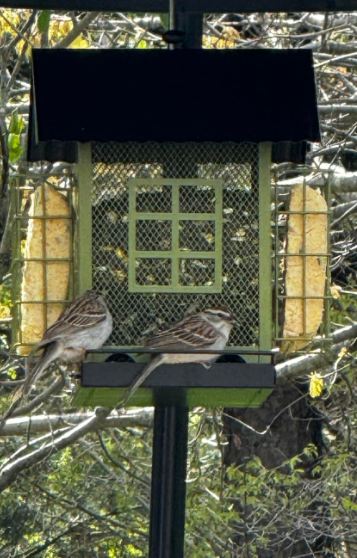
In residential courtyards in the Americas, common birds such as sparrows, cardinals, and bluebirds often face the problem of sleep deprivation - light pollution caused by urbanization, nocturnal predator activity, and extreme weather disturbances can all disrupt their sleep cycles. But these small creatures have evolved a sophisticated adaptation strategy, from physiological regulation to behavioral adjustment, cleverly resolving fatigue crises and maintaining a balance between survival and reproduction.
Physiologically speaking: Efficient sleep and energy optimization work together
The sleep patterns of birds are already significantly different from those of mammals, and this specificity has become their innate advantage in coping with sleep deprivation. For smaller birds in the courtyard, "single hemisphere slow wave sleep" is the most essential physiological weapon - they can put half of their brain into a deep sleep state, while the other half remains alert and monitors threats in the surrounding environment. This "half dream, half awake" mode is frequently activated during sleep deprivation. For example, when sparrows experience nighttime light pollution interference and stay on tree branches in the courtyard during the day, they will alternately close their left and right eyes, allowing their brains on both sides to rest alternately. This not only fills the sleep gap but also prevents them from being exposed to the vision of predators such as cats and eagles due to complete sleep.
The precise regulation of energy metabolism further enhances the ability to resist fatigue. Lack of sleep can accelerate energy expenditure, and yard birds respond in two ways: one is to improve food conversion efficiency. They will prioritize pecking at high-energy foods in the yard, such as sunflower seeds, berries, insect larvae, etc. The fat and protein in these foods can quickly supply energy to the body, reducing energy waste; The second is to reduce the basal metabolic rate. During daytime rest, they curl up their bodies into a spherical shape, tighten their feathers to reduce heat loss, and slow down their heartbeat and breathing rate, allowing their bodies to enter an "energy-saving mode" and use the saved energy to compensate for the depletion caused by insufficient sleep.
Behavioral Adjustment: Fragmented Rest and Activity Rhythm Reconstruction
When nighttime sleep is severely disrupted, courtyard birds in the Americas will completely reconstruct their activity rhythms and replace complete nighttime sleep with "fragmented rest". In hidden corners of the courtyard, such as deep shrubs, crevices under eaves, and hanging bird nests, they will engage in "micro sleep" - each rest time ranging from tens of seconds to minutes, cumulatively meeting their daily basic sleep needs. The main sparrow is a typical representative. During the season of guarding their territory, male birds often lack sleep at night to drive away competitors. During the day, they frequently take short breaks on the branches next to the feeders. Once they discover food or threats, they can instantly switch from a resting state to an active state.
The synergy of social behavior can also help birds combat fatigue. Many courtyard birds have social habits, such as sparrows, starlings, etc., and they form groups of varying numbers for activities. In a group, birds implement a "rotating vigilance system": some individuals remain awake and observe their surroundings, while others can enter a brief sleep with peace of mind. This division of labor and cooperation model allows each bird in the group to have a chance to rest, especially in cases of sleep deprivation, effectively reducing the risk of predation caused by fatigue. In addition, group habitat can reduce energy consumption and indirectly alleviate physical stress caused by fatigue through "cluster insulation".
We recommend our Flowafoli bird feeder!