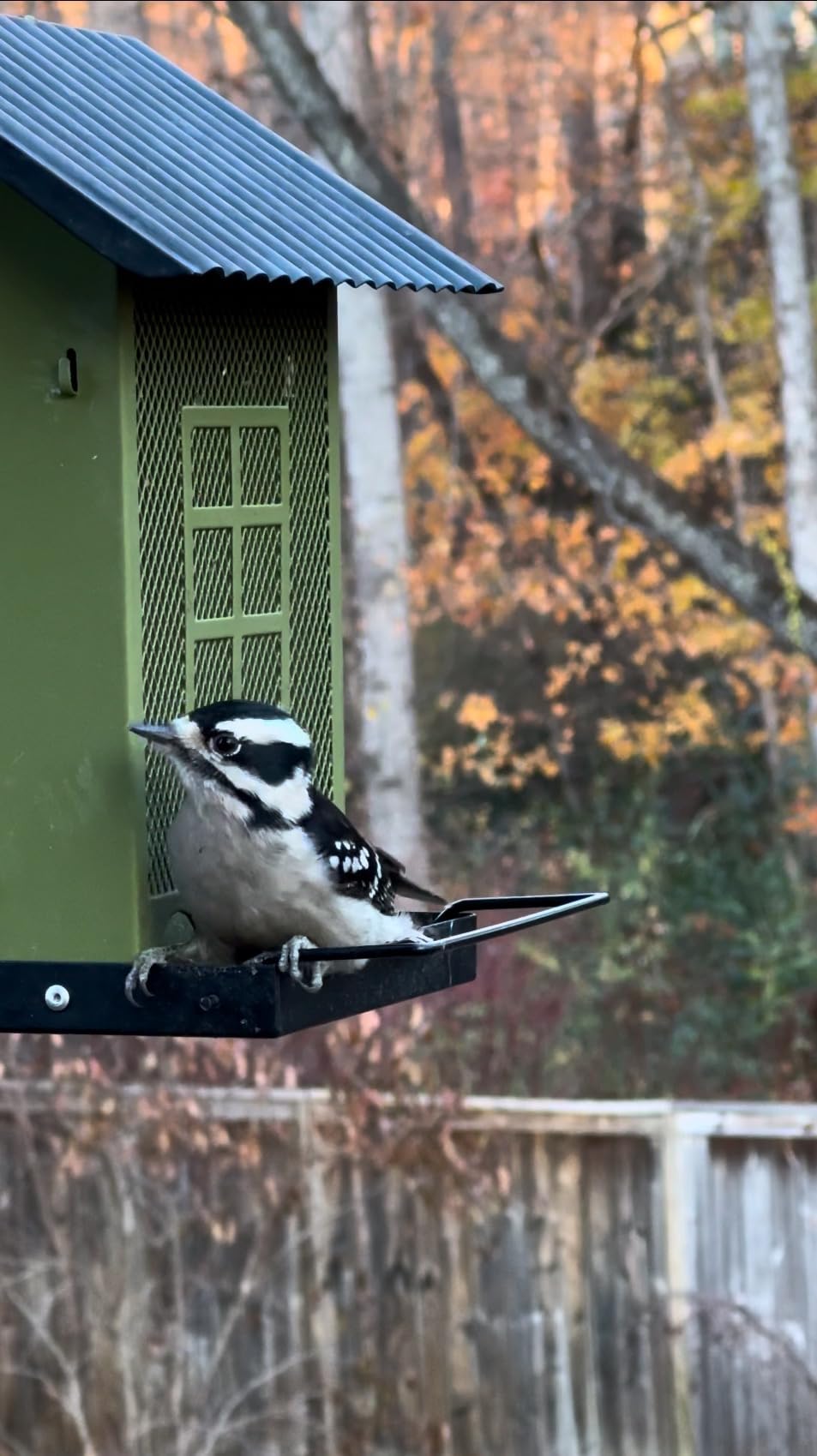
In the ecosystems of American courtyards, the survival activities of birds are highly dependent on precise perception of time - from foraging at sunrise to returning home at sunset, from building nests during breeding season to setting off during migration season, every behavior needs to be synchronized with natural rhythms. However, climate fluctuations, human activity disturbances, or individual judgment errors often lead to "improper time management", such as missing the optimal foraging window, delaying breeding cycles, or misjudging migration opportunities. Faced with such deviations, different bird species have evolved highly adaptive "compensation operations", which minimize the survival risks caused by time errors through behavioral adjustments, physiological adjustments, and even community collaboration.
1、 Foraging time deviation: strategic adjustment from "off peak" to "efficient"
The most common time deviation in American courtyards is concentrated in foraging behavior. Many bird species rely on fixed time periods of resources - for example, the American Robin is accustomed to catching earthworms when the ground is moist in the early morning, while the Northern Cardinal relies on sugar accumulation from midday berries. If delayed nest release is caused by rainfall or disrupted by human activities such as yard pruning, they will quickly activate compensation mechanisms.
Taking the main Cardinals as an example, if they miss the optimal feeding period for midday berries (when the berry water to sugar ratio is optimal), they will turn to two compensation methods: one is to extend the foraging time in the evening and take advantage of the weak light environment before dusk to preferentially feed on high sugar berries that have not been consumed by other birds; The second is to adjust the type of food, shifting from berries to insect larvae - at this time, the larvae are less active due to the decrease in temperature, making it easier to catch and compensate for the energy intake gap. If the Barn Swallow delays the timing of catching flying insects due to morning fog (flying insects are most active in the morning), it will expand the search range through the collaborative method of "cluster low altitude flight", while accelerating the flapping frequency (from 12 times per second to 15 times per second), in order to recover the missed time with higher hunting efficiency.
In addition, some birds also use "time memory correction" to optimize their subsequent behavior. For example, if a Blue Jay goes out of the nest too late on a certain day, resulting in insufficient pine cone collection, it will wake up 15-20 minutes earlier the next day and shorten the dwell time between each round trip to the nest and the foraging point. Compensation is achieved through "early start+efficient cycle".
2、 Reproductive cycle delay: emergency plan from "adjusting rhythm" to "resource substitution"
Reproduction is the most time sensitive behavior of birds, and every step from building nests, laying eggs to raising chicks needs to be matched with seasonal resources (such as insect outbreaks and plant fruiting periods). If the breeding start is delayed due to sudden weather such as cold wave and rainstorm, the American yard birds will adopt a multi-dimensional compensation strategy.
Carolina Wren is a typical 'rhythm adjuster'. If the spring cold wave causes a 1-2 week delay in nest building time, they will shorten the nest material collection cycle - originally collecting hay and feathers 10-12 times a day, the compensation stage will be increased to 15-18 times, and the structure of the nest will be simplified (reducing the number of outer branches), compressing the total nest building time from 7-10 days to 5-6 days. In addition, they will adjust the hatching rhythm after spawning in advance: the male birds originally only assisted the female birds in hatching for 2-3 hours every day, and the compensation phase will be extended to 4-5 hours, so that the female birds have more time to go out to look for food and ensure that there is sufficient food supply after the chicks break their shells.
The Northern Cardinals, on the other hand, excel at "resource substitution" compensation. If the delayed breeding season leads to a decrease in the number of larvae (which were originally the main food for chicks), the female bird will quickly turn to mature berries, seeds, or even feeder food in human yards (such as sunflower seeds) to make up for the lack of natural food by changing the chick's diet. At the same time, they will shorten the brooding period - the chicks originally needed to stay in the nest for 10-12 days, and during the compensation phase, they will be guided to leave the nest 1-2 days in advance, allowing the chicks to learn to forage independently earlier and reducing the feeding pressure on their parents.
For birds like the mourning dove that reproduce multiple times, the compensation strategy after time delay is more flexible. If the first nest fails to reproduce due to time deviation (such as eggs being destroyed by natural enemies or chicks dying), they will skip the rest period and build a new nest to lay eggs within 1-2 weeks. They will use the longer breeding window in summer to increase the probability of breeding in the second or third nest, and compensate for the loss of a single failure by "increasing the number of breeding times".
3、 Misjudgment of migration timing: collaborative compensation from "short distance correction" to "group navigation"
The risk of timing control errors in migratory birds is higher. If the departure time is misjudged (too early or too late), they may face fatal threats such as food shortages and severe weather along the way. The common migratory birds in American courtyards, such as Oriole and Indigo Bunting, have evolved a collaborative compensation mechanism for migration time deviations.
If the indigo bunting departs early due to a sudden drop in autumn temperatures (resulting in insect resources not reaching their peak on the way), they will adopt a "short stop+quick adjustment" strategy: shorten the stopping time at the originally planned mid way stopping points (such as courtyard shrubs, forest edges) (from 2-3 days to 1 day), and increase the daytime flying speed (from 20 kilometers per hour to 25 kilometers per hour), arriving early at the southern wintering ground - where the plant fruits mature later and can make up for the problem of insufficient food on the way. On the contrary, if their migration is delayed due to warm autumn, they will abandon some traditional resting points and fly directly to the wintering areas further south, avoiding the early arrival of cold waves in the north. At the same time, they will reduce energy consumption through "nighttime cluster flight" (using group airflow to reduce flight resistance) and shorten the total migration time.
Baltimore Oriole relies on "group navigation correction" to cope with time misjudgments. If some individuals fail to keep up with the large force due to feeding delay, they will establish contact with the nearby oriole group by singing. After joining the new migration group, they will adjust their own flight rhythm (such as accelerating or slowing down the speed) to ensure that they reach the wintering place synchronously with the new group. In addition, delayed departure of orioles will prioritize the "low altitude migration route" - avoiding low temperatures and strong winds in high-altitude areas to reduce migration risks, while utilizing the richer berry resources in low altitude areas to supplement energy, achieving a dual compensation of "route optimization+resource supplementation".
4、 The underlying logic of time compensation: the synergy between physiological regulation and environmental adaptation
The time compensation operation of birds is not simply a behavioral adjustment, but a deep synergy between physiological mechanisms and environmental perception. Physiologically speaking, when birds perceive time deviations, their bodies activate hormone regulation: for example, when foraging is delayed, cortisol levels increase, stimulating appetite and activity levels; When reproduction is delayed, the secretion of gonadotropin-releasing hormone (GnRH) increases, accelerating the process of egg laying and hatching; During migration misjudgment, thyroid hormone levels are adjusted to increase metabolic rate and support longer flight times.
From the perspective of environmental adaptation, birds in American courtyards have long coexisted with human activities and have learned to utilize the "time buffer resources" created by humans, such as relying on courtyard feeders to supplement missed foraging time, quickly building nests through building gaps (such as eaves, wall caves) to shorten breeding cycles, and even using city lighting to judge circadian rhythms and correct time perception biases caused by cloud cover. This dual strategy of "natural adaptation+artificial resource utilization" allows them to have more compensation options when time control errors occur.
In short, the time compensation behavior of courtyard birds in the Americas is a survival wisdom formed during the evolutionary process. From individual behavior adjustment to group collaboration, from physiological regulation to environmental resource utilization, each compensation strategy accurately corresponds to the survival challenges brought by time deviation, and also demonstrates their strong adaptability and resilience in interacting with natural rhythms.
We recommend our Flowafoli bird feeder!