1、 Core inducement: sleep disturbance dominated by artificial light
The proliferation of artificial light sources brought about by urbanization is the primary driving force behind the disrupted sleep patterns of courtyard birds. A global study covering over 500 bird species shows that light damage prolongs the average daily activity time of birds by 50 minutes - chirping 20 minutes earlier in the morning and stopping activity 30 minutes later at night. For common birds in American courtyards, this "forced overtime" breaks the natural rhythm based on sunrise and sunset, forming the core contradiction of "irregular sleep".
2、 Species differentiation response: Sensitivity determines adaptation pathways
The mainstream birds in American courtyards, such as the American mockingbird, North American Cardinals, and Crested Tits, have evolved three typical coping strategies due to differences in physiological characteristics:
1. Highly sensitive species: actively extending the activity window
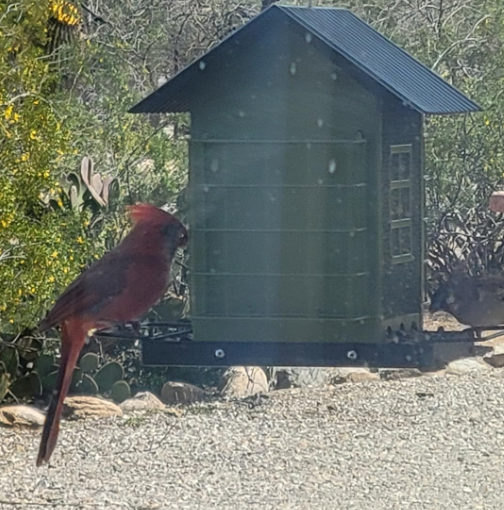
Represented by the American mockingbird, North American Cardinals, and Northern Mockingbird, these birds have relatively large eyes and are extremely sensitive to changes in light. In courtyards with severe light damage, American mockingbirds may even start chirping 2 hours before sunrise, forcibly matching their activity time with the light period by "starting work early and ending work later". This adjustment may seem to increase foraging opportunities (such as capturing insects in morning dew), but it also carries hidden risks - fragmented sleep may interfere with melatonin secretion and affect the reproductive hormone cycle.
2. Low sensitivity species: Adhere to the core rhythm anchor point
Birds with smaller eyes, such as the tufted tit and the white breasted sparrow, or species that inhabit tree holes (such as the Carolina tit), are significantly less affected by light damage. They maintain rhythm through two mechanisms:
Physical isolation: using tree cave walls to block external light and maintain a dark environment inside the nest;
Resilience of biological clock: The melatonin secreted by the pineal gland is less affected by light interference and can still regulate activities based on the "internal clock" (such as starting foraging at 4 am without being affected by streetlights).
3. Adaptive species: flexible switching of behavioral patterns
Birds such as sparrows that coexist with humans exhibit strong plasticity. Research shows that when faced with two conflicting lighting conditions (such as courtyard lights on for 8 hours and natural light on for 12 hours), the leading sparrow will choose the "earliest lighting time" as the starting point for the activity, integrating the two rhythms into a new sleep cycle. This' early selection strategy 'allows it to utilize artificial light to prolong foraging while avoiding resource competition with other birds.
We recommend our Flowafoli bird feeder!