As an important habitat, foraging, and breeding ground for birds, the American courtyard has recently experienced a sustained high stock of birds, which has brought a series of problems to the birds themselves, such as intensified food competition, tight habitat space, and rising threats from natural enemies. Faced with this problem, different types of courtyard birds actively adapt through behavior adjustment, resource allocation optimization, community collaboration, and other means, forming a set of coping strategies that are suitable for the courtyard environment. This not only ensures their own survival, but also to some extent alleviates the pressure brought by excessive stock. Specifically, it can be divided into the following aspects:
1、 Coping with food resource competition: optimizing foraging strategies and reducing internal conflicts
The sustained high inventory has led to limited food resources in the courtyard (such as seeds in feeders, fruits of courtyard vegetation, insects, etc.) becoming scarce. Birds mainly respond through three ways: "preference differentiation", "temporal misalignment", and "efficient storage" to avoid excessive competition.
On the one hand, birds adjust their foraging preferences based on their own diet and avoid competitive hotspots. For example, "dominant birds" such as blue jays and brown cowbirds prefer common seeds such as corn and sunflower seeds, and often quickly clear their feeders, squeezing the food space of small songbirds; Small birds such as tits and sparrows actively turn to the red flower seeds and Niger seeds that these dominant birds do not like, and obtain exclusive food resources through differentiated food preferences, reducing direct competition. At the same time, some omnivorous birds (such as migratory thrushes) will expand their foraging range, shifting from the core area of the courtyard to the grasslands and shrubs on the edges, searching for alternative foods such as insects and berries to avoid crowding and competing for food stocks in the feeder.
On the other hand, birds will allocate their foraging time reasonably through "staggered timing". For example, tits and sparrows form winter foraging groups in autumn, with higher ranking birds prioritizing efficient foraging during the day, while lower ranking birds choose to eat during non peak hours such as early morning and evening, ensuring food access for each member of the group and reducing competition pressure during the same time period. In addition, birds such as mountain sparrows also initiate the "dispersed grain storage" strategy. When food is relatively abundant in autumn, excess seeds are scattered and stored in the bark crevices, grass, and soil of the courtyard to form "reserve grain" to cope with the dilemma of high inventory and food scarcity in winter. This grain storage behavior can help them ensure their own energy supply without competing with other birds.
2、 Coping with habitat space constraints: utilizing the environment in layers and optimizing nesting strategies
The continuous increase in stock has led to a shortage of habitat and nesting spaces (such as tree holes, shrubs, eaves, nest boxes, etc.) in the courtyard. Birds use methods such as "spatial stratification," "nest innovation," and "territorial adjustment" to maximize the use of limited space and reduce habitat conflicts.
Spatial stratification is the most common coping strategy: large birds (such as mourning doves and wild geese) prefer to occupy open areas in courtyards and the top of tall trees as habitats and activity areas; Medium sized birds (such as blue crows and starlings) choose the middle layer of trees or the top of shrubs; Small birds such as sparrows and wrens utilize the lower layers of trees, low shrubs, grass, and even gaps and corners of courtyards to form a vertically layered habitat pattern, avoiding spatial competition among birds of different body sizes. For example, the coexistence of bluebirds and purple swallows in the same courtyard is mainly due to their different nesting spaces - bluebirds prefer tree holes and nest boxes, while purple swallows choose to build their nests under eaves and on beams, reducing competition through spatial separation.
In terms of nest building strategy, birds will adjust the nest building time and location according to the stock situation. Some birds will build nests in advance to seize high-quality nesting resources (such as natural tree holes and artificial nest boxes); Birds that cannot seize high-quality resources will innovate their nesting methods by using discarded items in the courtyard (such as old flower pots, plastic boxes, and hay stacks) to build nests, reducing the difficulty of building nests. At the same time, some bird species may reduce their territorial defense range to avoid excessive energy consumption due to territorial competition. For example, in urbanized environments, the Biwick wren may expand its habitat range and form limited spatial overlap with the Pacific wren. Through differentiated resource utilization, the pressure on habitat space can be alleviated. However, this adjustment may also lead to a decrease in the number of some vulnerable species, such as the Pacific wren. In addition, for birds such as wild geese that inhabit clusters, when the courtyard space is too crowded, some individuals will voluntarily leave and seek new habitats in nearby parks and water bodies to avoid the spatial pressure and fecal accumulation caused by the cluster.
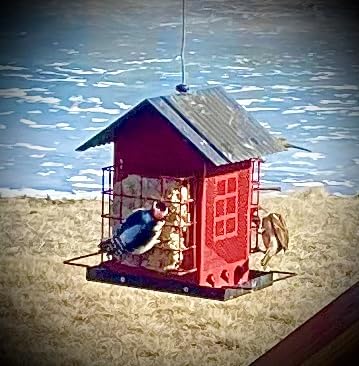
We recommend our Flowafoli bird feeder!