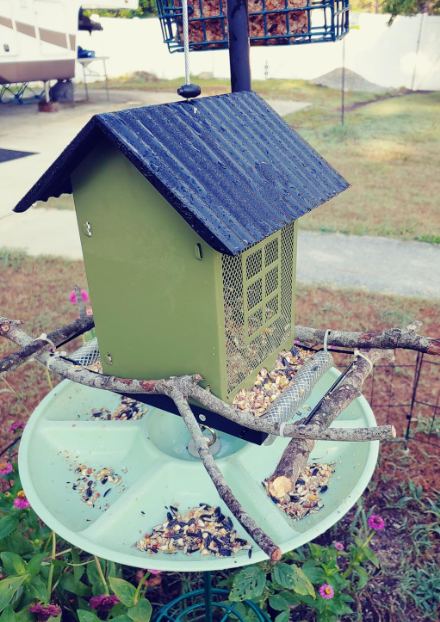
The courtyards of the American continent are the "urban oases" of numerous birds, with the crimson feathers of the northern main Cardinals, the crisp singing of thrushes, and the agile figures of hummingbirds, making these little creatures close neighbors of human life. However, in recent years, special events such as local outbreaks of avian influenza, frequent extreme weather events, and temporary human disturbances have emerged one after another. These seemingly fragile birds have evolved a flexible set of "emergency strategies" to maintain their survival balance amidst changes.
1、 Disease Assault: Finding a Balance between Gathering and Evacuation
Since the continued spread of highly pathogenic avian influenza (HPAI) in 2022, nearly 11000 wild birds in the United States have been detected with traces of infection. Although songbirds commonly found in courtyards are less susceptible to infection compared to waterfowl and raptors, the "bird social circle" formed by feeders and water basins still poses a risk of transmission. Faced with this implicit threat, birds exhibit the wisdom of "actively adjusting their behavioral patterns" in response.
Firstly, the strengthening of the "dispersed feeding" strategy. The white throated sparrow, which is accustomed to competing for sunflower seeds in clusters, will actively avoid the peak feeding period. Some individuals even give up fixed feeders and instead search for scattered seeds in the gaps of the lawn. Research has observed that when diseased birds with fluffy feathers and cloudy eyes appear in a courtyard, the main population of Cardinals and Sparrows in that area will reduce their feeder visit frequency by 80% within 24 hours and instead rely on natural food sources. Secondly, there is the activation of the "cleaning instinct". Many birds will comb their feathers in shallow waters and clean their beaks with saliva after feeding, and the frequency of this behavior will increase by more than three times during the active period of avian influenza.
It is worth noting that birds also transmit risks through "population warnings". When a bird detects an abnormal individual, it will emit a short and sharp warning cry, which covers a range of 50 meters. The same species that receives the signal will immediately stop activity and observe the environment. This group collaboration effectively reduces the probability of disease transmission.
2、 Extreme weather: dual protection of migration and hoarding
In recent years, the weather in the American continent has become more "wayward" - sudden cold waves in the spring migration period, summer rainstorm destroyed nests, and winter snowstorms buried food. These temporary extreme events tested the adaptability of birds. For migratory birds, "route fine-tuning" and "timing control" become key survival skills.
Ruby throated hummingbirds need to fly over the Gulf of Mexico from Central America every year to reach the eastern United States. If they encounter a hurricane warning, they will replenish nectar in their yards along the Gulf Coast 3-5 days in advance, increase their weight by 20% to store energy, and wait for the storm to pass before starting long-distance flights. The thrush will adjust its migration rhythm according to temperature changes. When a sudden cold wave of -15 ℃ occurs in the north, the population that had already started migrating north will temporarily turn back and gather in the holly bushes in the southern courtyard, relying on berries to survive the cold wave period.
For resident birds, "food hoarding" is the core strategy to cope with snowstorm lockdowns. The acorn woodpecker in California has demonstrated amazing planning abilities. A pair of woodpeckers can carve hundreds of small holes in the gaps between the wooden boards of human houses, storing one acorn in each hole, and can stockpile over 300 kilograms of food within five years. This "decentralized storage" method can not only cope with food shortages, but also avoid single storage points being destroyed by competitors such as squirrels. When the blizzard lasts for more than a week, the main Cardinals will break the habit of "territory monopoly" and share feeder resources with other birds, improving survival rates through group heating and shared feeding.
3、 Human disturbance: adaptation to noise and spatial compression
With the development of tourism and urban transformation, many courtyards in the Americas have experienced temporary construction and a surge in car traffic, making noise and space compression new challenges for survival. Birds resolve threats through sensory adjustment and behavioral avoidance.
The yellow warblers in the Galapagos Islands have evolved a communication method called "volume enhancement" to cope with car noise - individuals near the road have a vocal intensity 15 decibels higher than their counterparts in quiet areas, in order to cover up environmental noise and ensure that signals for courtship and territorial declaration can be received by their peers. When temporary construction sheds appear in the courtyard, North American mockingbirds will move their nests from low shrubs to tree branches over 10 meters high, while shortening the nest construction time from 7 days to 4 days, reducing exposure risks.
For birds migrating at night, light pollution in urban courtyards is a deadly threat. Species such as the diphtheria sparrow will adjust their flight altitude from low altitude to high altitude above 500 meters to avoid interference from courtyard lights; If they are accidentally attracted by light, they will quickly flap their wings to create airflow and adjust their direction to escape the strong light area. After some courtyard owners voluntarily turned off the night lights, the collision accident rate of surrounding birds decreased by 60%, proving that the behavioral adjustment of birds and human protection measures can form a positive interaction.
We recommend our Flowafoli bird feeder!