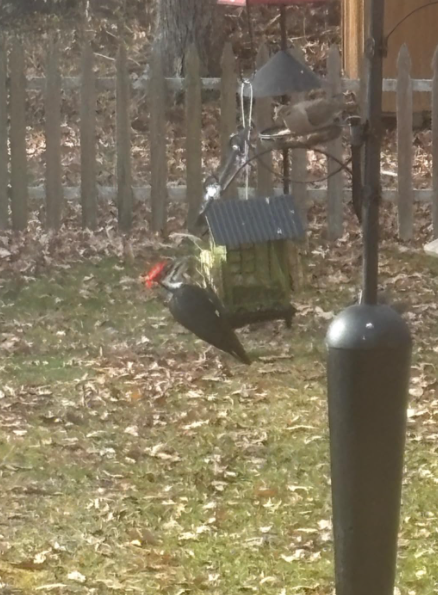
Although birds in American courtyards do not have a clear "time plan", they have strong adaptability to various recent time adjustments (such as changes in light duration, human activity time, climate related seasonal rhythm shifts, etc.). The core is to adjust their own behavioral rhythms, optimize survival strategies, quickly adapt to changes, and ensure the normal development of core needs such as foraging, reproduction, and habitat. The specific response methods are based on different time adjustment scenarios, presenting species specific flexible strategies.
1、 Adjustment of Light Duration: Adapting to Foraging and Habitat Rhythms
The recent fluctuations in light duration, such as changes in daylight hours caused by seasonal changes and shifts in light periods due to extreme weather, are the most easily perceived time adjustments for birds and the most direct scenarios they respond to. Common birds in American courtyards, such as the main Cardinals, Blue Jays, and Cardinals, mainly adjust their peak activity periods, adapt to changes in light conditions, and balance energy acquisition and safety protection.
The foraging behavior of most yard birds presents a "bimodal pattern", that is, two active peaks in the morning and evening, which can be flexibly adjusted with the light duration. When the daytime is shortened (such as during the transition period between autumn and winter), birds will advance their early morning foraging time and delay their evening foraging time, compress their lunch break time, and ensure energy replenishment within limited light - after all, insufficient light will increase the difficulty of foraging and the risk of encountering natural enemies, especially small birds (such as tits and goldfinches), which will use limited light to efficiently forage while reducing nighttime energy consumption. When the daytime is prolonged, they will appropriately disperse their foraging activities, avoid going out during the high temperature period at noon, and allocate some foraging behavior to the afternoon, which not only reduces the risk of heat stress but also fully utilizes sufficient light to expand their foraging range.
In addition, changes in light duration can also affect the habitat and vocal rhythms of birds. During the period of early light, the morning chirping of birds will correspondingly advance. For example, the thrush often starts chirping before sunrise, while sparrows will join the chirping ranks shortly after sunrise; If the lighting is delayed, the morning chirping time will also be delayed synchronously, and the frequency of chirping will be adjusted according to the intensity of the lighting - chirping will be more frequent on clear days with sufficient lighting, and significantly reduced on rainy days with insufficient lighting. At the same time, the habitat time will be correspondingly extended to reduce unnecessary energy consumption.
2、 Responding to human activity time adjustments: Avoiding interference and flexibly utilizing resources
American courtyard birds have long coexisted with humans and are highly adaptable to adjustments in human activity time, such as changes in courtyard maintenance time, feeding time, and nighttime lighting duration. The core strategy is to "avoid interference+leverage resources" and balance survival safety and energy acquisition.
Birds will actively adjust their activity areas and time periods in response to human interference such as courtyard maintenance and outdoor activities. For example, if humans change the pruning and cleaning time of the courtyard from early morning to afternoon, blue crows, mourning doves, and other animals that were originally active in the early morning will temporarily move to the shrubs and trees on the edge of the courtyard to inhabit, and then return to forage after the artificial activity is over; If the nighttime lighting time is prolonged (such as keeping the courtyard lights on all night), nocturnal birds (such as owls) will adjust their hunting time appropriately, avoid areas directly under the light, and use the shadows at the edges of the light to capture prey. Daytime birds, on the other hand, will delay their bedtime due to light interference and wake up early in the morning to avoid increased energy consumption caused by light stimulation at night.
For the adjustment of feeding time for humans, the adaptation of courtyard birds is more obvious. Many American families regularly place feeders in their yards, and birds gradually form a fixed foraging memory. If the feeding time is advanced or delayed, they will adapt by waiting in advance and adjusting their daily foraging routes - such as the main Cardinals, house sparrows, etc. They will concentrate near the feeders before and after the feeding time. If the feeding time changes, they will stay in the original time slot for a short time, then expand their foraging range, and increase the frequency of daily patrols of the feeders until a new foraging rhythm is formed. In addition, the stability of human feeding time can also affect the collective behavior of birds. If the feeding time is fixed, birds will form a regular group foraging pattern; If time changes frequently, the cluster size will shrink and foraging behavior will become more dispersed.
We recommend our Flowafoli bird feeder!