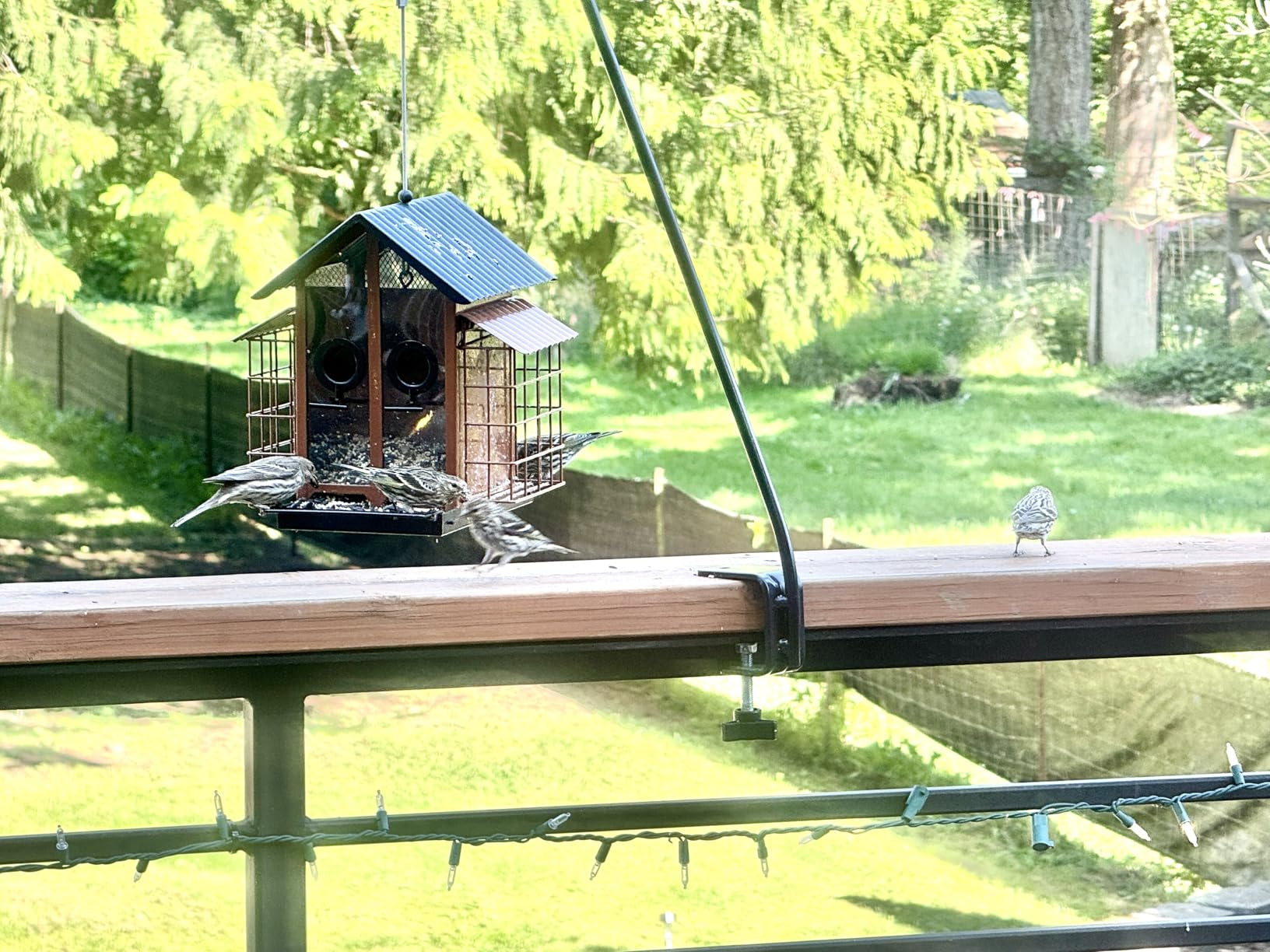
As a transitional zone between cities and nature, American courtyards not only provide food and shelter for birds, but also hide many complex challenges such as resource competition, environmental interference, and human activity conflicts. From invasive species to urban noise disturbance, from food shortages to habitat destruction, different bird species have evolved unique coping strategies, which are both the result of natural selection and reflect the complex symbiotic relationship between humans and birds.
1、 Resource Competition: Survival Game under the Pressure of Invasive Species
One of the most severe ecological challenges in American courtyards currently comes from the invasion of European starlings (commonly known as "baybears"). This bird species, introduced to the United States in the 19th century, has multiplied to 200 million and has become a major competitor to native birds due to its strong adaptability and aggressiveness. Faced with this threat, local birds have formed a multi-level response system.
For cave nesting birds such as woodpeckers and bluebirds, the habit of starlings occupying their nests directly threatens their reproductive safety. For this reason, woodpeckers have evolved more efficient nesting abilities - they start digging tree holes 2-3 weeks before the breeding season, and the diameter of the holes is precisely controlled at 5-7 centimeters, which is just suitable for their own entry but can block slightly larger starlings. Some populations also choose to build nests on wooden structures of human houses, using human activities to indirectly drive away starlings. Although this strategy of "taking advantage of the situation to resist enemies" has caused difficulties for humans, it has effectively improved the success rate of reproduction.
In terms of food competition, omnivorous American mockingbirds exhibit flexible foraging and adjustment abilities. When flocks of starlings plunder orchards and vegetable fields, mockingbirds will shift their foraging time from the daytime peak to early morning and dusk, avoiding competing peaks; At the same time, expand the range of recipes, shifting from focusing on berries and insects to digging earthworms and seeds from lawns, and utilizing their long beaks to explore new food sources. Species such as the Hispaniola Amazon parrot enhance their competitiveness through group activities. A foraging group of dozens of parrots can effectively drive away small flocks of starlings and protect food resources such as bananas and corn in the yard.
2、 Environmental interference: behavioral adaptation under urban pressure
The noise, light, and pedestrian disturbances brought about by urbanization are profoundly changing the living habits of courtyard birds in the Americas. Research has found that species such as the Jia Island Yellow Warbler and Song Belt Bunting, which are located near busy roads, have an increased aggression rate of over 30% compared to their wild counterparts. This behavioral adjustment has become an important means for them to cope with environmental pressure.
Light interference affects the reproductive rhythm of birds. The dark eyed lanterns, whose breeding season was originally determined based on the duration of sunlight, started breeding 1-2 weeks earlier under the influence of courtyard lighting. They compensate for the risk of early reproduction by building more concealed nest sites - they build their nests deep in dense shrubs, less than 50 centimeters above the ground, using vegetation cover to avoid detection by predators, and reducing the impact of lighting on chick hatching.
We recommend our Flowafoli bird feeder!