In the courtyards of the American continent, from the main Cardinals chirping in the morning to the swallows shuttling in the evening, the activities of birds are always closely linked to the circadian rhythm. However, factors such as urbanization, threat from natural enemies, and reproductive demand often pose challenges to their sleep deprivation. Unlike humans, birds have highly adaptable sleep patterns and coping mechanisms, which not only ensure their survival but also demonstrate the intelligence of organisms in evolution.
1、 Sleep characteristics and causes of insufficient sleep of courtyard birds in the Americas
The sleep structure of birds is significantly different from that of mammals, and they generally adopt a "fragmented sleep" mode, which accumulates rest time through multiple short sleep periods (several minutes to tens of minutes each time), rather than a single long sleep. This model has already reserved flexibility to cope with environmental changes, but in specific scenarios of American courtyards, sleep deprivation still frequently occurs, mainly due to three factors:
Urbanization interference: Street lights and building lighting around courtyards can disrupt the light cycle rhythm of birds, leading to delayed sleep; Traffic noise and human activities frequently disrupt sleep, especially in birds that forage at night (such as owls).
Breeding period pressure: During the spring breeding season, male birds need to call early in the morning to declare their territory, while female birds need to frequently leave the nest to forage and raise chicks. The sleep duration of both birds may be reduced from the normal 6-8 hours to 3-4 hours. For example, American mockingbirds often experience fragmented sleep for several consecutive days during their breeding season.
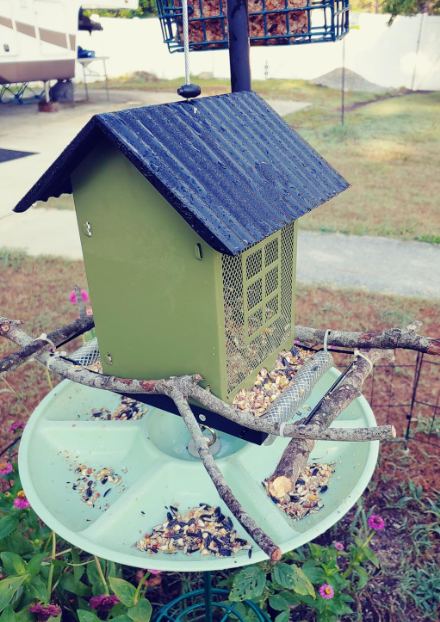
Natural enemies and competition: The presence of stray cats, snakes, and other natural enemies in the courtyard forces birds to remain vigilant during sleep, making it difficult for them to enter deep sleep; In addition, in order to compete for limited food resources (such as seeds in feeders), some birds need to wake up early to seize the opportunity and further compress their rest time.
2、 Physiological level: Efficient sleep and metabolic regulation
Faced with sleep deprivation, courtyard birds in the Americas first optimize their physiological mechanisms to reduce negative impacts, with core strategies focused on improving sleep quality and adjusting energy allocation
Deep sleep "concentration": Birds' sleep is divided into slow wave sleep (SWS) and rapid eye movement sleep (REM), among which slow wave sleep is closely related to body repair and energy recovery. When the total sleep duration is shortened, birds will increase the proportion of slow wave sleep. For example, when a sparrow lacks sleep, the proportion of slow wave sleep can increase from the normal 40% to 60%, which can be compensated for by "efficient sleep".
Metabolism and energy reserve: Some birds cope with energy expenditure caused by sleep deprivation by adjusting their metabolic rate. For example, when the main Cardinals lack sleep at night, they will lower their metabolic rate during a brief rest during the day (similar to a "light hibernation" state), reducing energy consumption by 15% -20%; At the same time, they will increase their foraging frequency during the day, store more fat, and reserve energy buffer for possible sleep interruptions at night.
3、 Behavioral level: flexible adjustment and risk avoidance
In addition to physiological adaptation, courtyard birds in the Americas also actively respond to sleep deprivation through behavioral changes. These strategies ensure both rest needs and survival safety:
Time sharing rest and "sleep replenishment" strategy: During daytime activities, birds will use safe areas in the environment (such as dense branches and under eaves) for brief sleep replenishment. For example, the pearl necked spotted dove often stays on the bushes in the courtyard for 10-20 minutes in the afternoon when there is sufficient sunlight, and recovers its energy through a brief sleep; During the breeding season, parent birds will alternate between leaving the nest to forage and incubating eggs. Each bird will quickly find a hidden place to catch up on sleep after leaving the nest, avoiding severe sleep loss caused by continuous incubation of eggs.
Habitat selection and vigilance balance: In order to reduce disturbance during sleep, birds will prioritize building nests or resting in areas far away from human activities and natural enemies. For example, in a courtyard where stray cats are present, North American Cardinals will build their nests at the top of trees that are higher than 3 meters, while keeping one eye half open during sleep (using a single hemisphere sleep mechanism), which can monitor danger and ensure partial brain rest. In this "half asleep and half awake" state, although the reaction speed of birds slightly decreases, they can still timely avoid attacks from predators.
Reduce non essential activities: When sleep deprivation occurs, birds will actively reduce non critical behaviors and focus on core tasks such as foraging and reproduction. For example, blue jays, who usually enjoy chasing and playing, will lower their range of activity and reduce competition and interaction with other birds when they lack sleep. They will spend more time resting and foraging to avoid energy waste.
4、 Ecological adaptation: anti-interference ability formed by long-term evolution
From an evolutionary perspective, the sleep adaptation strategies of courtyard birds in the Americas are the result of long-term interaction with the environment. As an artificial ecological environment, urbanized courtyards have broken the natural circadian rhythm, but birds have gradually developed strong anti-interference abilities through intergenerational behavioral patterns and physiological characteristics
Improved tolerance to light pollution: Birds that live in urban courtyards for a long time, such as swallows and barnacles, are significantly less sensitive to artificial light sources than their counterparts in forests. Research has found that the secretion of melatonin (a key hormone regulating sleep) in urban bird populations is less affected by light, and even under streetlight illumination, it can maintain a relatively normal sleep rhythm and reduce sleep delay.
Community collaboration to address risks: Some social bird species, such as the purple winged starling, may collectively cope with sleep deprivation through group dwelling. They gather on the big trees in the courtyard at night, forming a flock of hundreds of birds, reducing individual vigilance pressure through "collective vigilance" - each bird only needs to remain vigilant for a short period of time, and can sleep peacefully for the rest of the time. The larger the size of the group, the higher the quality of individual sleep. This social behavior not only reduces the threat of predators, but also provides more rest opportunities for individuals who lack sleep.
5、 Challenge and Inspiration: The Impact of Human Activities on Bird Sleep
Although courtyard birds in the Americas have various strategies to cope with sleep deprivation, long-term sleep disturbances still pose a potential threat to their survival. Studies have shown that birds with long-term sleep deprivation have a 10% -15% decrease in their immune system, reduced reproductive success rates (such as a decrease in chick survival rates), and even affect migration behavior. This also reminds us that when creating a courtyard environment, we can provide more friendly resting conditions for birds by reducing nighttime lighting and setting up safe resting areas for birds (such as planting dense shrubs and avoiding the use of poison bait).
The sleep adaptation strategies of courtyard birds in the Americas are a microcosm of the wisdom of living organisms in changing environments. From efficient sleep at the physiological level, to flexible adjustments at the behavioral level, and to community collaboration at the ecological level, these strategies not only help them cope with the challenges of sleep deprivation, but also demonstrate the strong adaptability of life to the environment. A deeper understanding of these mechanisms not only enables us to better protect birds in cities, but also provides important references for studying the evolution of animal sleep.
We recommend our Flowafoli bird feeder!