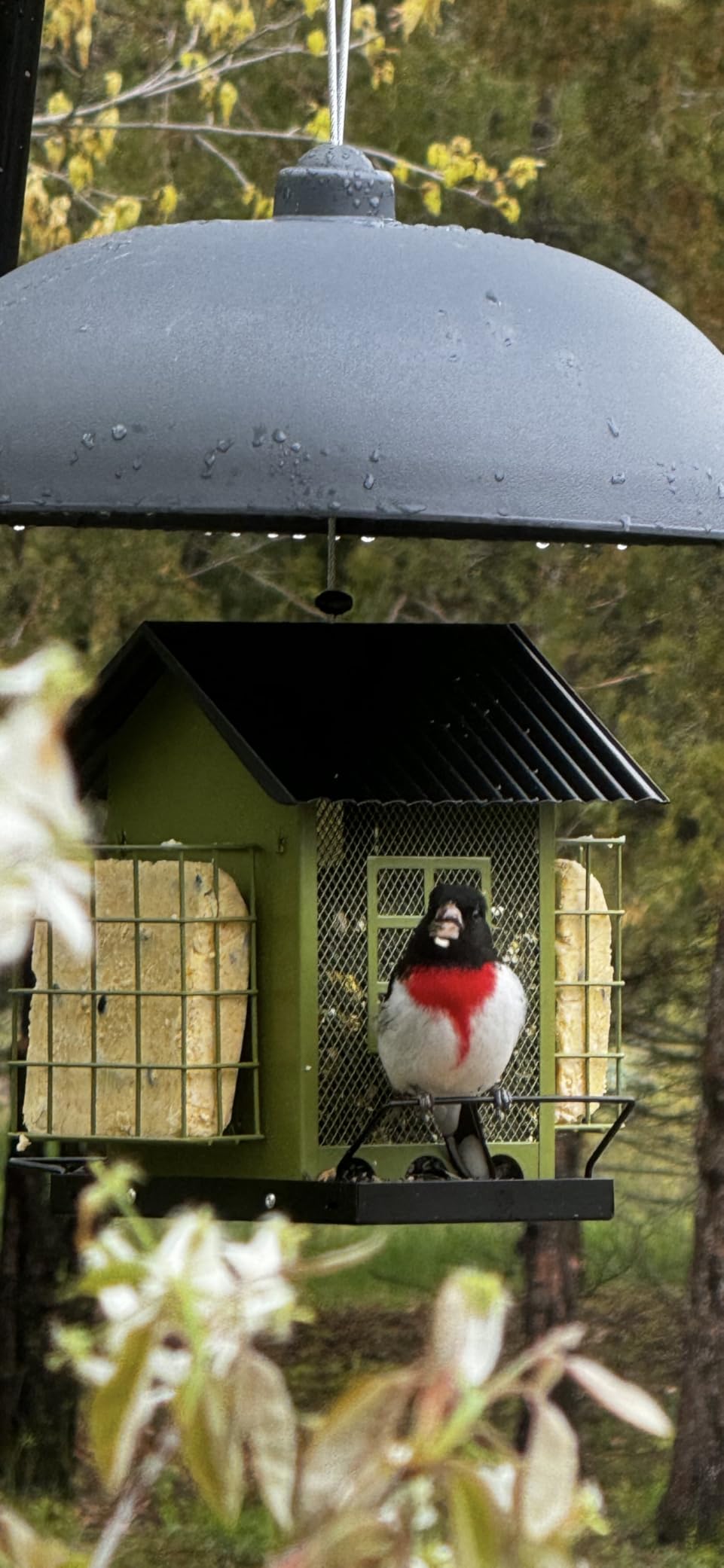
In the ecosystems of American courtyards, birds often face a series of "slow processes" such as foraging, reproduction, molting, etc. These processes often require sustained investment of hours to months and often involve time overlap or resource conflicts. To balance multiple demands, different bird species have evolved precise behavioral scheduling mechanisms, physiological adaptation strategies, and environmental utilization intelligence, ensuring the optimal solution between efficiency and risk.
1、 Conflict and Prioritization of Core Slow Processes
The typical slow processes faced by courtyard birds in the Americas include ground foraging (2-4 hours/day), nest material collection and building (lasting 5-12 days), chick rearing (15-25 days), and seasonal molting (6-8 weeks). The overlap of these processes can lead to a significant increase in energy consumption, for example, during the brooding period, parent birds need to simultaneously balance "frequent back and forth foraging" and "nest area vigilance," while feather renewal during molting period can reduce flight efficiency and further increase foraging difficulty.
In the face of conflicts, birds will dynamically adjust their priorities to respond:
Breeding priority principle: Birds during the breeding season (spring and summer) will compress their molting progress, such as the North American Cardinalis, which will delay the replacement of non critical feathers and prioritize energy investment in building nests and raising chicks;
Staggered time periods: When storing pine cones in autumn (which takes several weeks), the star crow (Nucifraga columbiana) divides its daily activities into three periods: "morning foraging - afternoon storage - evening vigilance" to avoid overlapping with the foraging peaks of other birds;
Resource reserve: Thryothorus ludovicianus starts hoarding nest materials 1-2 weeks before reproduction, breaking down the nesting process into two stages: "material collection" and "assembly" to reduce time pressure during the brooding period.
2、 Behavioral Strategy: Process Decomposition and Collaborative Optimization
American courtyard birds excel at breaking down complex slow processes into sub tasks that can be parallelized or interspersed, and improving efficiency through behavioral collaboration:
1. Fragmented synergy between foraging and chick rearing
During the brooding period, parent birds (such as American mockingbirds) adopt a "short-term high-frequency" foraging mode: a single foraging trip lasts only 5-8 minutes, and after returning to the nest to feed, the nest area is immediately cleared (taking 2-3 minutes), and then set off again. This' fragmentation operation 'ensures that the chicks receive food every 30 minutes while avoiding the risk of nest predation caused by prolonged absence (such as attacks from squirrels and snakes).
At the same time, parent birds will optimize their foraging routes through "environmental memory": mark 3-5 fixed foraging points in the courtyard (such as lawn insect holes, shrubs and berry bushes), patrol in a fixed order every time they go out, reduce search time - this strategy can increase daily foraging efficiency by 40% and effectively cope with the slow process of "frequent feeding".
2. Energy allocation and risk avoidance during molting period
Feather shedding is one of the most energy intensive slow processes in birds, during which feather shedding can lead to a 30% -50% decrease in flight ability. To address this dilemma, courtyard birds in the Americas have evolved two strategies:
Progressive molting: The House Vermilion (Haemorhous mexicanus) adopts a "symmetrical replacement of feathers one by one" approach, with only 1-2 feathers shed at a time, ensuring that the wings maintain their basic flight structure and can still forage normally during molting;
Environmental selection and behavioral adjustment: Blue jays (Cyanochita cristata) during molting period will reduce long-distance flight and instead move between the middle branches of courtyard trees - which is convenient for catching insects and can use branches and leaves to shield and avoid attacks from raptors (such as peregrine falcons), balancing "molting needs" and "survival risks".
3、 Physiological and environmental adaptation: providing support for slow processes
1. Efficient energy supply of physiological mechanisms
Faced with the energy demands of multiple slow processes, the physiological system of birds will initiate targeted adjustments:
Dynamic regulation of metabolic rate: During the breeding season, parent birds will increase their basal metabolic rate by 15% -20% and quickly obtain energy through "efficient digestion" (reducing food retention time to 1.5 hours); During the molting period, the activity metabolic rate will be reduced, and more energy will be used for feather protein synthesis;
Fat reserve strategy: Birds that molt in autumn (such as the dark eyed bunting) will increase their fat intake 1-2 weeks before molting, increasing the proportion of body fat from 5% to 12%, providing an "energy buffer" for the subsequent 6-8 weeks of molting process.
2. Simplify the process by utilizing the courtyard environment
The particularity of human courtyards provides convenience for birds to cope with slow processes, and birds will actively use these artificial environments to optimize their behavior:
Artificial resource utilization of nest building materials: Hirundo rustica collects human waste (such as cotton thread and scraps) from the yard to replace natural nest materials, reducing the nest building time from 12 days to 7 days;
Artificial Assistance Dependence for Foraging: In winter, North American goldfinches (Spinus tristis) rely on feeders in their yards to reduce foraging time (from 4 hours per day to 2 hours) and focus more on feather maintenance to cope with energy consumption in cold environments.
4、 Group Collaboration: Improving Process Response Efficiency
Some social birds, such as the purple winged starling, will respond to multiple slow processes through group collaboration:
Collective vigilance and division of labor for foraging: When foraging on the ground, there will be 2-3 "sentinel birds" in the group staying at high altitudes to observe, while the rest of the individuals concentrate on foraging; Once danger is detected, sentinel birds sound an alarm and the entire group immediately evacuates - this division of labor extends the single foraging time from 10 minutes to 25 minutes, improving foraging efficiency while reducing risk;
Nest area cluster defense: During the breeding season, starlings will gather their nests on the same tree in the courtyard to collectively drive away predators (such as crows), reducing the vigilance pressure on individual parent birds and allowing them to focus more on the chick rearing process.
Conclusion
The strategy of American courtyard birds to cope with multiple slow processes is essentially a comprehensive result of "behavioral scheduling, physiological adaptation, and environmental utilization". From "fragmented foraging" to "gradual molting", from "dynamic energy allocation" to "group collaboration", these strategies not only demonstrate the precise response of birds to survival pressures, but also reflect the deep integration of "natural adaptation" and "artificial environment" in human courtyard ecosystems. Understanding these strategies not only helps us better protect courtyard birds, but also provides important references for studying the survival wisdom of animals in human activity areas.
We recommend our Flowafoli bird feeder!