1、 Behavioral adaptation: risk avoidance and resource reallocation
Flexible switching of feeding behavior
Faced with bird prevention measures in the courtyard (such as implementing net covers and modifying feeders), birds have shown targeted strategies:
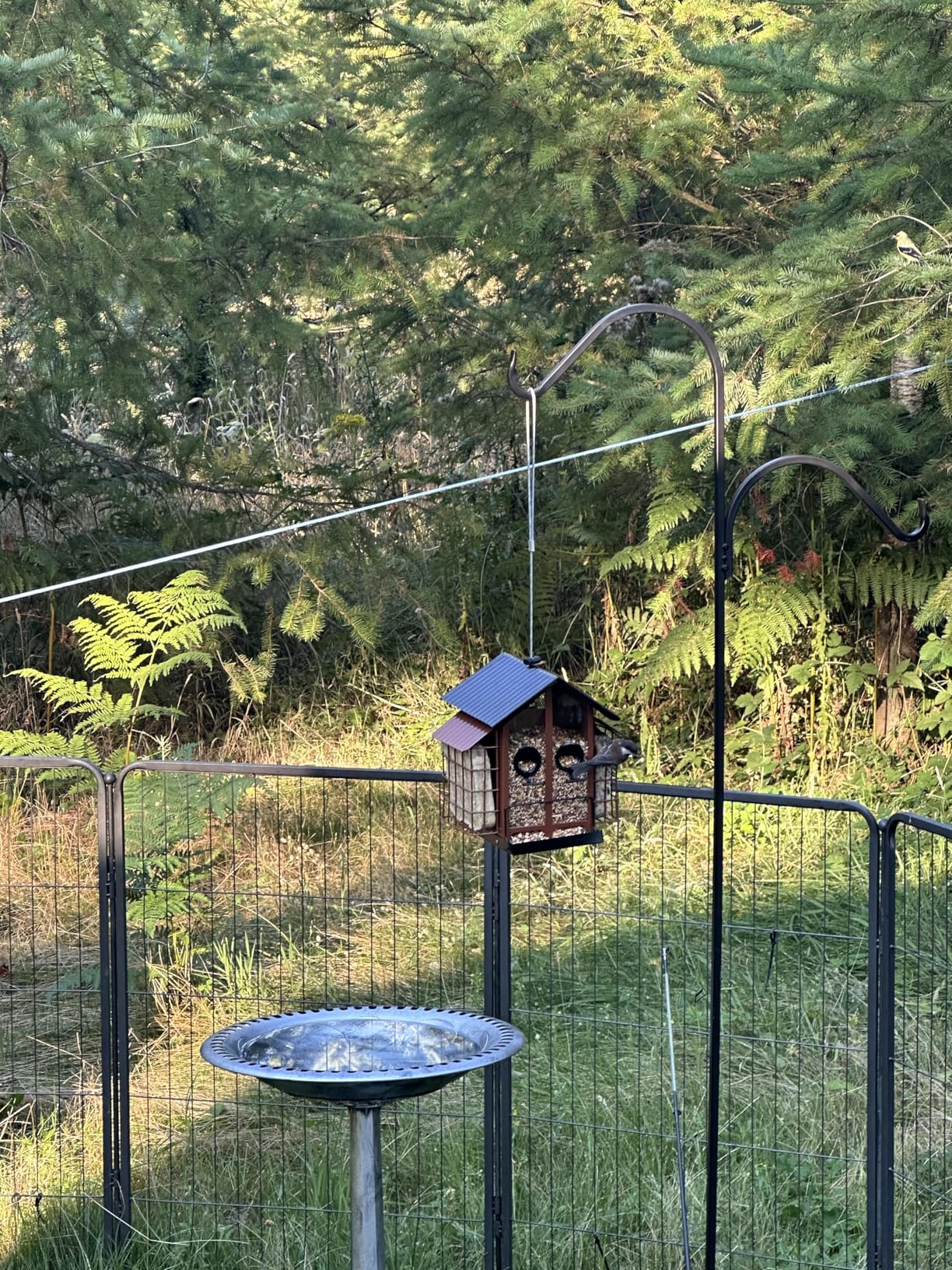
Fruit eating birds (such as mockingbirds and orioles) tend to prioritize feeding on edge fruits that are not covered by nets, or turn to alternative foods that humans have introduced - when gardeners set up feeders with sunflower seeds and millet near orchards, they reduce their pecking at crops.
Fish eating birds (such as herons and kingfishers) will adjust their foraging time to the low period of human activity or migrate to undefended small water accumulation areas when the pond is blocked by a single line of defense.
Risk avoidance adjustment of reproductive behavior
The fragmentation of habitats caused by urbanization forces birds to change their nesting strategies:
Cave nesting birds (such as bluebirds) that are driven away by invasive species such as sparrows and starlings tend to choose artificial nest boxes built by humans instead of natural tree holes, and tend to choose nest boxes located in less disturbed areas such as the inside of fences.
To cope with the risk of nest egg destruction, locally protected birds such as the wren increase the frequency of nest inspections and even build multiple "fake nests" in the same area to confuse competitors.
Time mismatch of activity rhythm
In response to human noise and peak activity, birds avoid interference by adjusting their daily routines
The blackbirds and mockingbirds in urban courtyards will advance their morning chirping time by 2-5 hours to avoid traffic noise during commuting hours; Some mockingbirds even turn to singing at night, using the weak light pollution in the early morning to transmit signals.
Starlings and gulls that inhabit clusters will migrate to adjacent tree canopies after being installed with bird repellent on rooftops, and their stay time will be shortened to reduce human drive caused by fecal accumulation.
2、 Resource utilization: Survival wisdom adapted to artificial environments
Artificial dependence on food sources
Birds gradually adapt to humans providing resources in the courtyard:
Small birds such as hummingbirds and goldfinches frequently visit feeders filled with nectar, and even remember feeding schedules in different courtyards; When the feeders are replaced with bird proof designs (such as short roosters or downward movement of holes), they will obtain food through special postures such as hanging upside down feeding.
Omnivorous birds, such as crows and mockingbirds, utilize by-products of human activities, such as pecking at leftover food in barbecue areas and picking up insect larvae exposed from gardening and soil turning.
Accurate selection of microhabitats
In the courtyard after landscape renovation, birds have become more refined in their selection of microenvironments:
Drought tolerant plant areas (such as the blue fescue community) have become a foraging hotspot for warbler birds due to their abundance of insects; The low-lying water accumulation areas near the permeable pavement will attract clusters of sparrows and buntings for drinking water.
Faced with light pollution, nocturnal birds (such as nighthawks) will avoid courtyard lighting areas and focus on dark corners covered by natural vegetation, reducing direct contact with humans.
3、 Deep adaptation at the physiological and evolutionary levels
Adaptive Evolution of Acoustic Communication
Long term noise environment promotes changes in bird song characteristics:
The chirping frequency of the white crowned bunting in urban courtyards is 1-2 kilohertz higher than its counterparts in the suburbs, and the duration of a single call is extended by 30% to break through traffic noise barriers; The similarity of adjacent individuals' vocalizations has significantly increased, forming an "urban dialect".
Territorial birds, such as the American red tailed robin, maintain the transmission of territorial defense signals in noisy scenes such as courtyard parties by enhancing their vocal penetration.
Physiological regulation of stress response
Frequent human interference promotes optimization of bird stress systems:
Research has found that the plasma cortisol levels of tits frequently exposed to horticultural activities are 20% lower than those in natural habitats, indicating a significant increase in their "fear threshold" towards human activities.
Insect eating birds exhibit enhanced liver detoxifying enzyme activity in courtyard environments exposed to low-dose pesticides, which to some extent alleviates the pressure of chemical pollution.
4、 Collaborative adaptation under human intervention
The adaptation strategies of birds and human management measures form a dynamic interaction:
When installing physical barriers such as bird nets and bird repellers in the courtyard, birds will first choose undefended "ecological gaps" (such as fence gaps and plant gaps); If humans simultaneously plant native plants and set up drinking water basins, it can significantly reduce the migration rate of birds.
Legitimate intervention measures (such as clearing starling nests) only affect invasive species, while locally protected birds (such as house wrens) can compensate for population loss and maintain community stability by accelerating the breeding cycle.
We recommend our Flowafoli bird feeder!