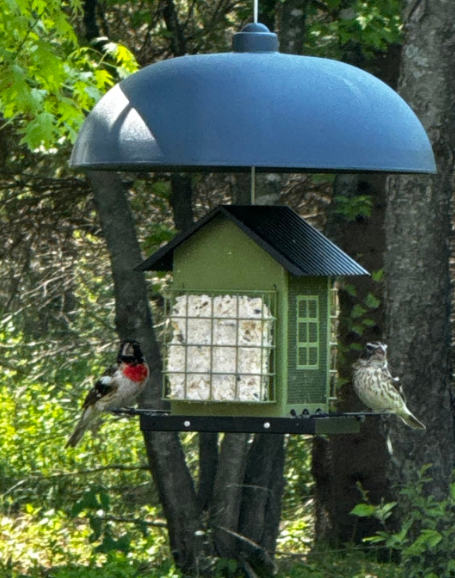
As a semi natural habitat for frequent bird activity, the American courtyard is often affected by various factors such as seasonal fluctuations, climate change, resource fluctuations, and human activities (such as light pollution and noise), resulting in many uncertainties in the production (reproduction) time of birds. To ensure the success rate of reproduction, these birds have evolved a flexible and precise response strategy, centered around the three dimensions of "signal perception, strategy adjustment, and risk avoidance", combined with their own physiological characteristics and environmental adaptability, to solve the survival challenges brought by uncertain production time. Specifically, it can be divided into the following aspects:
1、 Relying on environmental signal calibration to reduce time prediction errors
The primary coping strategy of courtyard birds in the Americas is to accurately capture reliable signals in the environment, which serve as a "calibrator" for production time, offsetting the impact of uncertainty. Among them, temperature, light, and food resources are the three core signals.
Temperature is a key clue for most courtyard birds to determine the timing of reproduction. Research has shown that common species in North America, such as blue tits and large tits, adjust their breeding time according to spring temperatures. For every 1 ℃ increase in temperature, the breeding time can be advanced by 2-4 days. Through this plasticity adjustment, it matches the time fluctuations caused by climate change and avoids the problem of insufficient food for young birds after hatching due to abnormal temperatures. For example, the great tit can precisely control the speed of embryo development by adjusting the incubation time. When the weather warms up, it can extend the incubation time and accelerate development. When the weather is cold, it can shorten the incubation time and slow down development, ensuring that the hatching time of young birds is completely synchronized with the peak period of food such as caterpillars. This is their core technique for dealing with temperature fluctuations that lead to uncertain production time.
The light signal directly affects the physiological rhythm of birds, thereby regulating the start time of reproduction. Normally, birds judge seasonal changes and determine their breeding window based on the duration of sunlight. However, in courtyards with high human activity, light pollution can interfere with this signal - courtyard birds in open environments may be affected by light pollution and build their nests one month earlier, while those around forests may do so 18 days earlier. Although this adjustment can adapt to time disturbances in human environments, it may also pose risks due to mismatches with the natural food cycle. Some birds, such as the white breasted oak, can use light pollution to reproduce early due to their good low light vision, and instead catch up with the early appearance of food caused by climate change, thereby improving their reproductive success rate.
The availability of food resources is the 'ultimate measure' of bird production time. The insect proliferation and berry ripening rhythm in American courtyards during spring are uncertain, and birds adjust their breeding plans by monitoring food changes in real time. When there is sufficient natural food in spring, birds reduce their dependence on courtyard feeders and focus on breeding preparation. If there is a delay in food, it will delay egg laying or hatching time; If food breaks out prematurely, it accelerates the reproductive process. For example, in spring, American mockingbirds frequently forage for worms on courtyard lawns. Once they find a stable amount of food, they will start building nests and laying eggs. If the number of worms is insufficient, they will temporarily suspend reproduction to avoid the young birds facing hunger after hatching.
2、 Flexibly adjust breeding strategies to cope with time fluctuation risks
Faced with the uncertainty of production time, courtyard birds in the Americas will use strategies such as "flexible breeding cycles, multiple breeding attempts, and collaborative optimization" to maximize the success rate of reproduction and compensate for the deviation in time prediction.
Elastic adjustment of reproductive cycles is the most common coping strategy, and birds with different nesting times exhibit varying levels of plasticity. Birds that breed early, such as common mermaids and mallards, have a more flexible response to spring temperatures and can quickly adjust their spawning time based on temperature fluctuations; Late stage breeding birds (such as small ducks), although not sensitive to temperature, will adjust their breeding cycle in response to other environmental factors to avoid failure due to time mismatches. In addition, some birds will flexibly change the length of their breeding cycle, contracting or extending the breeding period according to environmental conditions - when resources are sufficient and the environment is stable, extending the breeding period increases the number of breeding times; When the environment fluctuates greatly and resources are unstable, shrink the breeding season and focus on ensuring the success rate of a single reproduction.
Multiple breeding attempts are a "fallback strategy" to cope with uncertain production times, with the most representative being the "migratory breeding" behavior of the North American sandpiper. This migratory wading bird breaks the routine of "separation of migration and reproduction". It builds nests and reproduces multiple times during its northward migration in spring. Some individuals can try 6 times in a breeding season, with a nest building interval of only 24 days, and the shortest is only 1 day. Through the "fast failure, fast restart" mode, it tracks seasonal resources along the long migration route and resolves the risk of uncertain breeding time. Its low-cost breeding inputs (rudimentary nests, early adult chicks) and unique gender division of labor (male birds do not participate in brooding, female birds can quickly withdraw and reproduce) provide support for this strategy.
The flexible adjustment of reproductive division of labor further enhances the ability to cope with time uncertainty. Most courtyard birds, such as the black crowned sparrow, have clear division of labor during the breeding season: females are responsible for building nests and hatching, while males are responsible for foraging and feeding. This division of labor can reduce energy consumption, ensure efficient progress in all aspects of reproduction, and quickly adjust the rhythm even in the face of time fluctuations. For example, when a black crowned sparrow builds a nest, the female bird spends 7-10 days digging tree holes, while the male bird remains vigilant and provides food for the female bird. If the environment is uncomfortable during the nest building process (such as an increase in predators or insufficient food), the male bird will immediately abandon the nest and choose a new location to avoid investing too much energy at unsuitable times. In addition, male Stove Nest birds respond to changes in social situations by adjusting the amplitude of their singing. They sing from a distance to attract mates and declare their territory, while singing from a close distance reduces volume and eavesdropping. Through efficient communication strategies, they ensure timely breeding and pairing, resolving the time uncertainty caused by pairing delays.