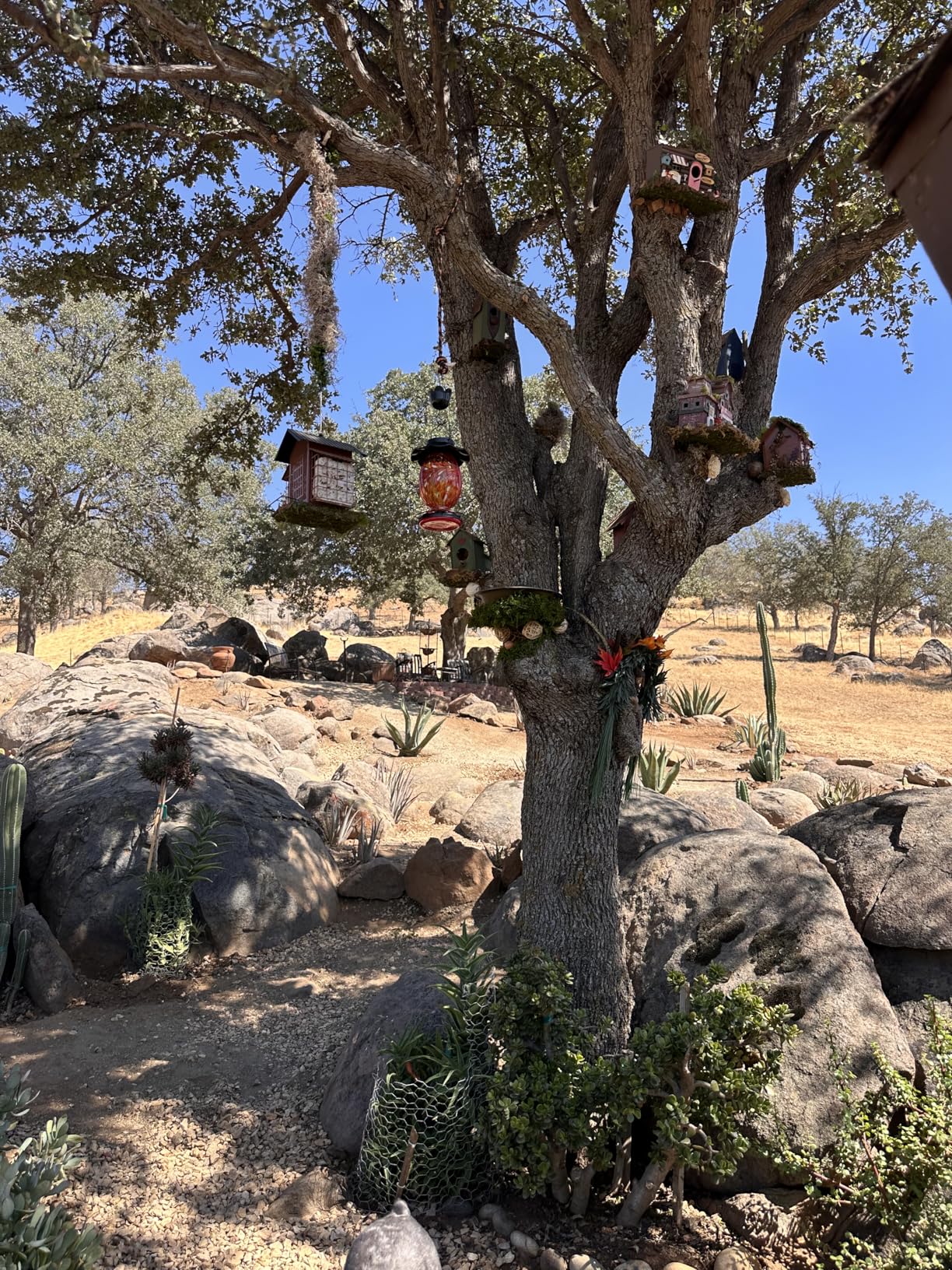
In residential courtyards on the American continent, bird habitats often overlap with human activity areas, forming a unique 'semi wild ecosystem'. When external invaders of the same kind show aggression, the resident birds in the courtyard will build an efficient survival response system through multi-level defense mechanisms, behavioral coordination strategies, and physiological stress regulation. This interaction not only reflects the instinctive adaptation of species, but also reveals the special evolutionary direction of bird communities in the human environment.
1、 Instant defense: graded response from individual vigilance to group dispersal
When facing similar attacks from the outside, courtyard birds will activate different levels of defense behavior based on the threat intensity, forming a complete chain of "warning confrontation expulsion".
(1) Primary warning: Collaborative communication between visual signals and sound
Resident birds transmit danger signals through specific singing frequencies and body postures. For example, when the North American Cardinalis detects an invasion of its territory by its own species, the male bird will first adjust the angle of its crest - when an aggressive intruder approaches, its crest will fully erect in a pointed shape, while emitting a short warning sound with a frequency of 2.5-3kHz, which can be recognized by other species within a range of 50 meters. The sparrow (Passer domesticus) population in the courtyard will complete group alert mobilization within 3-5 seconds through a combination of "continuous chirping+rapid wing flapping" signals. Research has shown that this collaborative warning can increase group response speed by 40%.
(2) Intermediate Confrontation: Domain Display and Resource Protection
When intruders enter the core activity area (such as feeders, within a 5-meter radius of bird nests), resident birds will activate territorial defense behavior. The blue raven (Cyanochita cristata) spreads its tail feathers to form a fan-shaped formation, revealing white markings under its wings, while flying in a "circular flight" around the intruder, using visual pressure to restrict their movement path. In the competition for courtyard feeders, the House Vermilion (Haemorhous mexicanus) adopts a "beak opening and closing demonstration" strategy - quickly opening and closing its beak and exposing its tongue, combined with a forward leaning posture. This behavior can make 60% of intruders retreat within 1 minute, avoiding direct conflict.
(3) Advanced eviction: physical confrontation and community collaboration
For aggressive species that continue to invade, courtyard birds will adopt physical attacks and group containment strategies. When the North American mockingbird (Turdus migratorius) is threatened in its nest area, it will dive and attack the intruder's head, with a beak pecking force of up to 0.8 Newtons, enough to cause minor damage. The purple winged starlings (Sturnus vulgaris) living in groups will form a "dispersal team" of 10-20 individuals, which will create airflow interference through synchronized flight and emit high-frequency noise (6-8kHz). This collaborative dispersal has a success rate of up to 85% and can effectively reduce the probability of individual injury.
2、 Long term adaptation: strategic optimization of physiological regulation and environmental utilization
In addition to immediate defense, courtyard birds also build long-term survival advantages against external attacks through physiological adaptation and environmental modification, and this adaptability is particularly evident in areas with frequent human activities.
(1) Physiological stress: hormone regulation and energy allocation
Faced with repeated external attacks, courtyard birds regulate their stress state through cortisol levels. Research has found that Thryothorus ludovicianus, which lives in the courtyard for a long time, has a basal secretion of cortisol that is 15% lower than that of the wild population. However, when attacked, the peak rate of hormones appears 20% faster. This "low basal+fast response" pattern can not only reduce the damage of long-term stress to the body, but also quickly mobilize energy to respond to threats. At the same time, they will optimize energy allocation by reducing non essential activities (such as long-distance foraging), reserving 30% of daily energy consumption as "defense reserves" to ensure sufficient flight and combat capabilities in the event of an attack.
(2) Environmental Utilization: Defense Transformation of Human Facilities and Landscape Structures
The human constructions in the courtyard become a natural 'defense barrier' for birds. Hirundo rustica will build its nest 30-50 centimeters below the eaves, using the vertical structure of the building to limit the attack angle of its own kind from the outside, so that intruders can only approach from the front. The walls on both sides of the nest mouth can provide cover for the parent bird. Zenaida macroura, which are active on the ground, use shrubs (1.2-1.5 meters high) in their courtyards as "escape shelters". When attacked, they quickly hide in areas with dense shrubs and use branches and leaves to block the intruder's line of sight. Studies have shown that this environmental use can reduce the probability of being preyed upon or attacked by more than 50%.
(3) Resource monopoly: priority possession of food and breeding grounds
Courtyard birds will reduce the probability of conflicts with their counterparts in the outside world by occupying key resource points in advance. Around the winter feeders, the main Cardinals and house sparrows form a "resource conservation alliance" - the larger main Cardinals are responsible for driving away distant intruders, while the flexible house sparrows patrol near the feeders to prevent close range grabbing. This division of labor allows them to monopolize the feeders for more than 8 hours per day, greatly reducing the motivation for similar attacks from the outside world. During the breeding season, courtyard birds will select nest sites 2-3 weeks in advance and mark their territories (such as through feces accumulation, feather placement, etc.). This "early occupation" strategy can reduce external attempts of similar species invasion by 65%, reducing the likelihood of aggressive behavior from the source.
We recommend our bird feeder!