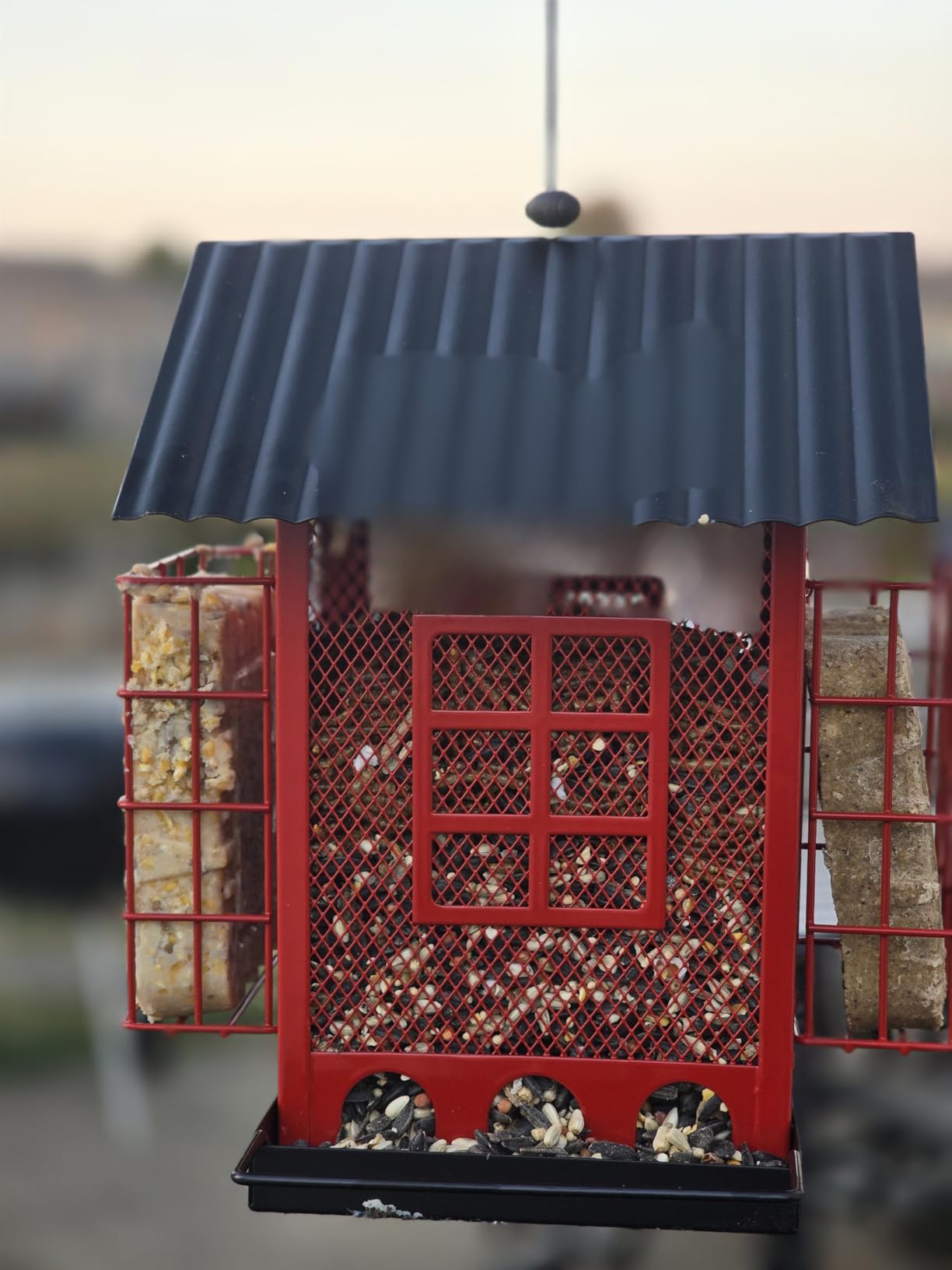
The American courtyard, as a semi artificial habitat for frequent bird activity, can cause overlapping interference to bird foraging, habitat, and reproduction if multiple operational tasks are carried out during an unusual time period, such as concentrated vegetation pruning, mechanical operations, environmental remediation, or a surge in human activities. The common birds in the courtyard, such as the American mockingbird, the main Cardinals, the Blue Jays, and the Black crowned Cardinals, break away from the conventional coping mode and use the core strategy of "priority sorting+flexible adaptation" to cope with multiple operational disturbances during this special period, balancing their own survival and reproduction, and presenting targeted adaptation characteristics by combining specific time periods and operational types.
1、 Core interference characteristics during unusual time periods
The core feature of the "unusual time period" referred to here is the "parallel operation of multiple tasks", which is different from daily single and scattered interference. Its interference has three major characteristics of "concentration, complexity, and persistence": firstly, there are various types of operations, and there may be multiple physical and chemical interferences such as lawn mowing, shrub cutting, building repair, pesticide spraying, etc. at the same time; The second is the superposition of interference intensity, where the noise and environmental damage generated by various operations interact with each other, further compressing the activity space of birds; The third is that the duration of interference is concentrated, not a single short-term interference, but frequent and continuous occurrences over a period of time, making it difficult for birds to adapt and recover quickly. This also prompts birds to adjust their conventional coping strategies to cope with the combined effects of multiple interferences.
2、 Core coping strategies for multiple parallel operations
(1) Prioritize avoiding high-risk operations and establish temporary safety zones
In the face of complex environments with multiple parallel operations, the primary task of birds is to avoid high-risk interference, rather than passively adapt. Common yard birds such as the American mockingbird and the main Cardinals quickly distinguish the risk levels of different operations through observation and memory: mechanical operations (such as trimmers and excavators) and pesticide spraying are considered high-risk operations, while human walking and light gardening are considered low-risk operations. Priority should be given to evacuating high-risk operation areas and establishing temporary safe habitats in dense vegetation at the edge or around the yard.
For example, when lawn mowing and pesticide spraying are carried out simultaneously in the courtyard, the American mockingbird will completely evacuate the courtyard and go to undisturbed parks and forests to forage and inhabit. After both high-risk operations are completed and the environment is restored, it will gradually return; Blue Jay will perceive the noise and odor of various operations in advance, transfer stored food in advance to avoid pesticide contamination or mechanical damage, and lead the group to a safe area to reduce the probability of individual exposure to high-risk environments. Small birds such as the black crowned sparrow, due to their weak flying ability, do not evacuate from long distances. Instead, they search for the most concealed corners in the courtyard (such as deep in dense bushes or artificial nest boxes), minimizing their activities until the interference is reduced.
(2) Flexibly adjust behavioral rhythms and adapt to the time patterns of multiple operations
Multiple operations during unusual time periods often have a fixed time pattern (such as concentrated work during the day, intermittent work in the morning and evening), and birds will actively adjust their daily routines, foraging, and nesting rhythms to avoid operational peaks and maximize the use of interference gaps.
For mechanical operations and human activities that are concentrated during the day, birds will adjust their foraging and activity time to early morning, evening, or night (if not disturbed by artificial light). For example, the American mockingbird will forage early in the morning to avoid the peak of pruning and repair operations in the morning. After the operation is completed in the evening, it will return to the courtyard to supplement foraging; The main Cardinals will shorten their daytime activity time, reduce their frequency of staying in the courtyard, and complete their foraging quickly each time, avoiding sudden operational interference. If the operation involves nighttime construction and lighting, birds will further adjust their rhythms, either by falling asleep early, avoiding lights and noise, or migrating to areas with weaker lighting and less noise to avoid completely disrupting their circadian rhythms.
For birds in their breeding season (such as during the spring nesting and brooding stages), if they encounter unusual periods of multiple operations in parallel, priority will be given to ensuring the safety of the chicks, shortening their foraging time, adopting a "batch foraging, fast round-trip" approach, and reinforcing the nest to avoid damage from mechanical operations and vegetation pruning; If the nest has been disturbed or there are safety hazards, the original nest will be abandoned, and in the shortest possible time, a new nest will be built in the most concealed and least disturbed area of the courtyard, with priority given to completing the brooding task, and then gradually adapting to other operational disturbances.
We recommend our Flowafoli bird feeder!