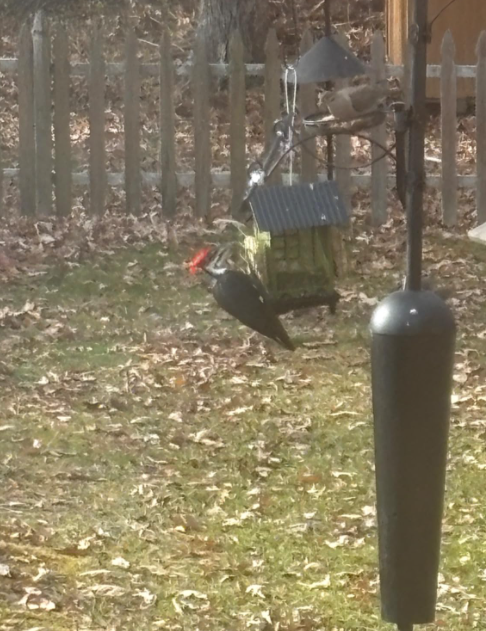
As a special ecological space that blends city and nature, the American courtyard not only provides convenience for birds to forage and inhabit, but also faces the challenge of periodic exhaustion due to human activities and fluctuations in food resources. From the joyous chirping in the dim morning light to the tranquil rest in the twilight, these dynamic beings have evolved a complete mechanism covering physiological regulation, behavioral strategies, and environmental adaptation to cope with fatigue and difficulties at different times, and maintain a balance between survival and reproduction.
Physiological level: precise regulation of the 'energy management system'
The fatigue of birds is essentially the result of an imbalance between energy consumption and replenishment, and American courtyard birds are the first to construct an "anti fatigue barrier" through precise physiological regulation. Among them, the most crucial is the dynamic adaptation of body temperature and metabolism - when frequent daytime activity leads to a sharp increase in energy consumption and signs of fatigue, some birds such as the American goldfinch will slightly lower their core body temperature (usually by 1-2 ℃), while slowing down their metabolic rate, putting the body into a "low-power mode". This regulation can reduce energy demand and avoid deep fatigue caused by excessive energy consumption.
The collaborative optimization of the respiratory and circulatory systems is equally crucial. When birds such as the home sparrow and the main red sparrow spend long periods of time foraging or hiding behind enemy lines in the courtyard, their respiratory system increases oxygen supply by increasing breathing rate. The heart then accelerates its beat to quickly transport oxygen and nutrients to muscle tissue, accelerating the breakdown of metabolic waste such as lactate, thereby relieving muscle soreness and fatigue. In addition, the blood of these birds contains a higher concentration of hemoglobin, which enhances their oxygen carrying capacity and provides a physiological basis for physical recovery after high-intensity activities.
Flexible adjustment of sleep patterns is an important means of coping with fatigue. Unlike the fixed sleep cycle of humans, courtyard birds in the Americas often adopt a "fragmented sleep" strategy - during daytime breaks, they will sleep for 10-20 minutes in safe areas such as branches and eaves. At this time, some areas of the brain remain alert, while the rest enter a resting state, achieving both physical replenishment and timely avoidance of danger. At night, if the environment is safe (such as no strong light or noise interference), they will enter deep sleep for up to 6-8 hours, repairing their body functions through a complete sleep cycle and storing energy for the next day's activities.
Behavioral strategy: Efficient and energy-saving "activity planning scheme"
During the long-term adaptation process, courtyard birds in the Americas have developed an efficient behavioral logic, reducing fatigue and improving recovery efficiency by optimizing activity rhythms and methods. The "time concentration" of foraging behavior is a typical manifestation - many birds avoid the intense activity during the high temperature period at noon and focus their main foraging time on the early morning and evening. At this time, the temperature is suitable, insects are highly active, and fruits have sufficient moisture. They can obtain sufficient food with lower energy consumption, avoiding fatigue caused by the dual effects of high temperature and hunger.
Group collaboration further reduces the risk of individual fatigue. Common social birds in the courtyard, such as purple winged starlings and cliff swallows, will complete foraging and vigilance tasks through division of labor and cooperation: some individuals focus on finding food, while others are responsible for observing the surrounding environment and issuing signals in a timely manner when danger is detected. In this mode, each individual does not need to bear the dual pressure of foraging and vigilance at the same time, and the activity intensity is significantly reduced, naturally reducing fatigue. In addition, when birds nest together in groups, it can reduce heat loss, lower the energy consumption for maintaining body temperature at night, and save energy for the next day's activities.
Activity intensity grading is also an important technique for birds to cope with fatigue. When food is abundant, birds will engage in low-intensity activities such as slow jumps and short distance flights to avoid unnecessary energy consumption; And only when natural enemies are discovered or food is contested, will high-intensity flying ability be instantly unleashed. This "on-demand allocation" activity mode allows birds to maintain vitality in critical scenarios while effectively relieving fatigue and achieving efficient energy utilization in non emergency situations.
We recommend our Flowafoli bird feeder!