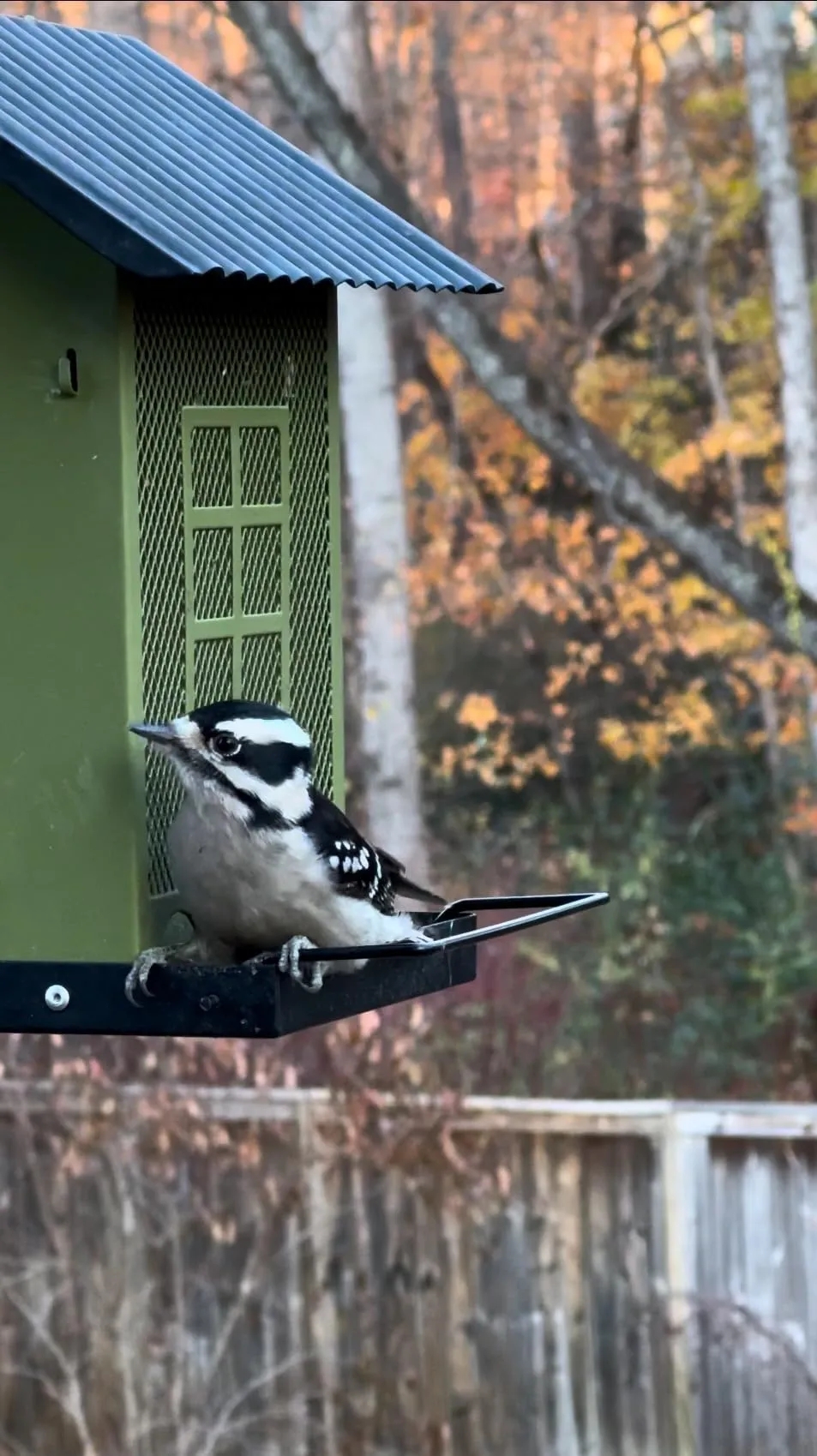
In the courtyard ecosystems of the American continent, birds such as sparrows, mockingbirds, hummingbirds, and blue jays form complex social networks. These seemingly light and agile creatures experience territorial competition, resource competition, and reproductive conflicts every day, but they are always able to maintain community balance through unique behavioral strategies. Their 'struggle handling system' not only reflects biological instincts, but also hides exquisite evolutionary wisdom.
1、 The core causes and scene division of the struggle
The conflicts among courtyard birds in the Americas do not occur randomly, but are concentrated in three core areas, and the coping strategies in different scenarios show significant differences:
Territorial Defense War: The spring breeding season is a high-risk period for territorial conflicts. Male mockingbirds will deter intruders through a "breast feather display" - when they notice their own species approaching their nest area, they will raise their red feathers on their chests and use a short "chirp chick" warning sound. If the opponent does not retreat, they will launch a low altitude dive attack. This type of conflict usually lasts for 1-3 minutes, and the loser will end the battle by bowing their head and withdrawing their feathers in a "surrender posture" to avoid serious injuries.
Resource competition conflict: Feeders and water sources are the hardest hit areas of conflict. Smaller American goldfinches often use a "cluster occupancy" strategy to combat the invasion of blue jays - when the blue jays attempt to monopolize the feeder, 5-8 goldfinches will fly around them, disrupting each other through the airflow generated by wing flapping, ultimately forcing the blue jays to give up. The competition for nectar among hummingbirds is even more intense, with male hummingbirds producing a "buzzing" sound with 50 wing vibrations per second and spreading their tail feathers to form a fan-shaped barrier, expelling competitors.
Breeding Rights Competition: In the community of the main Cardinals, males engage in "beaked fights" to compete for mating rights. Two male birds will peck at each other with their sharp beaks until one side bleeds or escapes. But this intense competition usually occurs between non relatives, and close relatives of male birds will recognize their blood relationship through "song comparison", actively reduce their attack intensity, and reflect the primitive wisdom of "kinship selection".
2、 Hierarchical conflict response strategies
American courtyard birds have developed a three-level response system from mild to intense, flexibly switching according to the degree of threat:
Signal deterrence stage: This is the most common way to resolve conflicts. The North American Cardinals will transmit warnings through "darkening of feathers" - when they perceive a threat, their red feathers will appear dark red due to blood vessel constriction, while emitting high-frequency calls of "tee tee". Research has found that this signal can terminate 80% of potential conflicts before they escalate. Blue ravens are good at using "imitation tactics" to intimidate competitors by imitating the chirping of raptors, especially when protecting young birds in their nests, with a success rate of up to 75%.
Ritualized Battle Stage: When signal deterrence fails, birds will engage in "ceremonial battles" that do not cause substantial damage. The "jumping duel" of sparrows is a typical representative - two male birds alternate jumping on the ground, erect their feathers on their heads, lightly touch each other with their beaks, and the loser will actively retreat and shake off their feathers. This ritualistic struggle lasts an average of 40 seconds, consumes only a small amount of energy, but can clarify the level order.
Actual combat attack stage: Only appears during periods of extreme resource scarcity or critical breeding periods. The "aerial combat" of Anna hummingbirds can be considered extreme - males will collide with each other at a speed of 30 kilometers per hour, tear each other's feathers with their claws, and even have their beaks broken. But the occurrence rate of such intense conflicts is less than 5%, and they usually end within 1 minute to avoid intra population conflicts.
3、 Community rules and long-term order maintenance
American courtyard birds reduce conflict frequency by establishing stable community structures:
Domain division mechanism: Most courtyard birds determine their territory boundaries through "vocalization markers". Male mockingbirds chirp for 30 minutes every morning at the highest point of their territory, and the frequency and length of their calls adjust with the size of the territory - for every 10 square meters increase in territory area, the pitch level of their calls will increase by 2 tones. This acoustic marking can enable clear recognition of boundaries among peers and reduce 90% of unintentional boundary conflicts.
Resource sharing protocol: In long-term coexistence, birds have formed "time allocation" rules. For example, in the same courtyard, American goldfinches use feeders from 8-10 am, while the main Cardinals choose 2-4 pm to reduce competition through staggered use. Hummingbirds have developed the ability to perceive nectar reserves, which can determine the remaining amount of nectar based on the shape of flowers and avoid ineffective competition.
Grade inheritance system: There is a clear "dominant individual" inheritance in the Blue Jay group - older male birds establish their status through "feeding priority", and when foraging, the dominant individual enjoys food first, while other members have to wait. This hierarchical system will be passed on to the young birds through "parental guidance". Within 3 months after birth, the young birds will observe and learn group rules, and the conflict rate in adulthood is 60% lower than that of the group without guidance.
4、 The impact of human activities on conflict patterns
With the acceleration of urbanization, the fighting strategies of courtyard birds in the Americas are also adapting:
New conflicts caused by artificial facilities: The reflection of glass curtain walls can make birds mistakenly believe it is an invasion of the same species, causing species such as mockingbirds to repeatedly attack glass, up to 200 times a day, resulting in physical exhaustion. In response, some birds have gradually developed the ability of "shadow recognition" - by observing the changes in shadows on glass to determine whether they are a real threat, the attack frequency can be reduced by 50% after adaptation.
Feeding machines change the competitive landscape: the emergence of fixed feeders brings together previously dispersed bird species, leading to an increased sense of territorial awareness among dominant species such as blue jays. But research has found that using feeders with partitions can reduce conflict rates by 35%, as partitions limit the exclusive ability of large birds and create safe feeding spaces for small birds.
Light interference and behavioral adjustment: Urban nighttime lights can disrupt the reproductive rhythm of birds, leading to territorial conflicts occurring 2 weeks earlier in spring. Some sparrows have adjusted their strategies by changing their singing time from early morning to evening, avoiding light interference while still effectively marking their territory.
The fighting and handling mechanism of courtyard birds in the Americas is a survival wisdom formed over millions of years of evolution. From subtle signals to complex community rules, every behavior embodies the core logic of "efficiently resolving conflicts and maintaining population continuity". These small lives interpret the eternal balance of "competition and coexistence" in the ecosystem in their own way, and provide valuable natural samples for humans to understand the behavior of biological communities.
We recommend our bird feeder!