As a habitat where artificial and natural elements intertwine, the American courtyard is where birds face various daily tasks such as foraging, reproduction, shelter, and socialization. The core logic of its orderly processing is to prioritize survival and reproduction, and dynamically weigh the importance of real-time environmental signals (such as natural enemy threats, food abundance, and breeding cycles). Through instinctive solidification and flexible adjustment, various tasks are carried out in order. This trade-off is not random selection, but an adaptive strategy formed by long-term natural selection, which runs through the entire process of birds' daily behavioral decision-making.
1、 Core trade-off principle: prioritize survival, prioritize reproduction
All behavioral decisions of courtyard birds in the Americas revolve around the two core goals of "ensuring immediate survival" and "continuing population reproduction", which are the fundamental criteria for balancing the importance of matters. When two core goals conflict, "immediate survival" is usually the top priority - only by ensuring one's own survival can reproduction be achieved; When survival is assured, matters related to reproduction will rise to the core task, forming a basic balance logic of "survival foundation, reproduction advancement".
For example, during the spring breeding season, the main Cardinalis cardinalis would have made building nests and seeking mates their core tasks. However, when natural enemies such as eagles and cats enter the courtyard, their breeding behavior will be immediately suspended, and priority will be given to adopting vigilance, concealment, or escape strategies; After the threat of natural enemies is eliminated, quickly return to nest building work without blindly taking risks due to the interruption of breeding rhythm. The decision to abandon traditional methods in the face of threats is a direct manifestation of the core principle.
2、 Dynamic prioritization of matters: flexible adjustment based on environment and cycle
The priority of matters related to courtyard birds in the Americas is not fixed and unchanging, but will be dynamically adjusted based on immediate environmental stimuli (natural enemies, food, weather) and life cycle stages (juvenile care period, molting period, migration period), forming an orderly processing mode of "core tasks remain unchanged, secondary tasks are flexibly interrupted". The following is a breakdown of the priority sorting logic and processing flow based on the behavior of common birds in the courtyard (such as the main Cardinals, Vermilion Finches, Blue Crows.
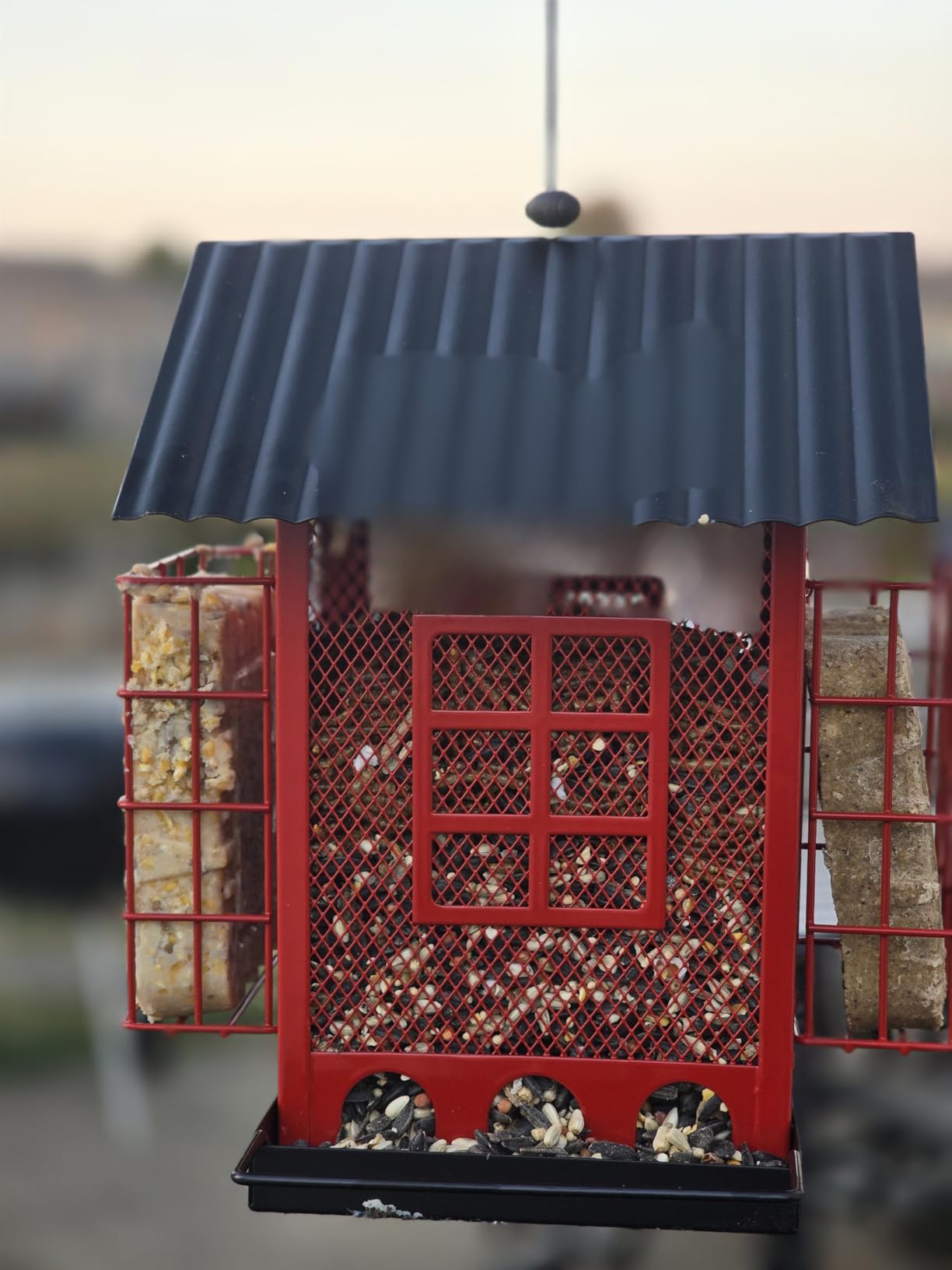
We recommend our Flowafoli bird feeder!