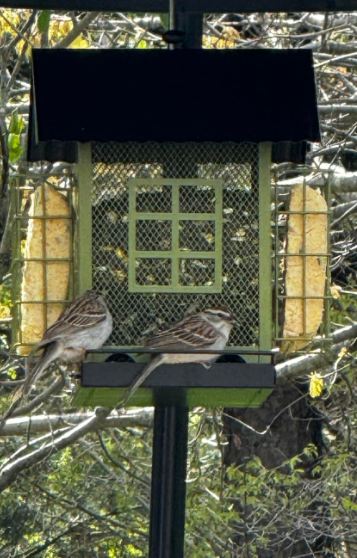
As a special ecological space where cities and nature intersect, the American courtyard is home to various bird species such as sparrows, mockingbirds, hummingbirds, and blue jays. These birds need to deal with multiple survival issues such as foraging, breeding, defense, and migration in a limited environment, but they can always maintain an efficient and orderly rhythm. Behind it is a set of precise behavioral strategies polished by natural selection.
1、 Foraging arrangement centered on "energy priority"
Foraging is the foundation of bird survival, and courtyard birds in the Americas develop layered and orderly foraging plans based on food types, difficulty in obtaining them, and their own physiological needs. For sparrows that feed on seeds and fruits, they adopt a "concentrated foraging+dispersed vigilance" mode in different time periods: 6-8 am and 5-7 pm are the periods when the plant seeds in the courtyard are most abundant and natural enemies are less active. Sparrows will cluster and fly to the lawn or flower bed to forage, while arranging 1-2 individuals to stop at high places for observation. If danger is found, they will alert the group through short calls; During the high temperature period at noon, they will reduce their activity and only occasionally feed briefly next to the feeders under the shade of trees to avoid excessive energy consumption.
Hummingbirds that feed on nectar exhibit a more sophisticated "territorial foraging" strategy. Male hummingbirds will prioritize occupying flower dense areas in the courtyard (such as geranium clusters), declaring their territory by quickly flapping their wings and chirping, ensuring that they can efficiently obtain high-energy nectar; Female hummingbirds choose secondary foraging areas while also collecting nesting materials, such as picking up nearby plant fibers while feeding on nectar, achieving a dual task of "foraging+nest preparation" synchronous processing.
2、 Division of labor and collaboration during the breeding season and time planning
Reproduction is a crucial matter in the life cycle of birds, and American courtyard birds ensure successful reproduction rates through clear division of labor and precise timing control. The breeding arrangement of the North American mockingbird is highly representative: during the breeding season from March to July each year, male and female birds undergo a "division of responsibilities" - the male bird is responsible for delineating the breeding territory, driving away intruders by chirping in the treetops, and searching for suitable nesting locations (such as the branching of yard trees); The female bird focuses on building a nest, going out every morning to collect soil, dry grass, and feathers. She stays in the nest at noon when the temperature is high to organize the materials, and replenishes the last batch of nest building supplies in the evening. The entire nesting process takes about 5-7 days, with a tight and orderly rhythm.
After laying eggs, the cooperation between male and female birds is further refined: during the day, the female bird is responsible for incubating the eggs, and the male bird brings insects (such as caterpillars and beetles) every 1-2 hours to feed the female bird; From evening to early morning, the male bird takes over the incubation and allows the female bird to go out to forage and replenish energy. This "day night alternation" incubation mode not only ensures a constant temperature environment for eggs, but also avoids the impact of excessive fatigue on the survival of parent birds, reflecting the balance between reproductive matters and basic survival needs.
3、 Graded response for defense and resource conservation
The threats faced by courtyard birds in the Americas include natural enemies such as eagles, cats, and snakes, as well as peer competition such as competition for feeders and nesting sites. They adopt a "graded defense" strategy based on the level of threat to ensure that they protect themselves and resources while avoiding unnecessary energy waste.
When natural enemies (such as red tailed eagles) appear above the courtyard, birds will activate the "emergency defense mode": smaller sparrows and warblers will quickly hide in bushes or dense branches, remain still and reduce their calls; Larger blue jays and ravens emit sharp "warning sounds" and hover low below eagles, disrupting their flight and forcing predators to leave. This collaborative defense of "small bird concealment+large bird interference" can not only protect group safety, but also improve defense efficiency through division of labor.
In the face of peer competition (such as competing for feeders), birds adopt a "mild defense" strategy: blue jays will intimidate other birds by "displaying behavior" by spreading their wings and raising their tail feathers. If the opponent does not back down, they will only give a brief peck; And social birds such as sparrows use their "numerical advantage" to occupy feeders, avoiding intense fights between individuals. This defense logic of 'display first, attack later' reduces damage among peers while ensuring the rational allocation of resources.
We recommend our Flowafoli bird feeder!