1、 The core cause of disordered sleep patterns of courtyard birds
As a "semi artificial ecosystem", the disrupted sleep patterns of birds in American courtyards are mainly caused by two types of disturbances:
Human activity interference: Courtyard lights (especially LED decorative lights) disrupt the circadian rhythm, and random behaviors such as pet activities and gardening work interfere with foraging and resting periods;
The impact of resource fluctuations: the timing of artificial feeding is not fixed, the maturity period of garden plants is scattered, and the activities of natural enemies (such as stray cats) are irregular, leading to the disruption of the traditional "day out and night dormant" rhythm of birds.
2、 Core regulatory mechanisms at the physiological level
Birds use precise physiological regulation to counteract the impact of daily fluctuations and ensure basic life activities
Elastic reset of biological clock: The hypothalamic suprachiasmatic nucleus (core of the biological clock) can adjust the rhythm cycle through changes in light intensity. For example, the North American mockingbird can delay its peak activity by 1-2 hours and shorten its deep sleep duration when the courtyard lighting prolongs "daylight", maintaining a total daily rest demand of 6-8 hours;
Dynamic balance of energy metabolism: When foraging time is compressed, the common dark eyed sparrow in the courtyard will activate the "high-efficiency energy storage mode", increase single feeding by 40%, and reduce energy consumption by lowering inactive body temperature (5-8 ℃ lower than normal body temperature), ensuring that key physiological activities such as reproduction and molting are not affected by energy shortage;
Precise regulation of stress hormones: In the face of sudden disturbances (such as human close range activities), birds quickly increase alertness by secreting cortisol, while accelerating hormone metabolism during safe periods to avoid immune function decline caused by long-term stress.
3、 Adaptive strategies at the behavioral level
Fragmentation activity reconstruction: Breaking down traditional continuous behaviors such as foraging and grooming into "short-term high-frequency" patterns. For example, in a courtyard with frequent human activities, blue jays will scatter and forage for 10-15 minutes, and spend the rest of the time on high branches for observation. The overall foraging efficiency only decreases by 12%, but it improves safety;
Optimization of microhabitat utilization: Select the "rhythm buffer zone" in the courtyard to avoid interference, such as building hidden nest sites at the bottom of shrubs to reduce the impact of light, using the shadow area of houses to move during high noon temperatures, or shortening the foraging path with the help of fixed positions of artificial bird feeders;
Community information collaboration: Social birds (such as purple winged starlings) transmit safety signals through their calls. When some individuals discover a stable foraging window, they will summon their peers to concentrate with specific calls, reducing the risk of individual sleep disorder through group behavior.
4、 The logic of ensuring critical survival matters
Rhythm anchor point during the breeding season: Despite fluctuations in daily routines, birds still rely on the duration of sunlight as the core anchor point to ensure that key processes such as egg laying and hatching match the peak periods of temperature and food. For example, Carolina wrens will complete the collection of nesting materials within one hour after sunrise, unaffected by the previous day's interference;
Compensation mechanism for foraging efficiency: When the natural food acquisition period is compressed, courtyard birds will rely more on artificial resources, such as the North American Cardinals adjusting to a "double peak" foraging mode in winter to compensate for insufficient feeding caused by human activities during the day;
Environmental selection for rest quality: Priority should be given to choosing dense vegetation areas far away from lights and noise for rest, or using building gaps to construct a "micro light avoidance environment". By improving the quality of rest per unit time, the impact of shortened rest time can be offset.
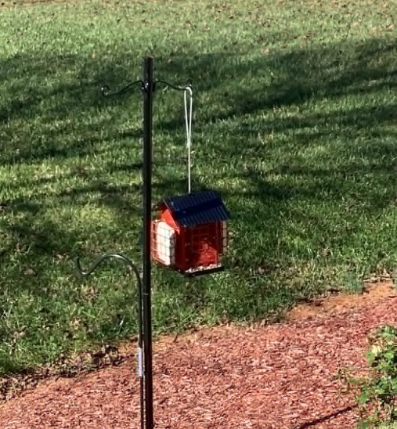
We recommend our FLOWAFOLI bird feeder!