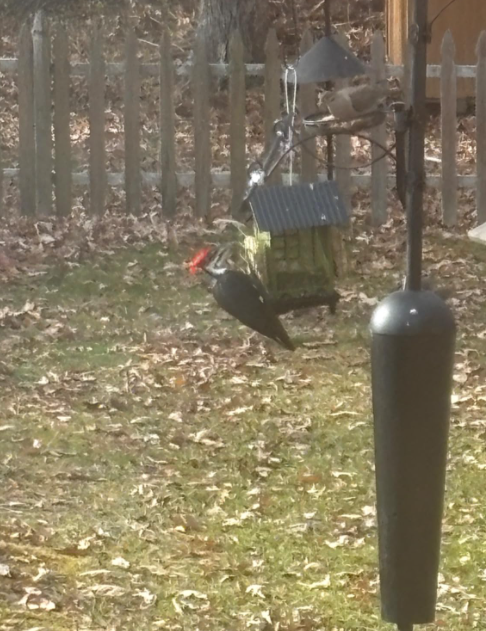
In the urban courtyard ecosystems of the Americas, the "attendance time" formed by human activities (such as fixed periods of human interference during residents' commuting, courtyard maintenance, commercial district business hours, etc.) is becoming a key factor affecting bird survival strategies. These regular disturbances that accompany human activities break the natural circadian rhythm of birds, while courtyard birds gradually form a survival mode that is in line with human sleep through long-term behavioral adaptation, physiological regulation, and ecological niche reconstruction. The following analyzes the scientific logic of daily routine adjustment from three aspects: influencing mechanism, adjustment strategy, and typical cases.
1、 The core impact of attendance time changes on bird sleep patterns
The essence of human "attendance time" is regular human interference, and its impact on courtyard birds is mainly reflected in two dimensions: first, the compression of resource acquisition windows. For example, the peak commuting time from 7-9 am can prevent birds from foraging on the courtyard lawn (due to pedestrian and vehicle interference), while courtyard lights from 18-20 pm in the evening may prolong or shorten their nighttime rest time; The second is the periodic fluctuation of safety risks. Mechanical noise (such as sweeping machines and car engines) and human activities (such as pruning shrubs and children's play) during attendance periods can increase the stress response of birds, forcing them to avoid core activities during high-risk periods (such as building nests and raising chicks).
Taking the common house sparrow (Passer domesticus) in North American courtyards as an example, research has found that in communities with dense human commuting, the traditional "morning rush hour" (1-2 hours after sunrise) is moved up to 30 minutes before sunrise or delayed until after 9:30 am after the end of the commuting rush hour to avoid pedestrian interference. This shift in sleep schedule is not a random behavior, but an active adaptation of birds to human activity rhythms.
2、 Three core strategies for adjusting bird sleep patterns
(1) Elastic calibration of physiological rhythm
The circadian rhythm receptors of birds are regulated by the "biological clock" (hypothalamic suprachiasmatic nucleus), but courtyard birds can dynamically adjust their physiological cycles through dual perception of light and sound signals. For example:
Light cycle adaptation: Lights during human attendance periods (such as streetlights at 6am and courtyard lights at 19:00 in the evening) are considered "abnormal light signals" by birds. The North American mockingbird (Turdus migratorius) delays its bedtime by 1-2 hours by adjusting melatonin secretion to utilize insect resources under light; During the dark period before commuting in the early morning, they will wake up early and complete their first round of foraging before human activities begin.
Metabolic rate regulation: Faced with the "foraging window period" during the attendance period, some birds will reduce their metabolic rate during the day. For example, the Junco hyemalis has a metabolic rate that is 15% -20% lower than the same period on weekends from 7 to 9 on weekdays. By reducing energy consumption, it can cope with the pressure of being unable to forage during this time period.
(2) Time period splitting and spatial transfer of behavioral patterns
To avoid the interference of attendance periods, courtyard birds will divide their core survival behaviors (foraging, nesting, and brooding) into multiple "fragmented periods" and use spatial transfer strategies:
The "off peak splitting" of foraging behavior: Taking the Blue Crow (Cyanochita cristata) in urban courtyards as an example, it splits foraging into three periods on weekdays: before sunrise (5-6 am), it preys on Lepidoptera larvae in the tree layer of the courtyard; After peak commuting hours (9-11am), forage for seeds on the lawn; In the evening (17-18 pm, before humans finish work), search for insects in flower pots on the balcony of buildings. On weekends, due to scattered human activities, their foraging periods will merge into continuous 2-3 hours, restoring a rhythm closer to nature.
Space avoidance for nest building and chick rearing: Birds will actively avoid areas with frequent human activities during attendance periods, such as the central lawn in the courtyard or shrubs near the sidewalk. Cardinalis cardinalis in North America will build their nests in evergreen shrubs deep in the courtyard, and the feeding time for chicks is concentrated between 10-12 pm and 14-16 pm after humans start work, avoiding the peak hours of sending children to school in the morning and returning home in the evening.
We recommend our Flowafoli bird feeder!