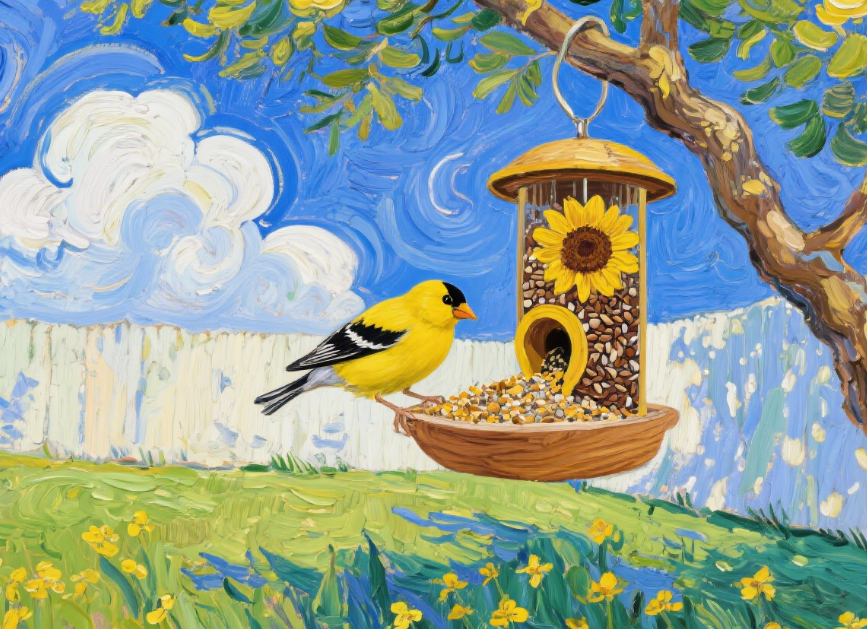
To better observe the feeding behavior of birds in American courtyards through bird feeders, it is necessary to start from multiple aspects such as the selection, placement, and observation methods of bird feeders. At the same time, a series of precautions should be taken to ensure the effectiveness of observation and the protection of birds.
In the selection of bird feeders, different types of feeders are suitable for different birds, which can increase the visitation rate of birds and facilitate the observation of more types of feeding behaviors. For example, tube feeders are suitable for small songbirds such as goldfinches and Vermilion sparrows. They will perch on the perch of the feeder and peck the seeds inside the tube with their beaks. When observed, their pecking movements and frequency can be clearly seen; The funnel-shaped bird feeder can accommodate a large amount of food, attracting medium-sized birds such as blue jays and main cardinals. When they feed, they may pause around the feeder for a while, or even pick up food and eat it on nearby branches, making it easier to observe their feeding strategies; The board oil bird feeder is highly attractive to birds such as woodpeckers and sparrows, who climb onto the feeder and peck at the board oil with their hard beaks. It is interesting to observe their unique climbing posture and pecking methods. In addition, bird feeders with transparent shells can also be chosen to provide a clearer view of the birds' feeding behavior inside.
The placement of bird feeders is also crucial. Firstly, it should be placed in a location that is close to the observation point but does not pose a threat to birds, such as on a tree branch near a window or in a corner of a courtyard. This way, people can observe quietly through the window indoors, reducing disturbance to birds. Secondly, it is best to have natural shelters such as trees and shrubs around the bird feeder. Birds can stay and observe the environment in these places before and after feeding, and only go to the bird feeder to feed when they feel safe. This also allows observers to see the entire process of birds from the shelter to the bird feeder. In addition, it is important to avoid placing bird feeders in areas that are easily accessible to pets such as cats and dogs, in order to prevent pets from startling or harming birds and affecting observation.
In terms of observation methods, it is recommended to use covert observation. Comfortable observation points can be set up by indoor windows to avoid disturbing birds directly in the courtyard. When observing, a telescope can be prepared to observe the detailed movements of birds more clearly, such as the relationship between beak shape and feeding methods, and limb coordination during feeding. At the same time, recording the observed bird species, feeding time, feeding frequency, and other information can help to gain a deeper understanding of their feeding behavior patterns.
In terms of precautions, the first thing to do is to keep the bird feeder clean and hygienic. Regularly clean the bird feeder to prevent food residue from breeding bacteria and mold, and to prevent birds from contracting diseases. Mild soapy water can be used for cleaning, rinse thoroughly, and then air dry before use. Secondly, choose and place food reasonably. Different birds prefer different foods, such as the goldfinch preferring Nyjer seeds and the main Cardinals preferring sunflower seeds. It is important to choose the appropriate food based on the common bird species in the yard. At the same time, do not place food in excess to prevent it from spoiling, and replace it with fresh food in a timely manner. In addition, we should respect the natural behavior of birds and not deliberately disturb them for observation, such as not making loud noises or tapping windows. If birds show signs of anxiety and vigilance, they should stay away from the observation point appropriately to give them enough sense of security. In addition, we should pay attention to the safety of the observation environment, and avoid forcing birds to eat in bad weather (such as rainstorm, strong wind, extreme high temperature or low temperature). At this time, birds may need to find natural shelters. Finally, comply with local regulations regarding bird feeding and observation, and refrain from any illegal or harmful behavior towards bird survival.
Through the above methods and precautions, people can better use bird feeders to observe the feeding behavior of birds in American courtyards while protecting them, and gain a deeper understanding of their living habits and behavioral characteristics.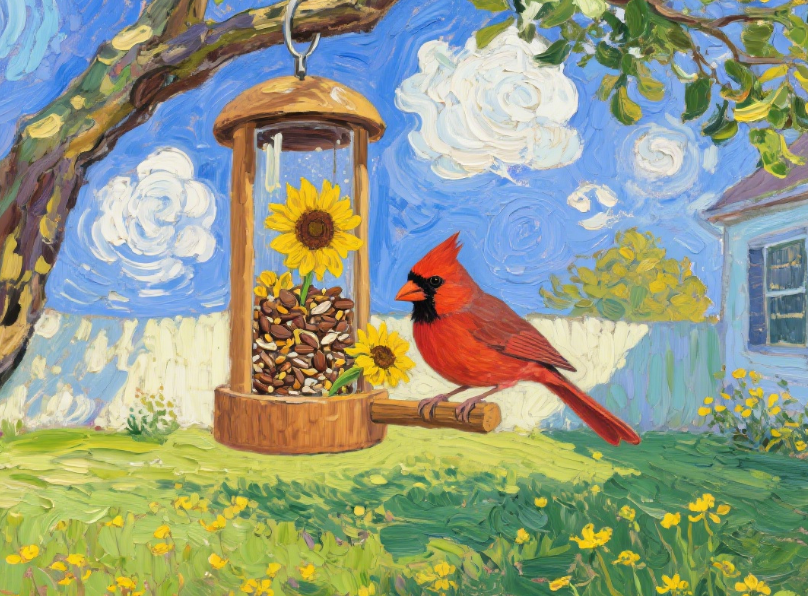
How can humans better observe the feeding behavior of birds in American courtyards through bird feeders, along with some precautions
Aug 14, 2025 Bird knowledge presenters