The natural response logic of courtyard birds in the Americas to "process updates"
If we understand "process updates" as changes in various environmental rules and resource acquisition patterns that affect the survival of birds in American courtyards - whether it is process adjustments brought about by human activities (such as feeding time, garbage cleaning frequency) or periodic changes in the natural environment (such as plant fruiting cycles, insect activity patterns), birds in American courtyards will rely on their evolved adaptive instincts to respond through the core logic of "perception probing solidification". These coping behaviors are essentially a manifestation of the dynamic balance between organisms and the environment, which can be elaborated from the following dimensions.
1、 Instant perception: capturing process change signals with keen senses
Birds in American courtyards, such as the main Cardinals, Blue Jays, and Swallows, have sensory systems that far exceed those of humans, which is the basis for their first perception of "process updates". For different types of process changes, their perception methods have their own emphasis:
-Perception of changes in human activity processes: If the courtyard owner adjusts the feeding time (such as changing from morning to evening) or changes the type of food fed (from grains to nuts), birds will capture signals through both visual and auditory senses. Jia Yan will identify new patterns by observing changes in human activity trajectories in the courtyard, such as the act of picking up a food bowl in the evening; The main Cardinals, on the other hand, rely on their sensitivity to food odors and arrive at the food source within minutes after new food is introduced. They even remember fixed human actions and wait on nearby branches in advance.
2、 Exploring Adaptation: Validating the Feasibility of New Processes through Flexible Behavior
After perceiving changes in the process, birds in the American courtyard do not immediately solidify their behavior, but adapt to new rules through a "small-scale exploration+risk assessment" strategy. This strategy ensures survival safety and quickly locks in the optimal solution:
In human intervention process updates, the exploratory behavior of birds is particularly evident. For example, if an automatic feeder is installed in the courtyard (with the process updated to "timed and quantitative feeding"), a small number of bold birds (such as blue jays) will approach first in the first few days. They will stay around the feeder to observe and confirm that there is no threat before pecking, and each time they peck, they will quickly retreat to a safe area. After verifying the safety of the new process, other birds (such as the main Cardinals and Sparrows) will gradually follow suit, and the entire adaptation process usually lasts for 3-7 days.
For natural process updates, bird exploration relies more on population experience. If the fruiting period of oak trees in the courtyard is delayed in a certain year (due to changes in the food acquisition process), the thrush will first expand its foraging range and explore surrounding areas such as maple and hawthorn trees for foraging. At the same time, some individuals will still stay around the oak tree and regularly check the results until the oak fruit matures, and then refocus on the food source. This "dispersed exploration+fixed-point stay" model can minimize the risk of food shortage.
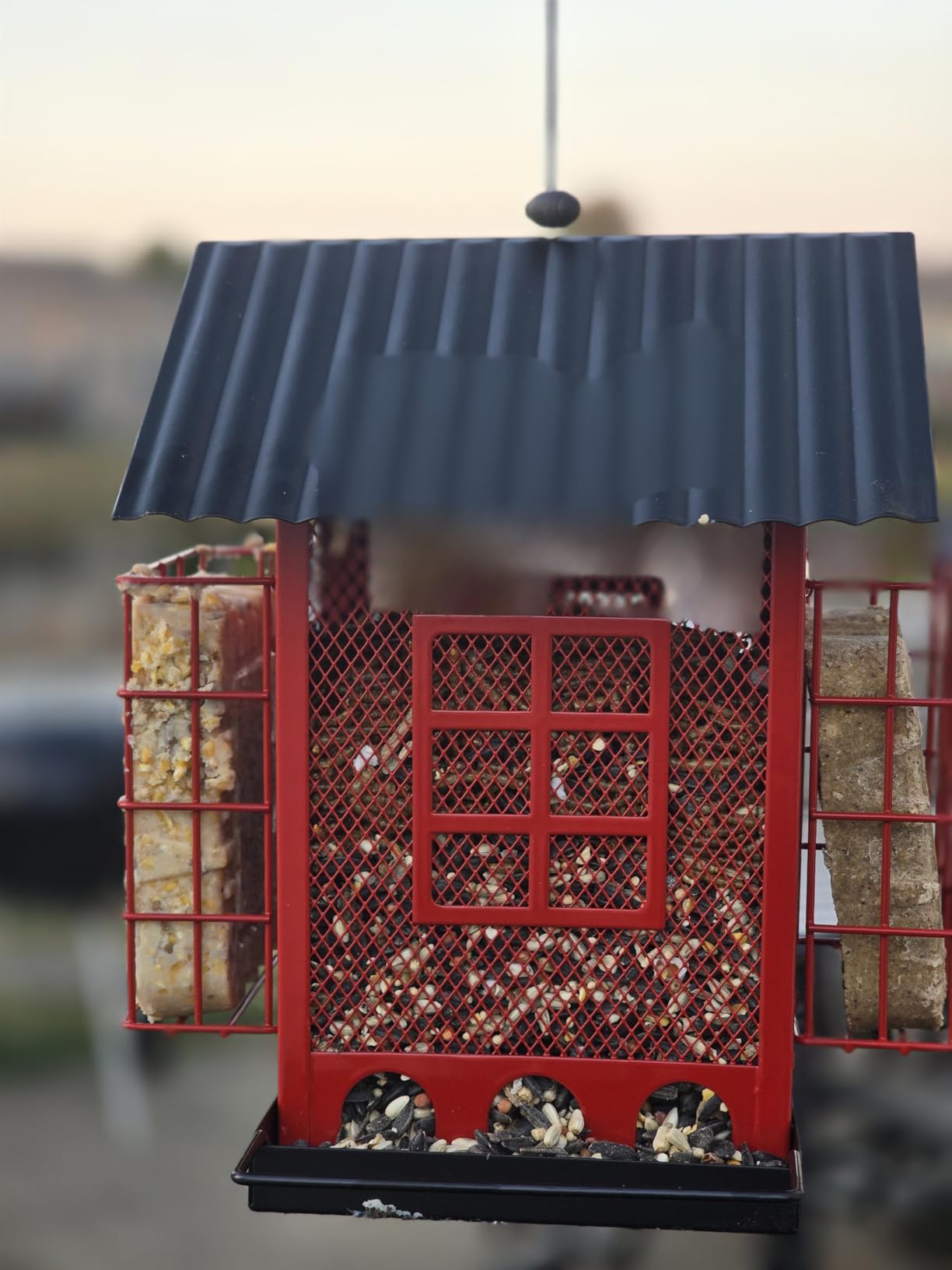
We recommend our Flowafoli bird feeder!