1、 Rapid reconstruction of habitat anchor points: bidirectional adaptation of natural selection and artificial facilities
As a "semi artificial ecosystem", the primary task of birds migrating back to the courtyard is to quickly locate a safe habitat, which highly relies on natural clues and convenient conditions provided by humans
The principle of "concealment priority" in site selection: Taking the most common American mockingbird in North America as an example, they will prioritize building nests in corners of the courtyard with dense shrubs and far away from human traffic. Nesting sites are often located at branches 1.5-3 meters above the ground, using leaves to block and form a natural concealment barrier. And cave nesting birds such as Carolina tits and white breasted pheasants directly use the tree holes of old locust trees or human hung nest boxes - if the entrance diameter matches (about 3-5 centimeters), the utilization rate of these artificial nest boxes can reach three times that of natural tree holes, and they can avoid the invasion of natural enemies such as snakes.
The strategy of using local materials for building nests: Birds make full use of natural and artificial waste in the courtyard: American mockingbirds use thin branches to build frames, with grass leaves trimmed from the lawn and pet hair shed as the inner layer; Swallows collect soil from under the eaves and mix it with saliva to build bowl shaped nests with strong adhesion. Moreover, some sparrows use cotton threads and old sweater fibers discarded by humans, which have a 40% higher insulation property than natural grass leaves and can significantly improve the survival rate of chicks.
The key role of the artificial "microhabitat": the uncut shrubs and reserved dead branches (stumps) in the courtyard become important "survival supply stations" - beetle larvae breeding in the dead branches are the core food for robin nestlings, while the shrubs provide nesting materials and shelter for adult birds in rainstorm. According to data from the US Fish and Wildlife Service (FWS), courtyards that preserve "wild areas" have a 62% higher success rate for bird nesting than fully trimmed courtyards.
2、 Layered adaptation of resource acquisition: efficient utilization of food and water sources
The distribution of resources in the courtyard has "artificial intervention characteristics", and birds achieve efficient access to food and water sources through differentiated strategies, while avoiding competition and risks:
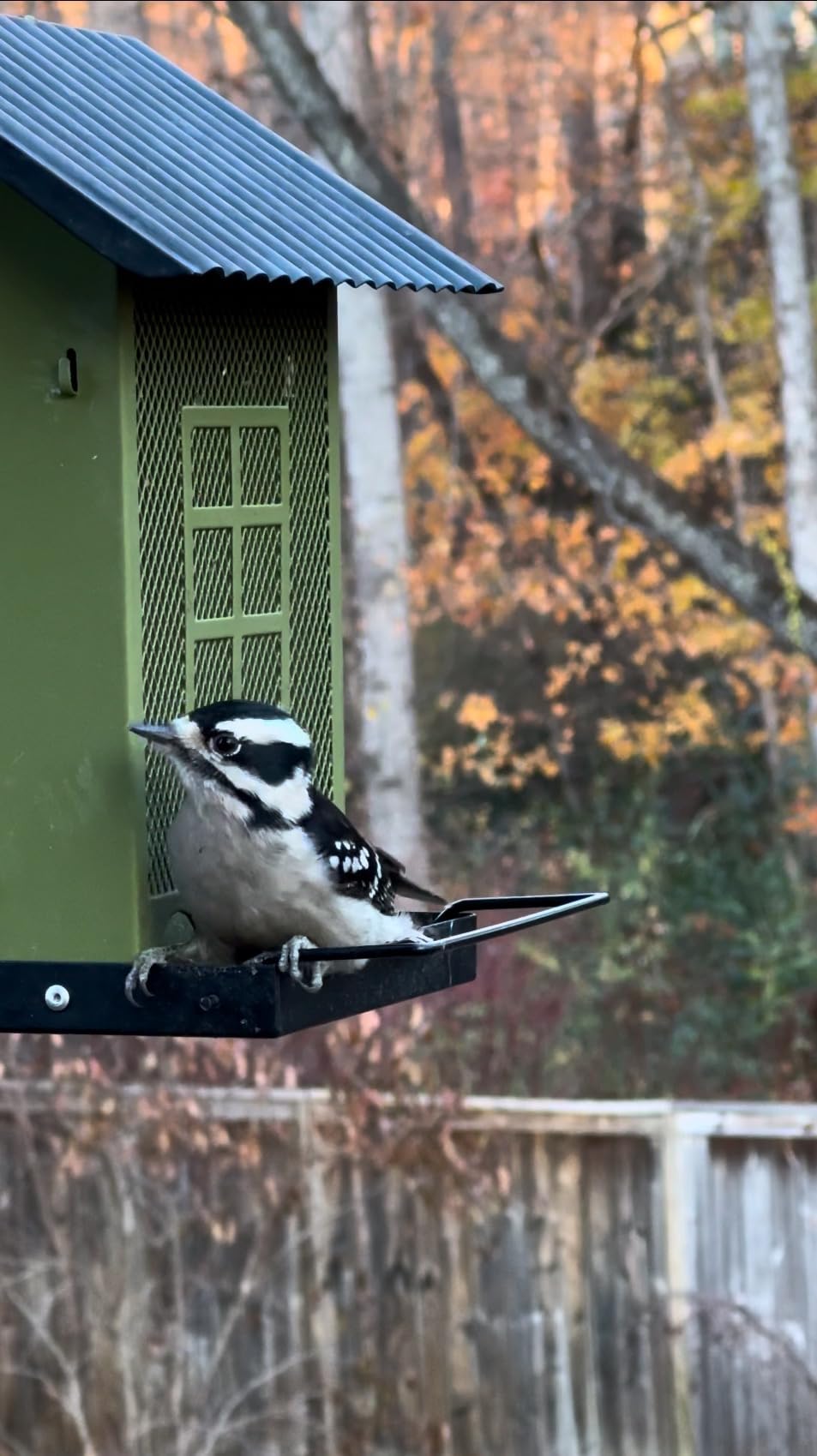
The "dual track system" of food sources: on the one hand, it relies on the natural ecological chain - tits peck at aphids in the cracks of tree bark, mockingbirds search for earthworms on the lawn, and hummingbirds focus on the nectar of honey plants in the courtyard (such as red flowered half lotus and bee mint); On the other hand, actively utilizing human supply - in bird feeders, the American goldfinch prefers to feed on Nyjer seeds, while the blue raven prefers peanut shavings. This "food specialization" reduces interspecific competition. Research shows that courtyards equipped with diverse feeders have a bird species richness 2.3 times higher than courtyards without feeders.
The "safety consideration" of water source utilization: Birds are much more strict in choosing water sources than food, and tend to prefer shallow water areas (water depth<5 centimeters) with vegetation cover around them - stone shallow basins in courtyards and uncovered fish tank edges are ideal choices. They will first stop at nearby branches and observe for 1-2 minutes to confirm that there is no threat before bending down to drink water, while maintaining a vigilant posture with their tails raised. This behavior is more pronounced in yards with pet cats.
The "time avoidance" of human activities: Birds adjust their behavior according to the activity patterns of their owners in the courtyard: when humans are frequently active from 7-9 in the morning, they tend to hide in bushes for rest; After 10 o'clock, there is a decrease in activity, and people focus on feeding and foraging on the lawn; In the evening, the sunset light is used to comb the feathers and repair the damaged feathers during migration.
We recommend our Flowafoli bird feeder!