Recently, courtyard birds in the Americas are facing multiple challenges such as climate change, habitat changes, food shortages, disease transmission, and human interference, which directly affect their survival and reproduction. In order to adapt to environmental changes and ensure their survival, different types of courtyard birds have evolved diverse coping strategies, covering behavioral adjustment, physiological adaptation, habitat selection, and optimization of foraging patterns. The specific manifestations are as follows:
1、 Coping with Climate Change: Dual Adjustment of Behavior and Space
The temperature rise caused by global warming is one of the main challenges faced by courtyard birds in the Americas. They mainly respond by "adjusting their time rhythm" and "small spatial migration", and tend to prefer the former
In terms of spatial migration, birds show a trend of "moving towards coolness", but the migration amplitude is relatively small: on average, they move 1.1 kilometers northward and 1.2 meters towards higher altitudes each year, and can only slightly avoid heat accumulation areas. At the same time, some birds that were originally migratory have chosen to give up long-distance migration and become resident birds in the courtyard due to the rising winter temperatures and relatively stable food supply in the courtyard, further adapting to local climate changes. In addition, some birds also utilize the layered structure of courtyard vegetation to inhabit tree shade and shrubs during high temperature periods, using vegetation cover to reduce heat absorption.
2、 Coping with Habitat and Food Dilemma: Optimizing Selection and Foraging Strategies
The recent challenges faced by American courtyards, such as habitat fragmentation, reduced native vegetation, and insect infestations caused by pesticide use, have directly led to food shortages and difficulties in building nests for birds. To address these issues, birds mainly respond by adjusting their habitat preferences, optimizing their foraging patterns, and utilizing human assisted resources.
In terms of habitat selection, birds tend to choose courtyards with rich vegetation and diverse structures - prioritizing areas where native plants (such as dogwood, holly, oak, etc.) are planted. These plants not only provide the necessary branches, leaves, and fibers for building nests, but also attract insects, bear fruit, and avoid invasive plants occupying living space. For example, the dark eyed bunting originally lived in forests and shrubs, but in recent years it has "migrated" to urban courtyards such as Los Angeles on a large scale. In just 20 years, its beak has evolved to be longer and sharper to adapt to different foraging environments in courtyards and cope with the urbanization of its habitat. The brown kitchen bird in South America has built special mud nests to meet the climate challenge of its habitat. Its hemispherical mud nests achieve constant temperature by virtue of thick mud walls, heat insulation during the day and heat insulation at night. At the same time, the narrow and tortuous entrance can resist natural enemies, and the hard mud walls can resist rainstorm erosion, becoming a "natural fortress" for the harsh environment of its habitat.
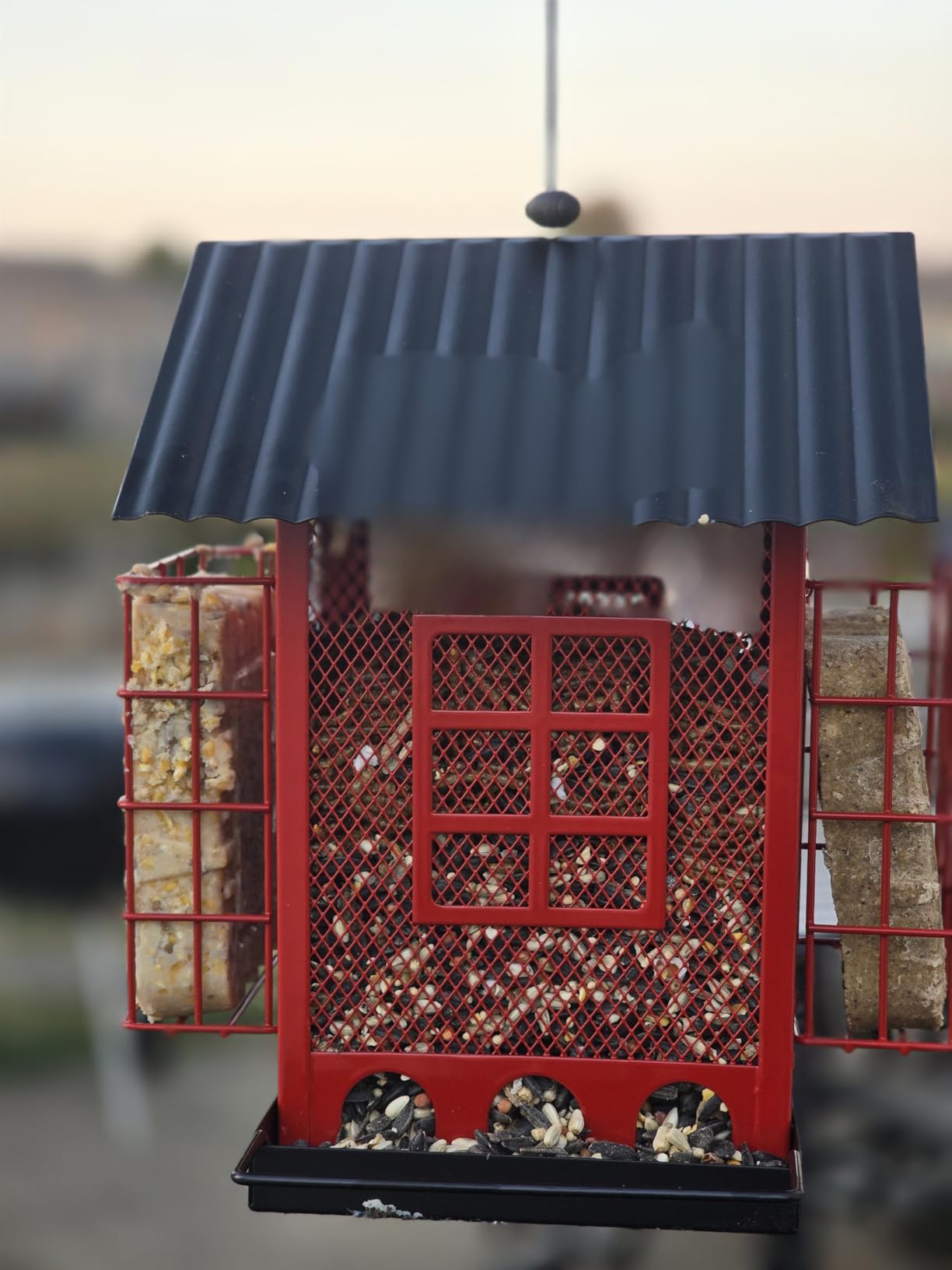
In terms of foraging strategies, birds flexibly adjust their diet and foraging methods: insects and worms are the main food sources in spring and summer, while in winter they turn to cold resistant foods such as berries and seeds to avoid food shortages; For the common American goldfinches in the courtyard, they use their feet to hang on seed spikes for foraging, and can also use the flexible operation of their beaks to obtain difficult to reach food. At the same time, they frequently visit the bird feeders set up by humans, especially in winter, where bird feeders become an important source of food. In addition, birds also utilize the dead wood and fallen leaves in the courtyard, which not only provide insect food but also provide a hiding place for birds foraging on the ground, reducing the threat of natural enemies. Some birds also store food and reserve it during times of food scarcity, further increasing their chances of survival.
3、 Coping with Disease and Natural Enemy Threats: Proactive Avoidance and Environmental Adaptation
In response to disease transmission, birds will actively reduce their stay time in gathering places such as bird feeders and water dispensers to avoid cross infection; At the same time, they will avoid their companions' fecal areas, reducing the probability of contact with pathogens. When sick individuals are found in the group, they will actively stay away to prevent the spread of the disease - this indirectly cooperates with human behavior of maintaining the cleanliness of bird feeders and timely handling of sick birds, jointly reducing the risk of disease transmission.
In response to the threat of natural enemies, birds optimize their nesting locations by selecting areas with strong concealment that are difficult for natural enemies to reach, such as the branches of tall trees, deep shrubs, or using tree holes or artificial bird boxes to build nests, reducing the intrusion of natural enemies; On the other hand, through group activities, vigilance is enhanced, with multiple birds foraging and inhabiting together. The mud nest design of the brown stove bird is specifically designed to defend against natural enemies, and the narrow and winding entrance prevents larger raptors and snakes from entering, effectively protecting the safety of chicks. In addition, some bird species gather together in winter to stay warm and enhance their vigilance against natural enemies through collective strength.
We recommend our Flowafoli bird feeder!