In the Americas, courtyards are not only spaces for beautifying living environments, but also places for bird enthusiasts to have intimate contact with nature. Different styles of bird feeders, paired with suitable food, can attract colorful birds to come and forage, adding vitality and energy to the courtyard. Next, let's delve into how to choose appropriate food based on the type of bird feeder.
1、 Common types of bird feeders and their compatible foods
(1) Platform type bird feeder
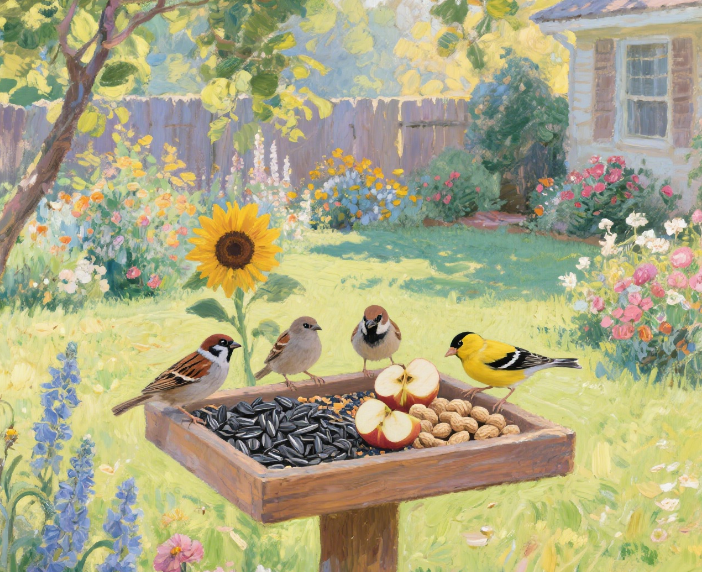
Platform type bird feeders are usually an open flat surface that facilitates birds of all sizes to stay and forage. Due to its openness, it is suitable for storing various types of food.
Seed type: Black sunflower seeds are one of the most popular choices, loved by almost all seed eating birds. It is rich in oil and can provide abundant energy for birds. In addition, mixed grains such as white perilla, millet, and barnyard grass can also meet the taste needs of different birds, attracting small birds such as sparrows, goldfinches, and wax billed sparrows.
Fruits: Apples, bananas, grapes, and other fruits that are cut into small pieces can not only attract birds such as thrushes and blackbirds who love fruits, but also replenish water for birds in summer.
Nuts: Breaking peanuts, walnuts and other nuts and placing them on a platform can attract birds such as crows and woodpeckers, who like to peck hard nuts with their beaks.
(2) Hanging bird feeder
There are various types of suspended bird feeders, and different structures correspond to different foods.
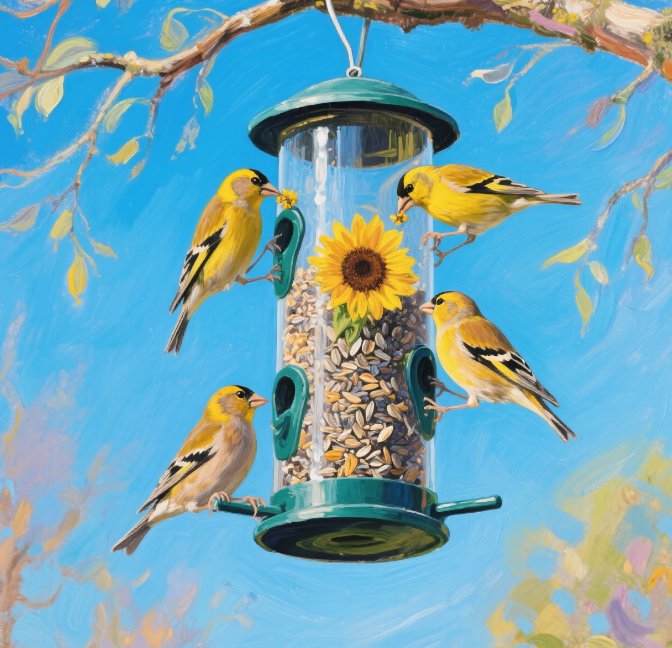
Tubular bird feeder: This bird feeder has a slender tube, usually with multiple feeding holes, suitable for placing small seeds. Sunflower seed kernels are an excellent choice as they remove the outer shell, making it easier for birds to peck directly and avoiding the problem of shell accumulation. In addition, Nyjer (goldfinch seeds) is also a classic combination of tubular bird feeders, which can attract brightly colored goldfinches. Nyjer's small particles are just suitable for leaking out of the small holes of the tubular bird feeder.
Mesh type bird feeder: The mesh of the mesh type bird feeder is relatively large, suitable for placing large pieces of food. Whole peanuts, pine cones, and other foods are good choices, as they can be easily caught by birds such as sparrows and woodpeckers. At the same time, breaking bread, cookies, etc. into small pieces and putting them in a mesh bag can also attract omnivorous birds such as crows and magpies.
Dish shaped bird feeder: The dish shaped bird feeder resembles a shallow dish and is suitable for placing liquid or semi-solid food. In spring and summer, honey water and sugar water can be placed in a dish to attract birds such as hummingbirds and sunbirds that feed on nectar. You can also place some jam, such as strawberry jam or blueberry jam, which can also attract these sweet birds.
(3) Hummingbird feeder
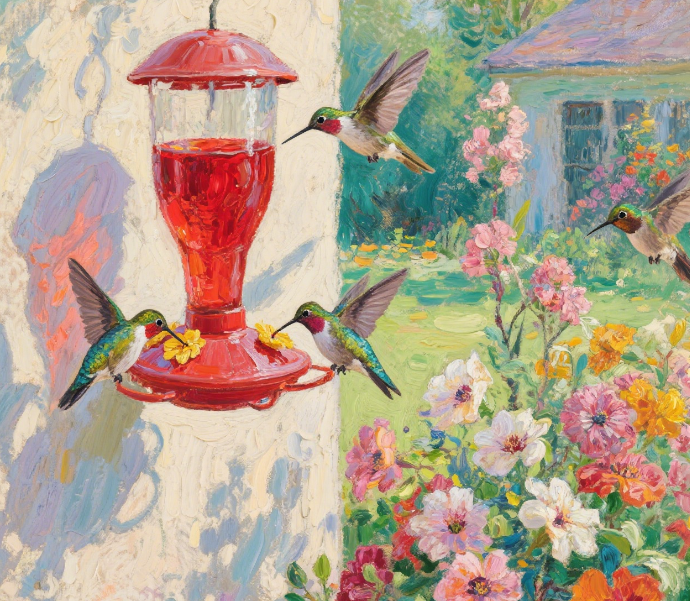
The hummingbird feeder is specially designed for hummingbirds, and its unique structure and color can attract hummingbirds to come. Hummingbirds mainly feed on nectar, so special hummingbird syrup should be placed in the hummingbird feeder.
Homemade Hummingbird Syrup: Boil water in a ratio of 4 parts water to 1 part white sugar, add white sugar, stir until completely dissolved, and cool before use. Do not use brown sugar, honey, or artificial sweeteners, as these substances may be harmful to hummingbirds. Meanwhile, in order to mimic the color of nectar, a small amount of red food coloring can be added to the syrup, but it is important to ensure that the coloring is safe and non-toxic.
(4) Woodpecker bird feeder
Woodpeckers like to peck at insects and sap on tree trunks, so the design of woodpecker feeders usually simulates the structure of tree trunks.
Insect food: Live insects such as mealworms and bread worms can be placed in the bird feeder. These insects are rich in protein and are the favorite of woodpeckers.
Sap substitute: peanut butter, corn flour, oatmeal, etc. are mixed into a paste and smeared into the groove of the bird feeder to imitate the texture and nutrition of the sap, attracting woodpeckers to peck.
2、 Precautions for Food Selection
(1) Seasonal factors
The climate in the Americas varies significantly throughout the four seasons, and the food needs of birds also change with the seasons.
Spring and summer: This is the breeding season for birds, which require a large amount of protein to feed their chicks. In addition to providing regular seeds and fruits, the supply of insect food should be increased, such as placing insect houses or adding mealworms to bird feeders. At the same time, due to the high temperature, attention should be paid to the freshness of food, and spoiled food should be replaced in a timely manner to prevent bacterial growth.
Autumn and winter: Birds need to store enough energy to resist the cold, so high-fat foods are more important. You can increase the amount of black sunflower seeds and nuts added, while providing some high calorie foods such as peanut butter, butter balls, etc. In winter, a warm water container can also be placed near the bird feeder to provide drinking water for birds, as natural water sources may freeze.
(2) Bird habits
Different species of birds have different foraging habits and taste preferences. Understanding the habits of common birds in the local area can help choose more suitable food. For example, North American Cardinals like to forage on the ground, so they can sprinkle some seeds under the platform type bird feeder; And sparrows like to jump and forage between branches, so hanging bird feeders are more suitable for them.
(3) Food safety
Ensuring the freshness and cleanliness of food is crucial. Regularly clean the bird feeder to avoid the accumulation of food residues, mold, bacteria, and pests. Meanwhile, choose high-quality food and avoid using expired or contaminated seeds, fruits, and nuts.
3、 Tips for using bird feeders
(1) Reasonably place bird feeders
Placing bird feeders in appropriate positions can improve the foraging efficiency and safety of birds. Choose a place with a wide view and sufficient lighting, but avoid direct sunlight to prevent food from spoiling too quickly. Meanwhile, bird feeders should be kept away from windows to prevent birds from hitting them and causing harm. The bird feeder can be hung on a tree branch or installed on a specialized bird feeder bracket.
(2) Diversified food combinations
To attract more types of birds, a variety of foods can be mixed and placed in the bird feeder. For example, in a platform style bird feeder, seeds, fruits, and nuts are mixed and placed to meet the taste needs of different birds. It is also possible to regularly change the types of food to maintain the freshness of birds.
(3) Observation and recording
After placing the bird feeder, spend some time observing the birds that come to forage, recording their species, quantity, and behavioral habits. This can not only increase understanding of birds, but also adjust food selection and placement of bird feeders based on observation results to better meet the needs of birds.
By selecting the appropriate food for bird feeders and paying attention to usage techniques and precautions, you can create a vibrant bird paradise in the American courtyard, sharing the beauty of nature with these adorable creatures.
The above has introduced you to the key points of food selection for bird feeders in American courtyards. Do you have any specific bird species you want to attract, or do you have any other questions about the type of bird feeder? You can tell me anytime.