The following are examples of how various bird feeders are used in American gardens:
Tube-shaped bird feederSuitable scenarios: Can be hung on tree branches or placed on the ground using a pole. Ideal for open areas in gardens where predators like cats cannot easily reach.
Attracts birds: Primarily attracts small to medium-sized birds such as sparrows and starlings. If filled with wood shavings, feed, and mealworms, it can also attract woodpeckers.
Usage tips: Choose appropriately sized feeding holes and perches to control the types of birds that can access the feeder; select the appropriate size of tubular bird feeder based on the number of birds in the garden to prevent leftover food from spoiling.
Tray bird feeder
Suitable scenarios: Can be hung under a tree or placed on the ground, but it is best to have a rain shelter or similar structure. It can be placed near a window for easy observation of birds.
Attracts birds: Attracts various seed-eating birds such as pigeons, starlings, waxwings, and sparrows.
Usage tips: Ensure drainage holes are present on the tray to prevent water accumulation, which can cause seeds to sprout or mold; do not overfill the feeder to avoid food being scattered by birds.
Suet feeder
Suitable scenarios: Typically nailed or tied to tree trunks, posts, or hung under trees.
Attracts birds: Primarily attracts woodpeckers, chickadees, titmice, jays, and starlings, among others.
Usage tips: Be mindful of potential safety hazards from metal wires to prevent birds from getting stuck or injured.
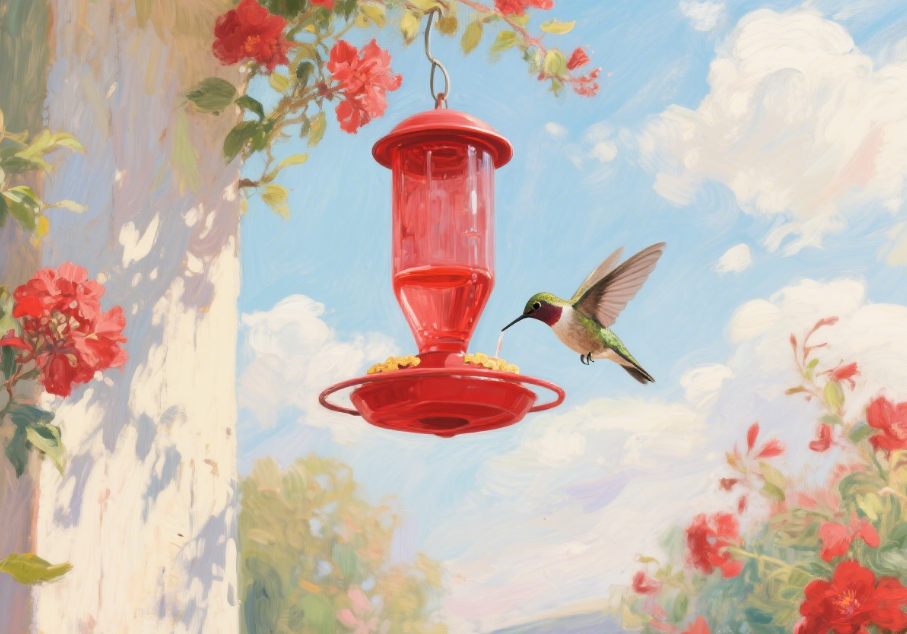
Hummingbird feeder
Suitable scenarios: Can be hung in a location with abundant flowers, ample sunlight, and good visibility in a courtyard, at a height convenient for observing hummingbirds.
Attracts birds: Specifically designed to attract hummingbirds.
Usage tips: Food is typically mixed in a 3:1 ratio of water to sugar to create a red solution; using a red feeder enhances effectiveness; clean the feeder regularly to prevent sugar water from spoiling and breeding bacteria; apply a small amount of Vaseline to the feeder's surface to prevent ants from climbing up.
Peanut feeder
Suitable scenarios: Can be hung on tree branches or placed on a dedicated stand, positioned slightly higher to prevent easy access by squirrels.
Attracting birds: Popular with blue jays, chickadees, titmice, and woodpeckers.
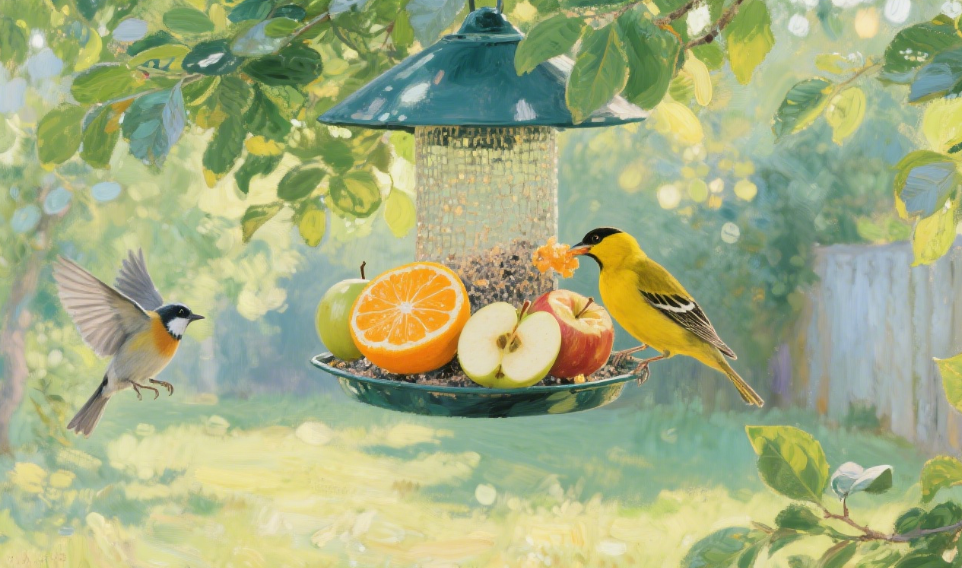
Usage tips: Choose high-quality, non-perishable peanuts; promptly remove any remaining peanut debris to prevent mold and spoilage.Fruit Bird FeederSuitable Scenarios: Hang near fruit trees in the courtyard or in shaded areas to prevent fruits from spoiling under direct sunlight.
Attracts Birds: Attracts birds such as orioles, dona birds, waxbills, and magpies.
Usage Tips: Replace with fresh fruits such as oranges, grape jelly, and apples to maintain freshness and attractiveness.Funnel-shaped bird feederSuitable scenarios: Can be placed on a platform in the courtyard or hung under the eaves, in a location convenient for adding food and observation.
Attracts birds: Attracts various small birds such as redpolls and titmice.
Usage tips: Choose appropriate seeds such as sunflower seeds; regularly clean debris and leftover seeds from the funnel to prevent blockages.Platform Bird FeederSuitable Scenarios: Can be placed on the ground, deck, or hung in high places, suitable for areas with open views.
Attracts Birds: Attracts various bird species, including larger birds like mourning doves and ground-dwelling birds like sparrows.
Usage Tips: Ensure the bottom has drainage holes or uses a mesh structure for drainage; can install a shade or rain cover on top.