Across the vast expanse of the American continent, from the peaks of the Andes Mountains to the depths of the Amazon Rainforest, from the North American prairies to the islands of the Caribbean Sea, birds with their graceful flight patterns create one of the most beautiful scenes in nature. Whether it's the swift-winged peregrine falcon, the gracefully gliding Andean condor, or the hummingbird that hovers effortlessly, the flight of these common American birds appears light and elegant, yet it is underpinned by complex and intricate scientific principles. From the basic laws of aerodynamics to the unique physical structure of birds, from the coordinated operation of flight muscles to the special functions of feathers, every detail contributes to the support of bird flight.
(1) Aerodynamics Basics: The Theoretical Foundation of Bird Flight
Aerodynamics is the study of the interaction between air and objects, serving as the cornerstone for understanding the principles of bird flight. During flight, birds are primarily subject to four forces: lift, gravity, thrust, and drag.
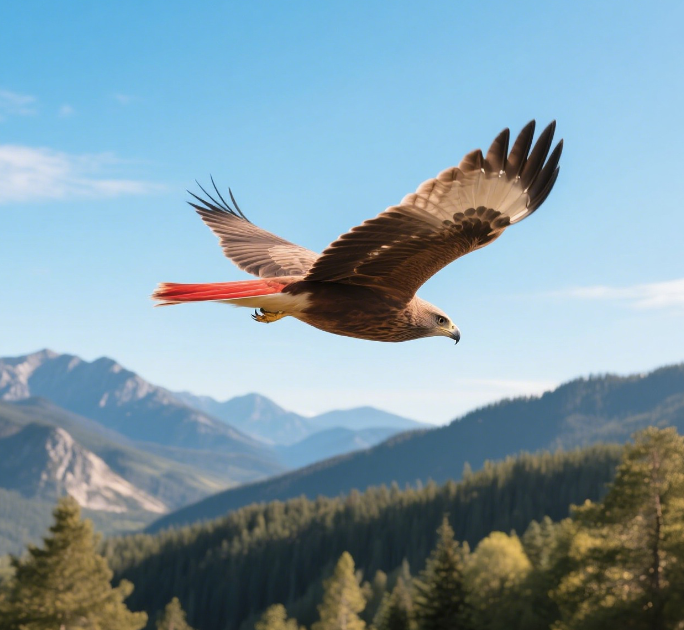
Lift is the key force enabling birds to overcome gravity and maintain flight in the air, based on the Bernoulli principle. When birds fly, the unique shape of their wings (a streamlined design with an upper convex and lower flat surface) causes different airflow speeds on the upper and lower surfaces of the wings. The airflow speed is faster on the upper surface, resulting in lower pressure, while the airflow speed is slower on the lower surface, resulting in higher pressure. This pressure difference generates upward lift, supporting the bird's weight. For example, the red-tailed hawk, commonly found in the Americas, has broad wings that generate sufficient lift during flight, enabling it to circle at high altitudes for extended periods while searching for prey on the ground.
Gravity is the downward force exerted by Earth on a bird's body, opposing the direction of lift. Birds must generate sufficient lift to overcome gravity in order to achieve flight. Thrust is the force that propels birds forward, primarily generated by the flapping of their wings. During wing flapping, birds contract and relax their muscles to move the wings backward and downward through the air. According to Newton's Third Law, the air exerts an equal and opposite reaction force on the birds, propelling them forward. Drag is the force that hinders birds' flight, including air friction resistance against the bird's body and pressure difference resistance caused by the pressure difference between the front and back of the bird's body. Birds optimize the shape of their bodies and wings to reduce air resistance and improve flight efficiency.
(2) Body Structure: A Perfect Design for Flight
The body structure of birds has evolved over a long period of time, highly adapted to a flying lifestyle, providing a solid physical foundation for their flight.
The bones of birds have unique characteristics: they are hollow and sturdy, filled with air inside. This structure ensures bone strength while significantly reducing the bird's weight, which is advantageous for flight. For example, the wild turkey of the Americas, despite its large size, can fly relatively effortlessly due to its hollow bones. Birds have highly developed sternums, forming prominent keels, with powerful pectoral muscles attached to the keel. The pectoral muscles are the primary source of power for bird flight, with their contraction and relaxation driving the up-and-down movement of the wings. Take the Andean condor as an example; its highly developed pectoral muscles generate tremendous force, propelling its massive wings in powerful flaps, enabling it to soar at high altitudes.
The respiratory system of birds is also highly adapted to their flying lifestyle. Birds possess a unique dual respiratory system, featuring not only lungs but also multiple air sacs. During flight, the air sacs assist in respiration, enabling more efficient gas exchange in the lungs and providing sufficient oxygen for flight. For example, in the case of the American golden plover, which undertakes long-distance migrations, the dual respiratory system ensures adequate oxygen supply during prolonged flight, enabling sustained high-intensity flight activity.
(3) Wings and feathers: the core tools of flight
Wings and feathers are the core structures that enable birds to fly, and their form and function are crucial to avian flight.
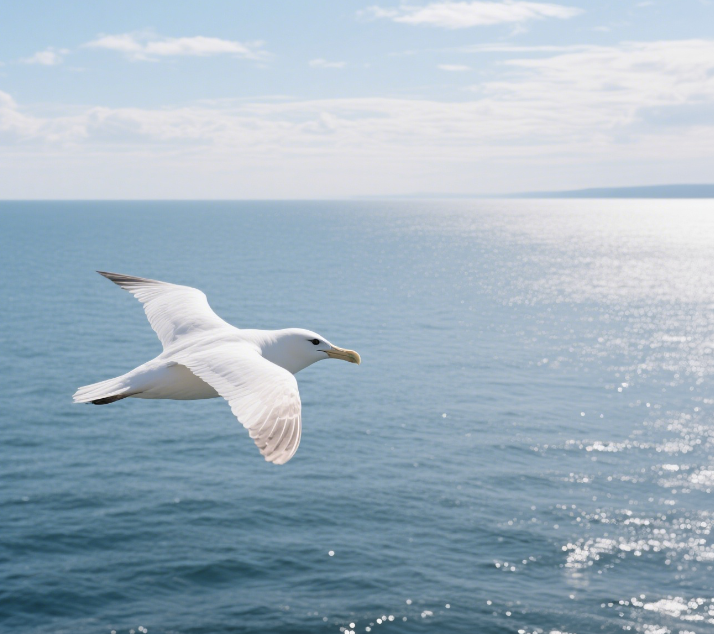
Different bird species have wings of varying shapes and sizes, and these differences are closely related to their flight patterns and lifestyle habits. For example, hummingbirds have short, flexible wings. This wing structure allows them to rapidly flap their wings (up to 50–80 times per second) while hovering, quickly changing the angle and direction of their wings to generate upward lift and control their flight posture, enabling them to precisely sip nectar from flowers. Albatrosses, on the other hand, have long, narrow wings, which are advantageous for long-distance gliding flights over the ocean. During flight, albatrosses utilize air currents over the ocean surface, spreading their wings and gliding long distances with minimal wing flapping, thereby significantly conserving flight energy.
Feathers also play a crucial role in bird flight. Bird feathers are categorized into primary feathers, down feathers, and filament feathers, among others. Primary feathers are the main feathers that form the wings and tail feathers, playing a crucial role in flight. The shafts of primary feathers are sturdy, and the vanes are composed of numerous interlocking barbs, forming a smooth and resilient surface that effectively cuts through the air, reduces aerodynamic drag, and generates lift during wing flapping. Tail feathers play a role in balancing and controlling direction during flight. Birds adjust the angle and shape of their tail feathers to change flight direction and stabilize flight posture. For example, woodpeckers flying through forests can quickly move up and down tree trunks and change direction by flexibly adjusting their tail feathers.
(4) Flight patterns: Diverse aerial postures
Common birds in the Americas exhibit a variety of flight patterns, each adapted to their distinct survival needs and ecological environments.
Flapping flight is the most common flight pattern, adopted by the majority of birds. During flapping flight, birds generate lift and thrust by continuously flapping their wings to achieve flight. The frequency and amplitude of wing flapping vary by bird species. Small birds like sparrows have a higher wing flapping frequency, reaching 10–20 times per second; while large birds like eagles have a relatively lower flapping frequency but a larger amplitude per flap, enabling greater force.
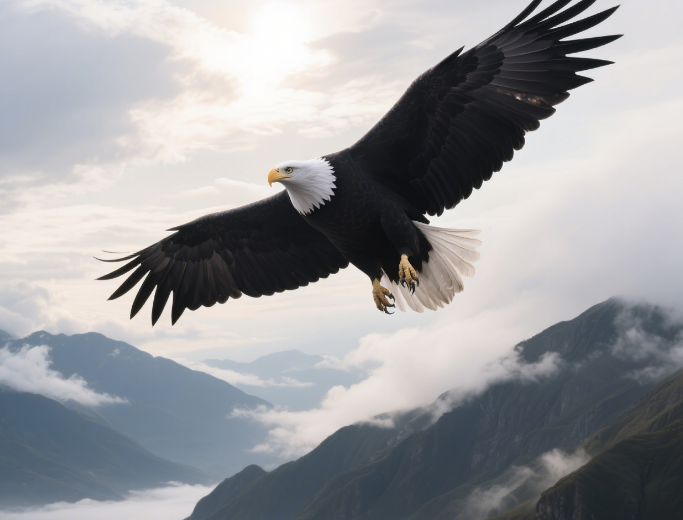
Gliding flight is a method of unpowered flight utilizing air currents. Many large birds, such as the Andean condor and the red-headed vulture, often utilize rising air currents to glide with their wings spread. They search for rising thermal currents or air currents generated by terrain in the air, leveraging the force of these currents to fly long distances without flapping their wings. This flight method significantly conserves energy, making it suitable for prolonged migrations and extensive foraging activities.
Hovering flight is a more specialized form of flight, with the hummingbird as a prime example. Hummingbirds rapidly flap their wings to create an air vortex around their bodies, generating upward lift that allows them to remain stationary in the air. Additionally, hummingbirds can precisely control the direction and angle of their wing movements to move forward, backward, left, or right. This unique flight pattern enables them to feed on nectar with pinpoint accuracy among flowers.
The flight of common birds in the Americas is the result of the interaction of various factors, including aerodynamics, body structure, wing feathers, and diverse flight patterns. Each bird species occupies a specific ecological niche in the Americas' ecosystems through its unique flight principles, showcasing the marvelous wisdom of life adapting to its environment. In-depth research into bird flight principles not only helps us better understand the mysteries of nature but also provides valuable inspiration and insights for technological innovations in fields such as aerospace.
The above provides a multi-dimensional analysis of the principles of bird flight in the Americas. If you are interested in the flight patterns of specific bird species or other related topics, feel free to share your thoughts with me.