The following are some common American bird feeders and their recommended placement locations in gardens, along with related instructions:
Feeder placement
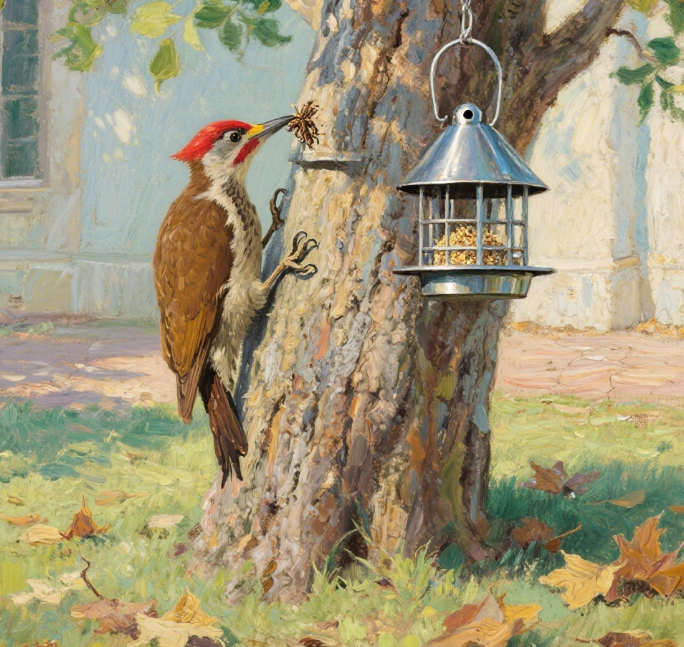
Woodpeckers: Place feeders vertically near trees to accommodate their natural feeding preferences. Choose quiet, sunny areas where woodpeckers feel safe and have good visibility while feeding.
Northern Cardinal: Place feeders near dense shrubbery, as Northern Cardinals prefer such areas for nesting and shelter from the elements. They primarily feed on seeds, fruits, and insects. Placing feeders containing black oil sunflower seeds, red flower seeds, and suet nearby will attract them.
Titmouse: It is suitable to place the feeder in a quiet area with trees. Titmice feed on insect eggs and larvae, and forests provide them with abundant food sources and nesting spaces.
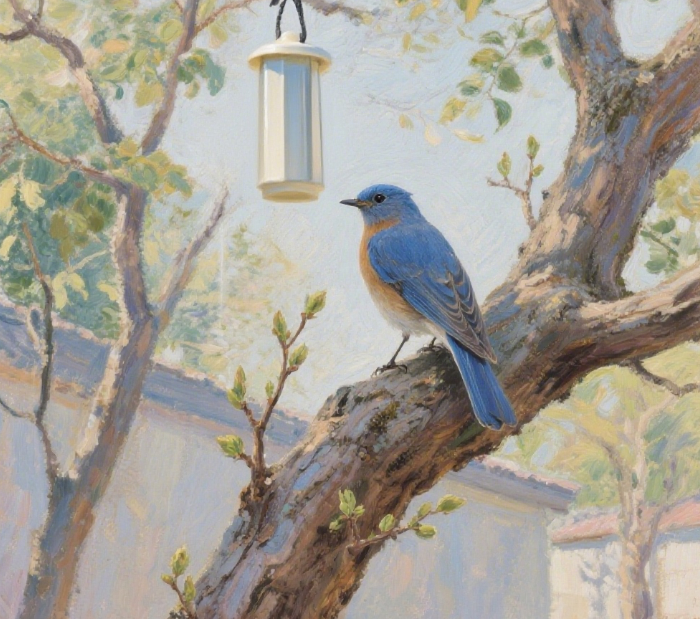
Blue Jay: The feeder should be installed in an open area away from competition with sparrows, such as on branches at the edge of a yard, surrounded by sparse trees and low-lying groundcover plants. This environment aligns with the blue jay's preferences.
Goldfinches: Since goldfinches prefer to perch on the highest branches of mature trees, feeders can be hung on higher branches. Planting local fruit trees such as mulberry and wild cherry trees, as well as flowering trees like crabapple and hawthorn, can better attract them.
Placement of bird baths
Woodpeckers: They prefer quiet, private baths close to the ground. Bird baths can be set up in shaded areas away from the center of the yard, such as near shrubs in a corner. The bath should be very shallow, approximately 1.5–2 centimeters deep, and low perches can be placed around the bath to encourage woodpeckers to use it.
American robins: These are enthusiastic bathers. The birdbath can be placed near the lawn, making it convenient for them to bathe after feeding on earthworms, insects, and berries. It is important to maintain a healthy lawn and avoid using pesticides.
Ruby-throated Hummingbird: Bird baths can be placed near areas with nectar-rich flowers, such as red flowers, bee flowers, trumpet flowers, and sage, to allow them to clean themselves and replenish fluids after feeding on nectar.
Placement of nesting boxes/nesting boxes
Woodpeckers: Some woodpeckers, such as the North American black woodpecker, prefer dead trees. Nesting boxes can be placed near dead trees or tied to posts, slightly above ground level, at a height of approximately 2-3 meters above the ground, ensuring they feel safe while allowing easy access.
Blue Jay: Nest boxes should be installed in suitable locations away from sparrow competition, such as on trees at the edge of a yard, approximately 1.5-2 meters above the ground, in an open environment with sparse trees and low-growing groundcover plants.
White-breasted Nuthatch: If natural cavities are limited, install appropriately sized nest boxes on mature oak trees or other hardwood trees at a height of approximately 2-5 meters above the ground, allowing them to access insect resources on the tree trunks.
Yellowhammer: Birdhouses or nesting baskets should be placed at least 8 feet (approximately 2.4 meters) above the ground and in areas with sufficient open space, such as the tops of taller trees in the yard or on isolated poles in open areas, to accommodate the birds' preference for open habitats.