In the grand tapestry of life in nature, birds and humans appear to occupy distinct ecological niches, yet they share numerous remarkable similarities in their behavioral patterns. These parallels not only highlight the marvels of evolutionary development but also invite us to reexamine our relationship with these feathered creatures from a fresh perspective.
(1)Foraging and Diet: Resonance in Strategy and Preference
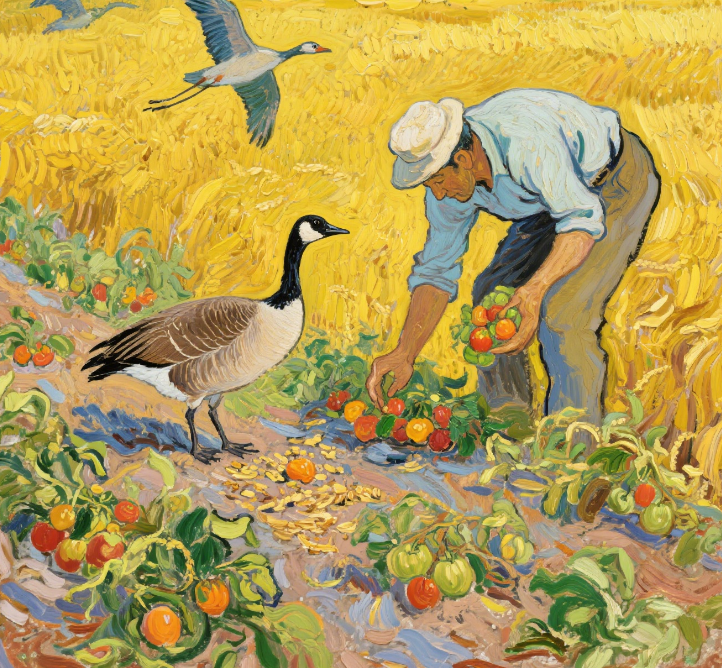
Both humans and birds exhibit a high degree of strategic behavior in foraging and diet. To obtain food, many birds adjust their diets and foraging locations according to seasonal changes. For example, migratory birds precisely locate areas rich in food during their migrations, much like humans purchase seasonal fruits and vegetables based on seasonal changes to meet their needs with the produce available at different times of the year. Some birds also use external objects to achieve their foraging goals, much like humans use tools to obtain food. The Galápagos woodpecker finch uses thin branches or cactus spines to extract insects from tree holes, a behavior reminiscent of early humans using stone tools to cut food or dig up roots.
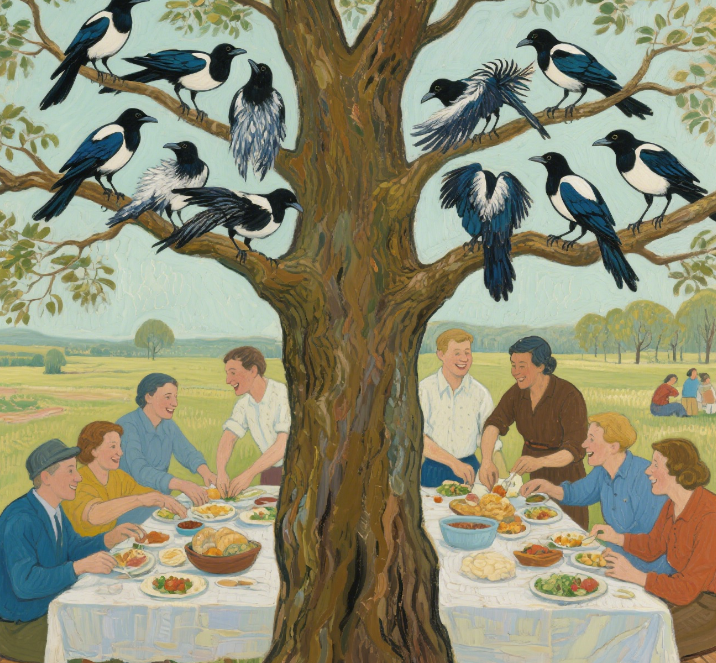
In terms of dietary preferences, both birds and humans exhibit “picky eating” behavior. Parrots prefer to select the most plump seeds from fruits, and humans often choose foods they prefer. Additionally, some birds, like humans, exhibit food-sharing behavior. Crows bring found food back to their nests to share with their companions, a practice that aligns with humans sharing meals at the table to foster emotional connections.
Social interaction and communication: the transmission of emotions and information
Social behavior is a key aspect where birds and humans share similar lifestyles. Many bird species have complex social structures, much like humans forming families, communities, and nations. Take magpies as an example: they often operate in family groups, with members collaborating to defend against predators and search for food. Humans also achieve common goals through division of labor and cooperation within families and social groups.
In terms of communication methods, birds convey information through calls and body movements, while humans use language, expressions, and gestures to communicate. Some bird calls have specific meanings, such as warning companions of impending danger or attracting mates, which is similar to human language functions—both serve to express emotions and convey information. Additionally, bird groups also have “social etiquette.” For example, peacocks display their beautiful tail feathers to attract mates, while humans also pay attention to their attire and behavior in social settings to present a good image and attract others' attention.
(2)Nest-building and habitation: the wisdom of spatial design
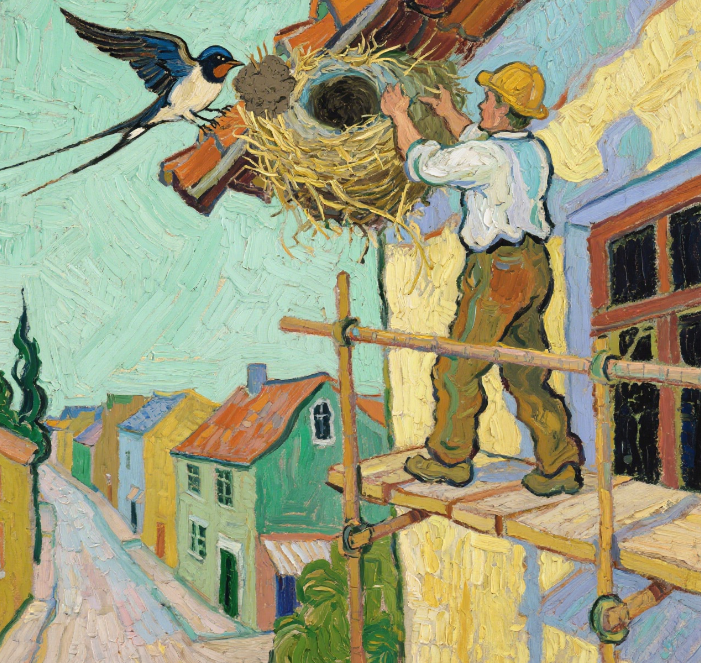
Bird nest-building and human house-building both reflect a meticulous approach to creating living spaces. Different bird species construct unique nests based on their needs and environmental conditions. Swallows build bowl-shaped nests under eaves using mud and grass stems, while humans construct various types of houses based on geographical conditions and lifestyle needs. Functionally, nests and houses provide safe and comfortable living spaces for individuals or groups, serving as places for rest and reproduction.
When selecting living environments, both birds and humans tend to seek out resource-rich, safe locations. Birds choose areas near water sources, with ample food supplies, and good concealment for nesting, while humans consider factors such as surrounding living resources and safety when selecting residential areas. Additionally, some bird species decorate and maintain their nests, much like humans renovate and clean their homes to maintain a comfortable and tidy living environment.
(3)Rearing and Education: Investment in Raising Offspring
The behaviors exhibited by birds during the rearing process share many similarities with human educational methods. Most bird parents jointly assume the responsibility of raising their young, tirelessly searching for food and feeding the chicks until they can live independently. This mirrors the behavior of human parents who meticulously care for their children, providing them with the necessities of life and ensuring their safety during growth.
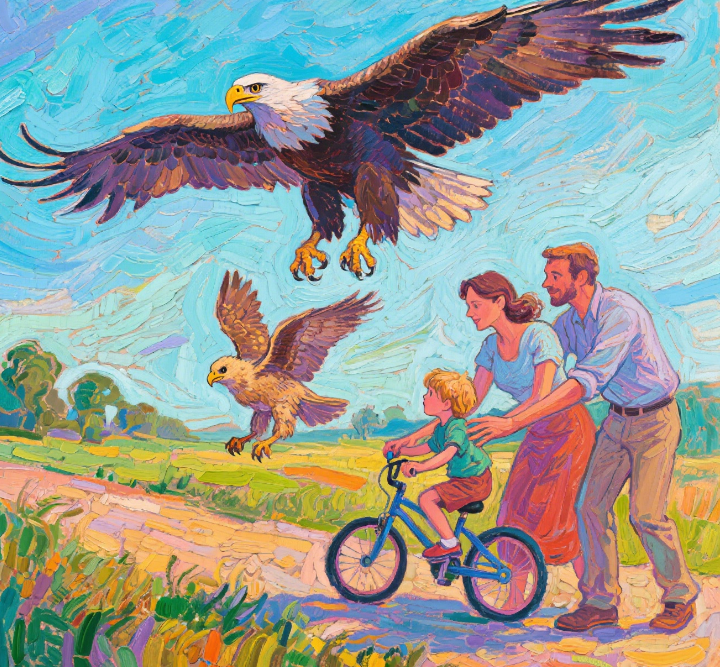
During the growth process of chicks, bird parents teach survival skills through demonstration and guidance. For example, eagles lead young eagles in practicing flying and hunting techniques, which is similar to human parents teaching children knowledge and life skills through example, helping them better adapt to society. Additionally, there is a phenomenon of “collective parenting” in bird communities, where some birds collectively care for the young. This behavior is similar to the model in human society where childcare institutions and schools share the responsibility of education.
These similarities between birds and humans in their living habits reveal the common laws that life follows in adapting to the environment and reproducing and developing. By delving into these similarities, we can not only gain a deeper understanding of the bird world but also gain new insights into human behavior and ways of life.
The above content presents the commonalities between birds and humans in terms of lifestyle habits from multiple perspectives. If you are interested in any particular aspect or wish to learn more about the habits of a specific bird species, feel free to reach out to me at any time.